Ferguson ‘Fine Television’ operating guide, c1950
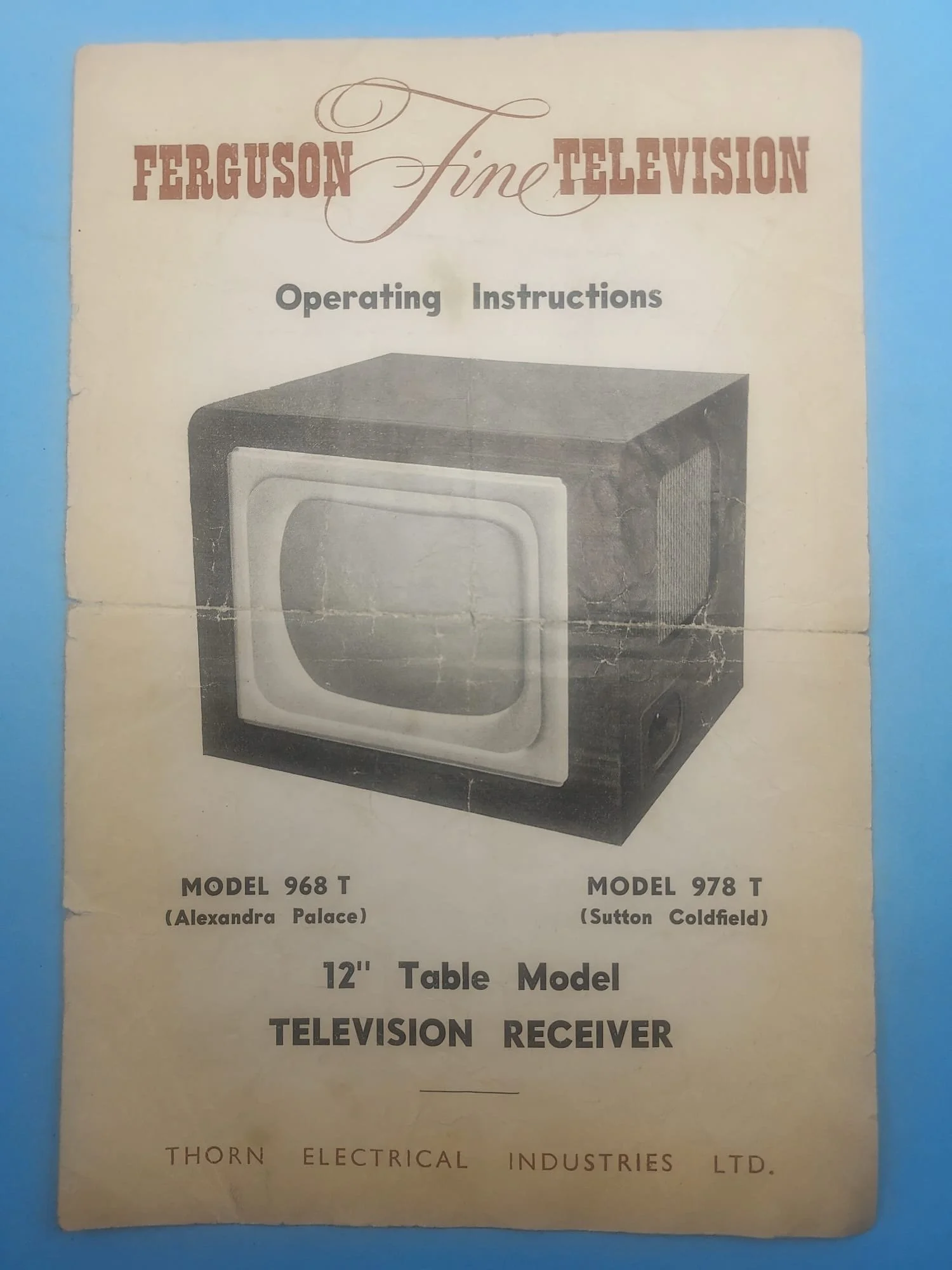
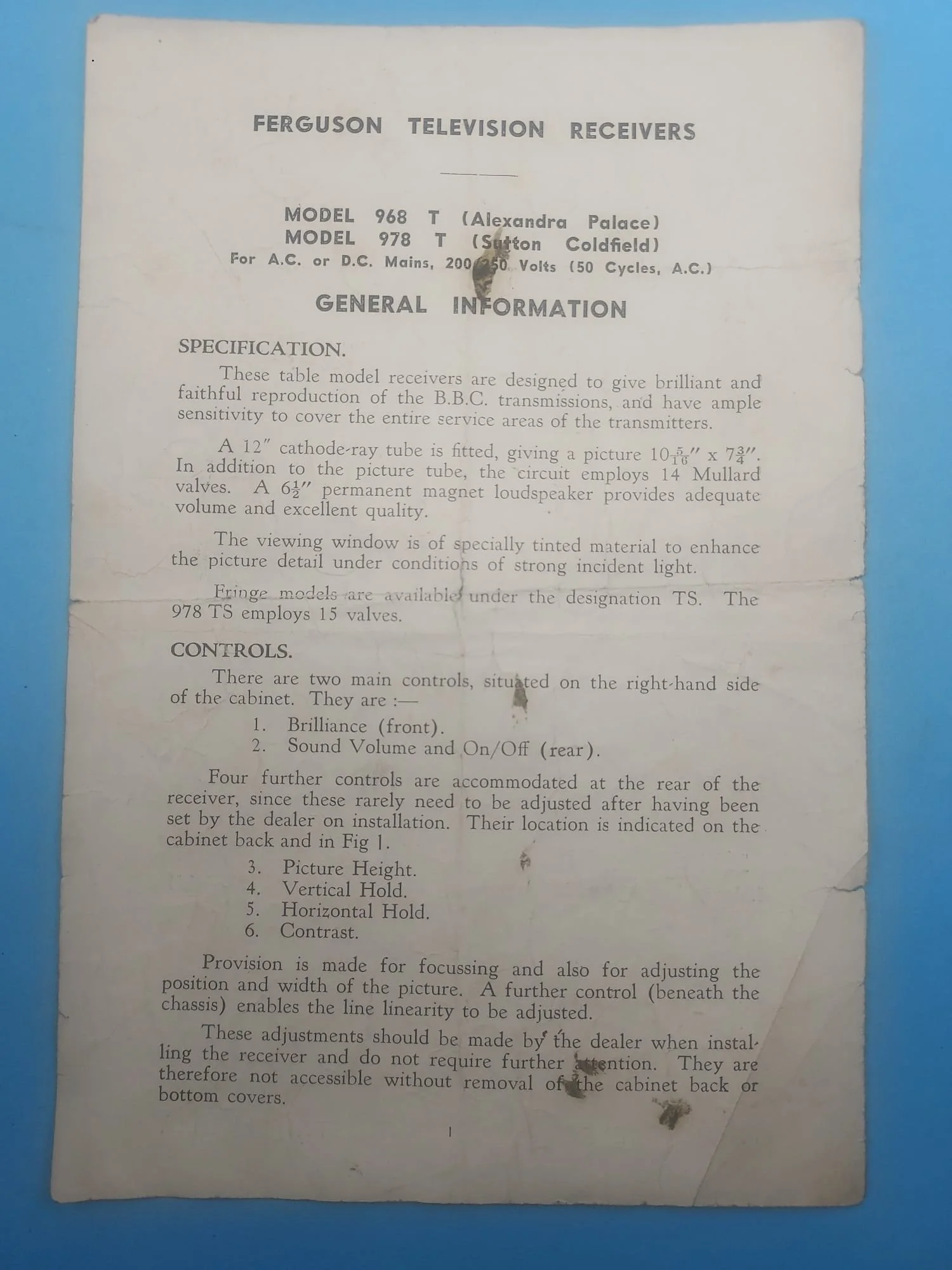
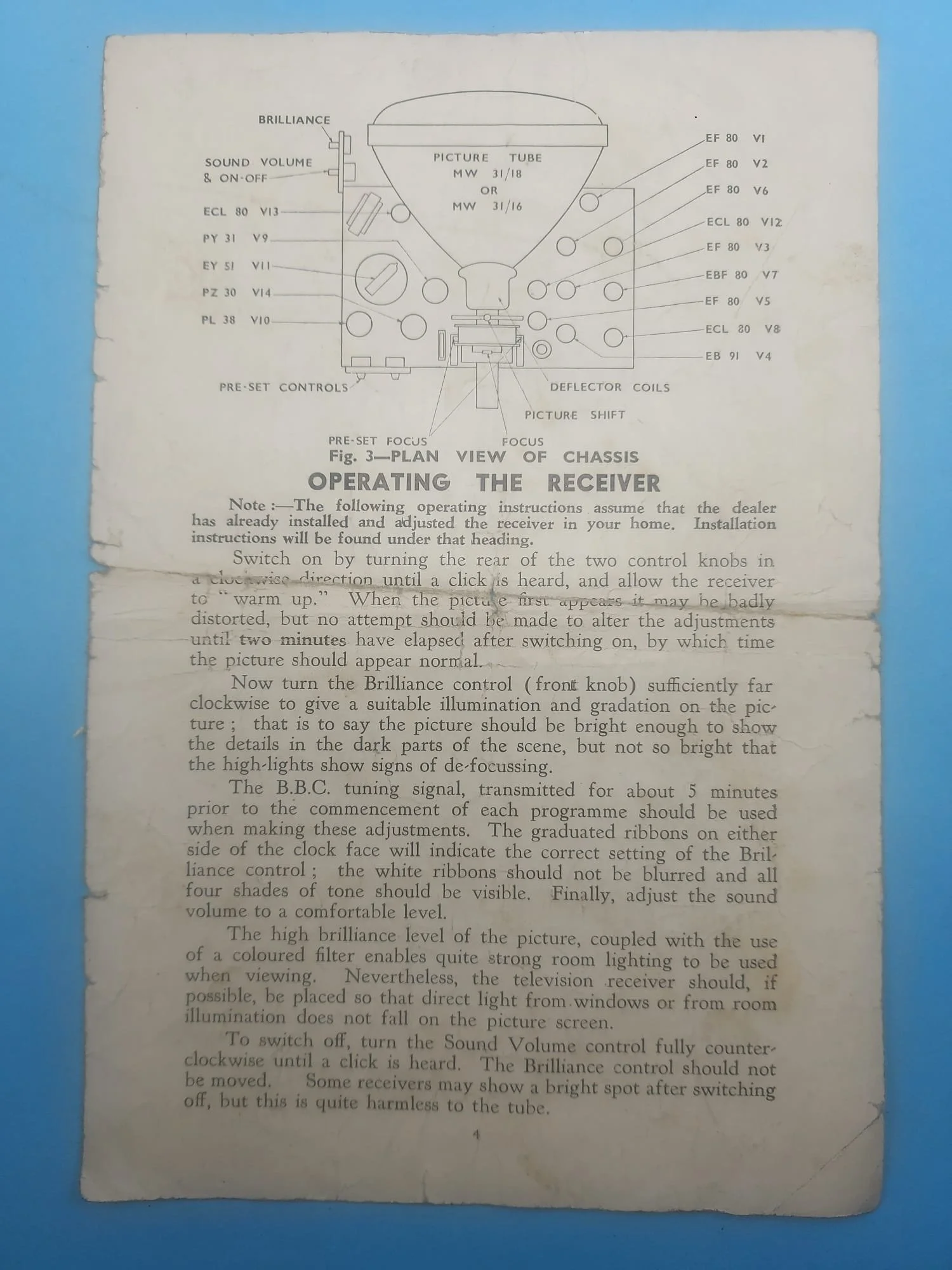
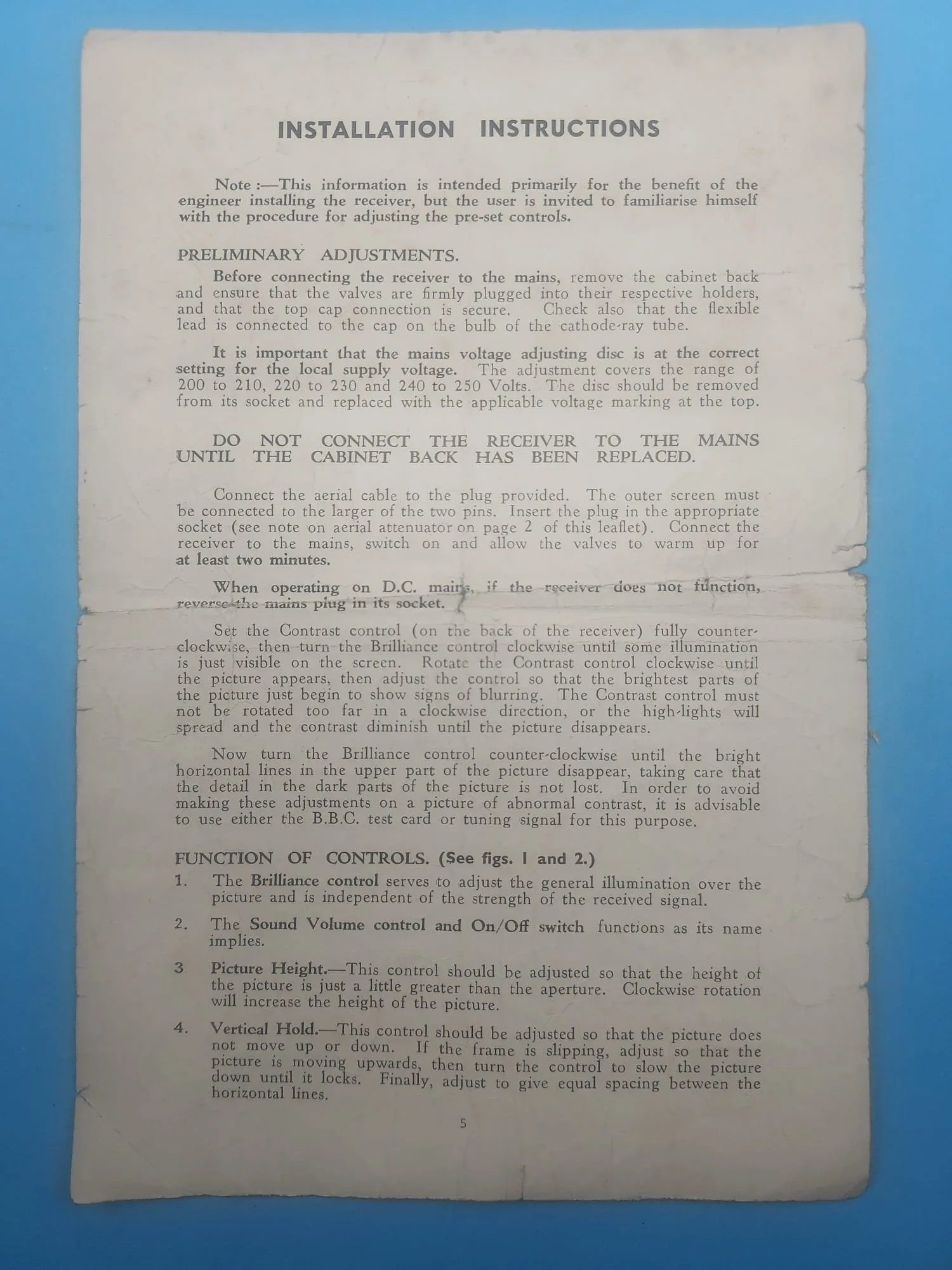
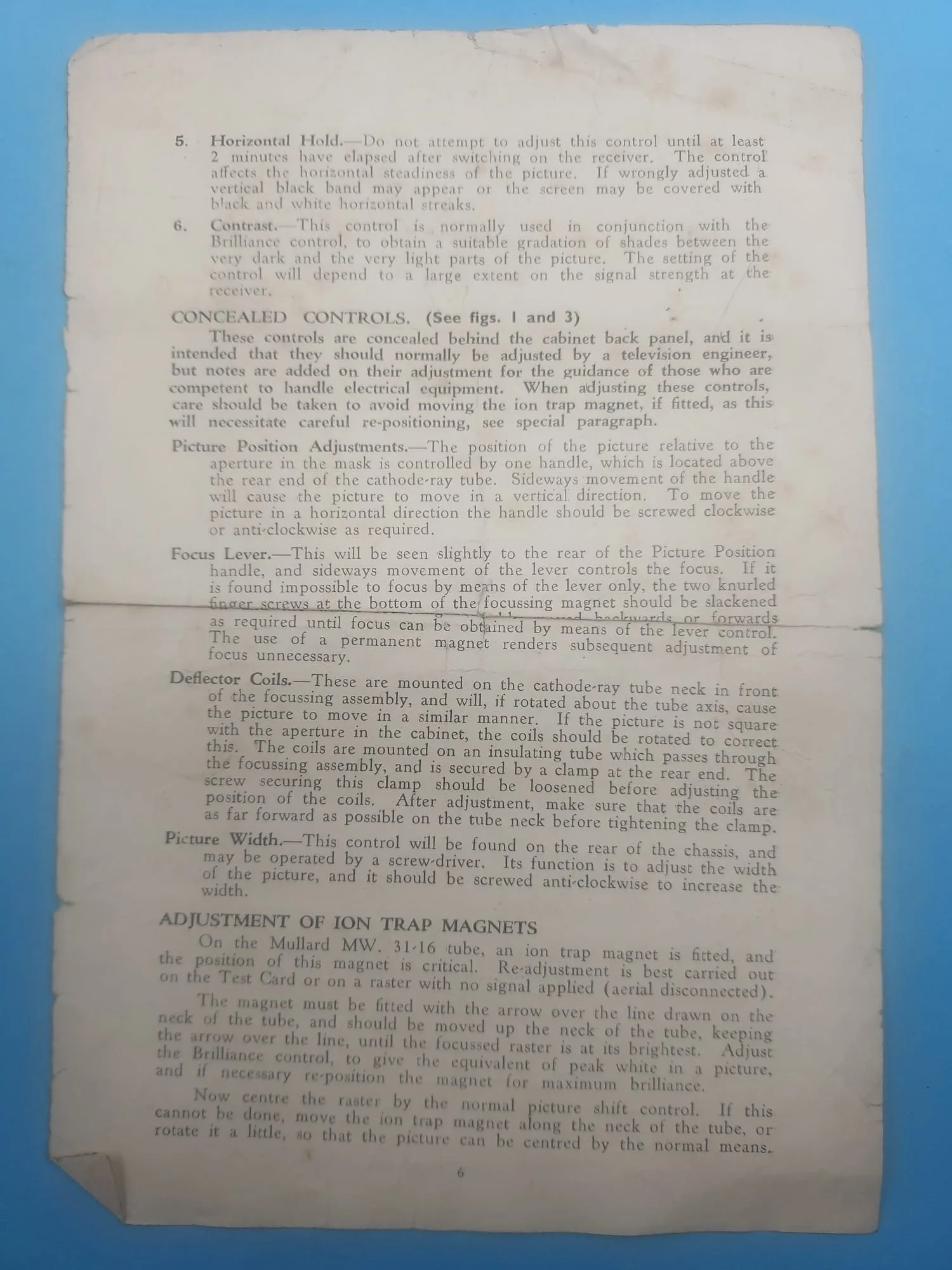
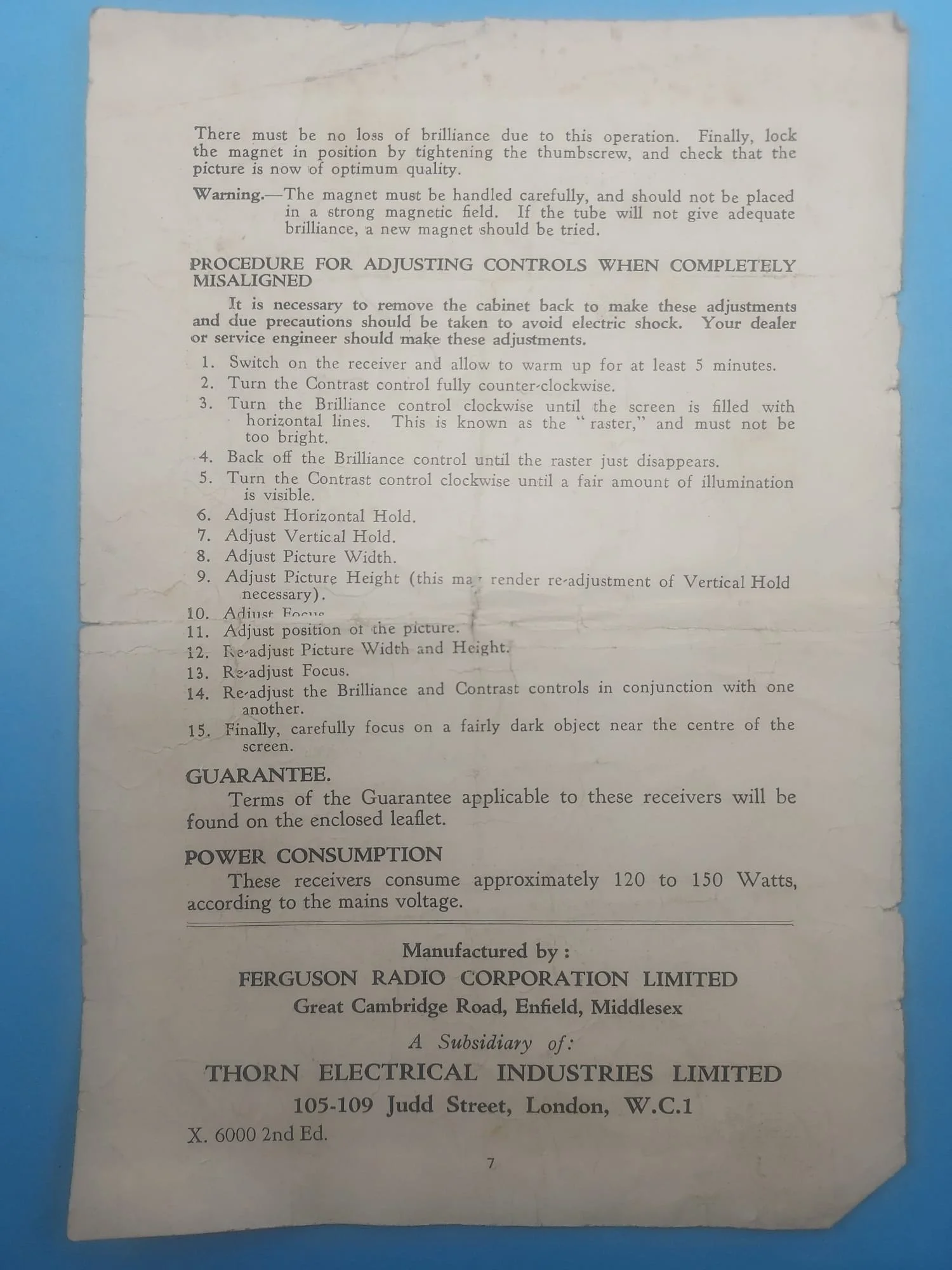
We have the ‘Operating Instructions’ for the Ferguson televisions made in about 1950. There are two models, both outwardly identical, but one (the 968T) was set up to receive BBC signals from the Alexandra Palace (London) transmitter, the other (the 978T) from Sutton Coldfield. We’ll come back to this detail in a second.
In this age of PDF user guides (if you’re lucky), to have an 8-page booklet on how to use your TV is quite a change. And what a thrill it must have been receiving programmes! This is not TV as we now know it. For example, the guide suggests two minutes of warming up should be allowed before you’d expect a normal picture. And when you switch off, seeing a bright spot appear is ‘quite harmless’.
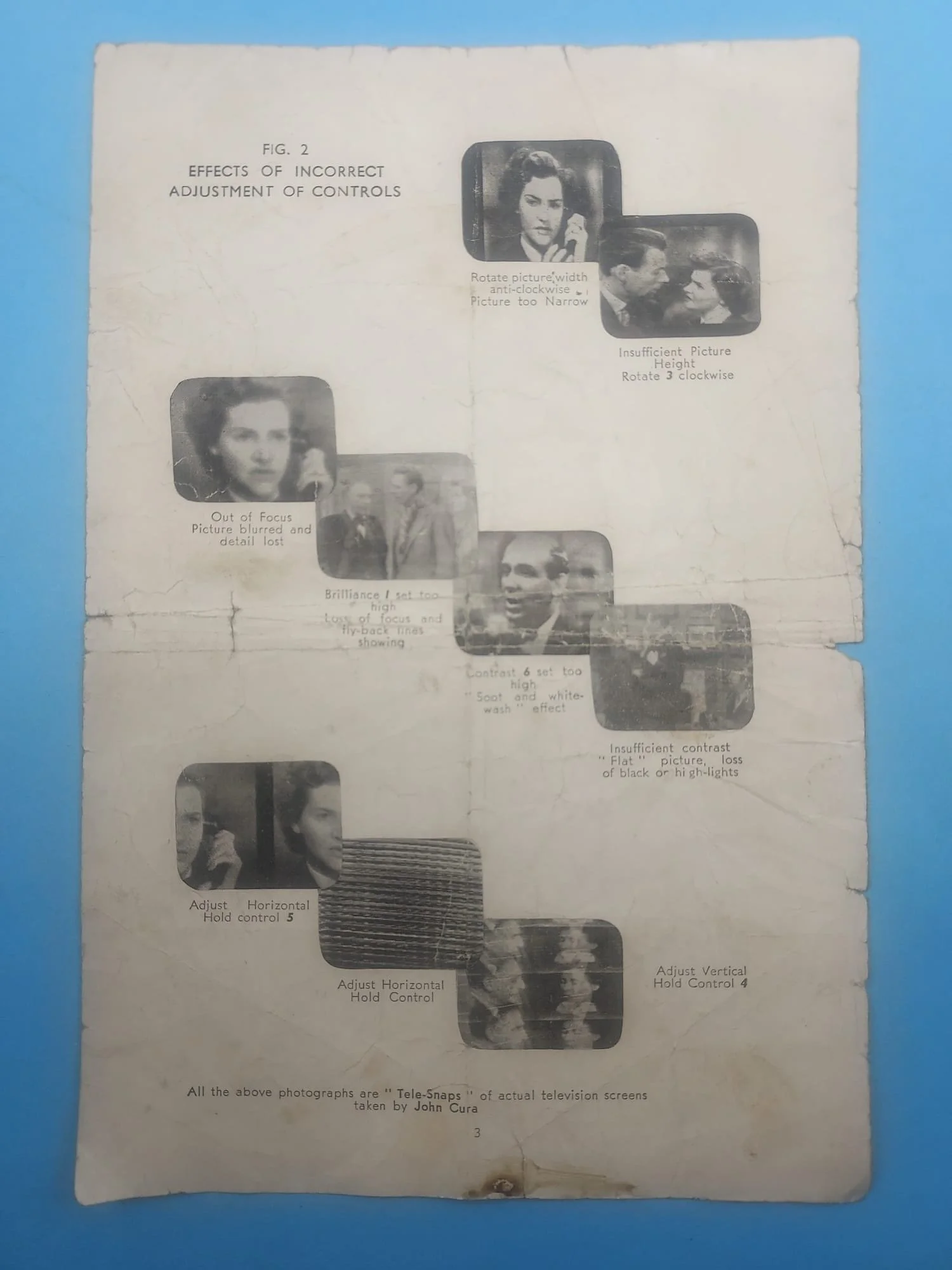
The guide reminds us that a BBC ‘tuning signal’ is transmitted for about five minutes ‘prior to the commencement of each programme’, and this was the opportunity to warm up the box and adjust it to perfection. Photographs of problems with ‘horizontal hold’, ‘vertical hold’, blurred and ‘soot and whitewash’ pictures give an idea of the challenges that the viewer might face.
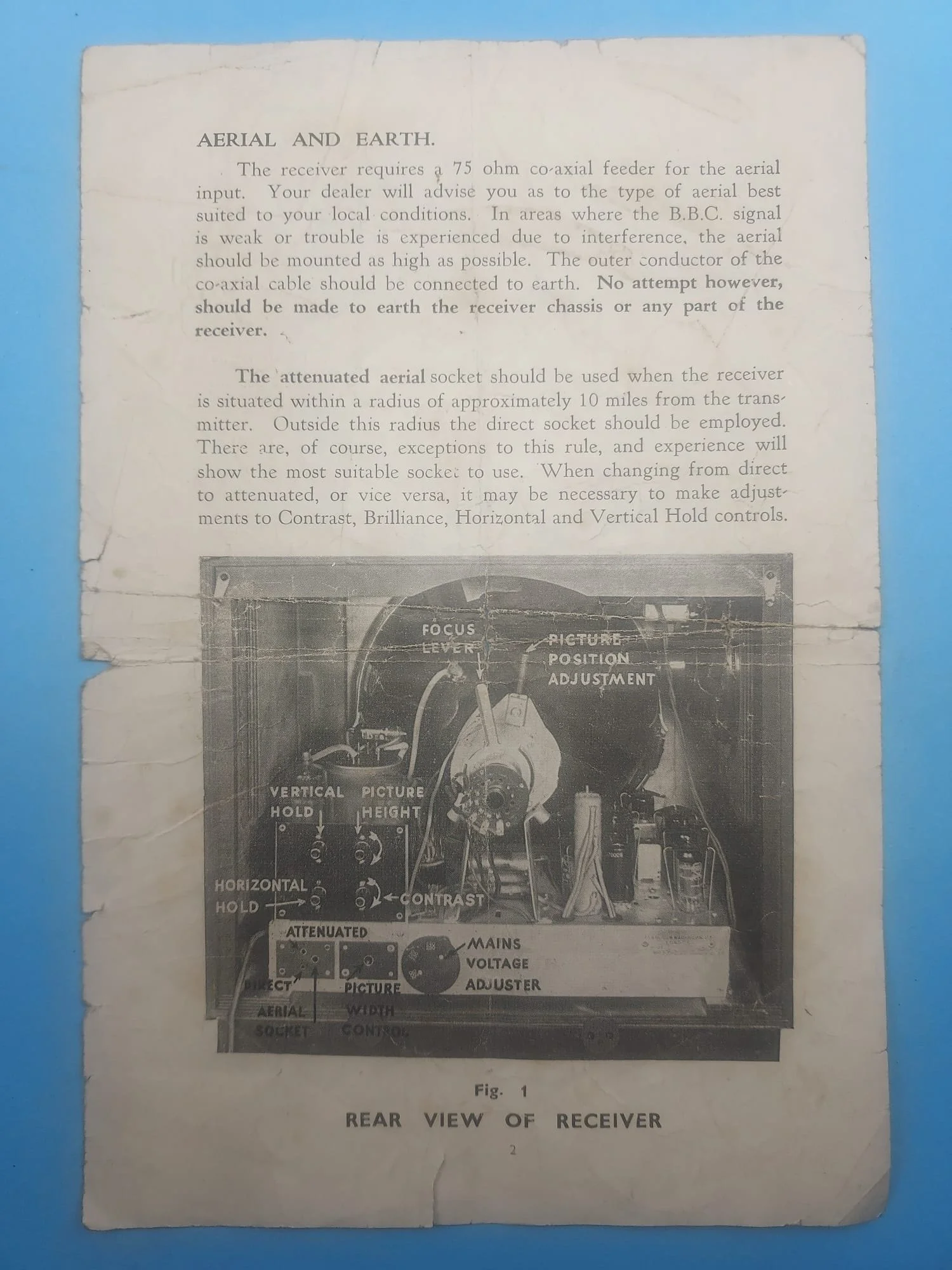
Pictures of the insides of your telly won’t appear in any recent user guides, but clearly Ferguson (or rather, the parent company Thorn Electrical Industries) were expecting the back to come off sooner or later. Hence the annotated photo of the gubbins inside, revealing no fewer than fifteen valves.
We have some copies of the Radio Times from the 50s which would give us an idea of what was broadcast, but TV transmission was not a 24/7 thing as it is now. And why were there two models? Until 1949, only London-based viewers could receive any TV signal. But that year a transmitter was introduced at Sutton Coldfield, and this allowed viewers in the midlands to receive a signal. There was in fact only one channel – BBC – before commercial TV came along in the mid 50s, and BBC2 in 1964. So there was no tuning to do with your telly – it was set up to receive one channel only, and you needed either the London model or the midlands one. What you received, of course, was in black and white. There are two sockets for an aerial, one for those within ten miles of the transmitter, the other for those outside that radius.
I was going to end by saying ‘It was a simpler time’, but it wasn’t. There still wasn’t a national network of TV transmission and getting a second transmitter going so soon after the war was a huge achievement. So, let’s just say: It was a different time. A very different time.