We have a product file of ads that extends to nearly 40,000. They are sorted alphabetically by manufacturer name and so it’s easy to check if you wanted to find an ad for a particular product. For some brands we have bulging files, and one such is Eastman Kodak, the US company that in the 1880s brought the portable camera, using a roll of film, to the masses. The brand Kodak was a bit like IBM or Nokia – huge in their day and we all thought, impregnable. Each was brought down by a combination of factors but usually to do with failing to move with the times.
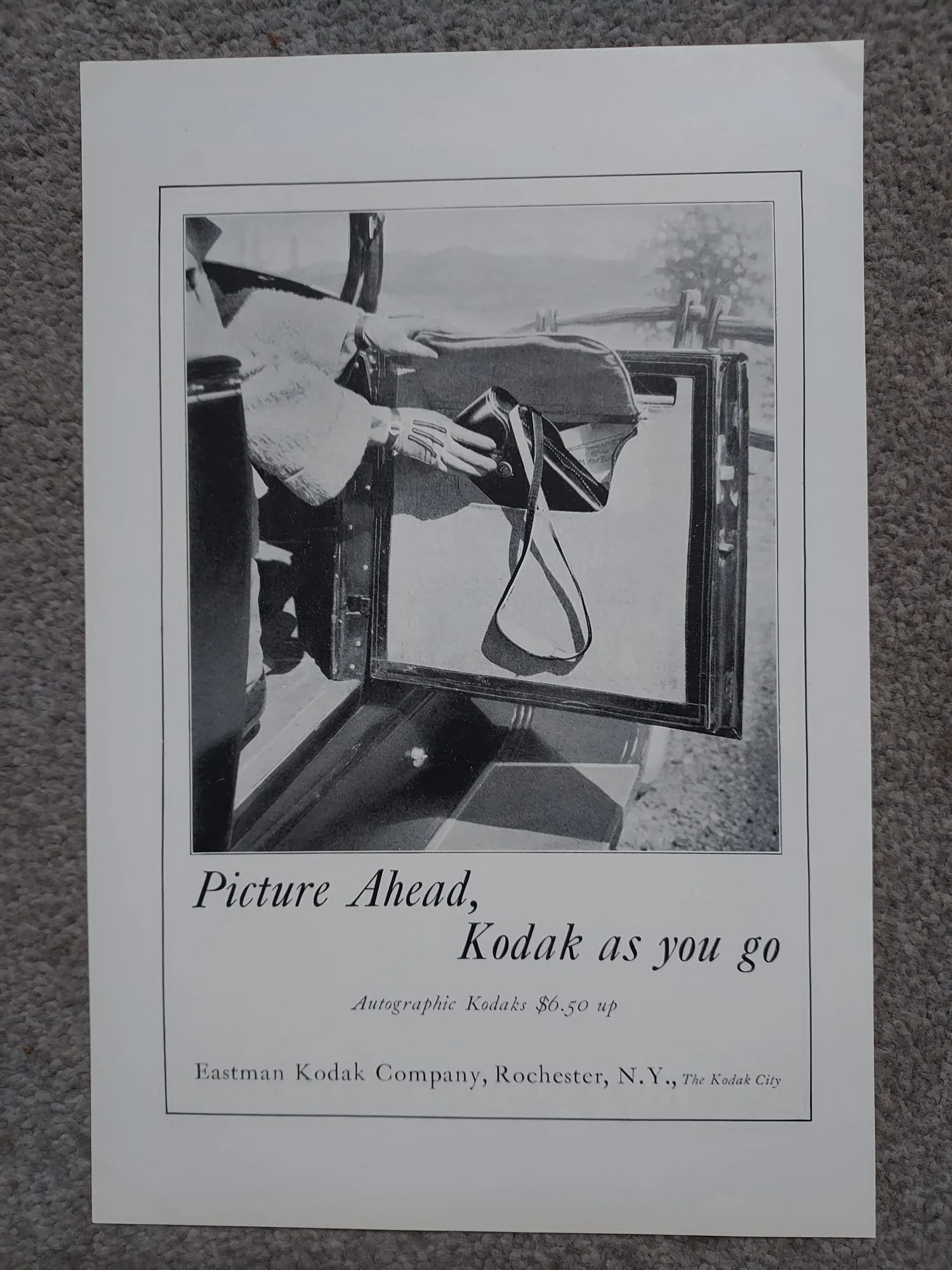
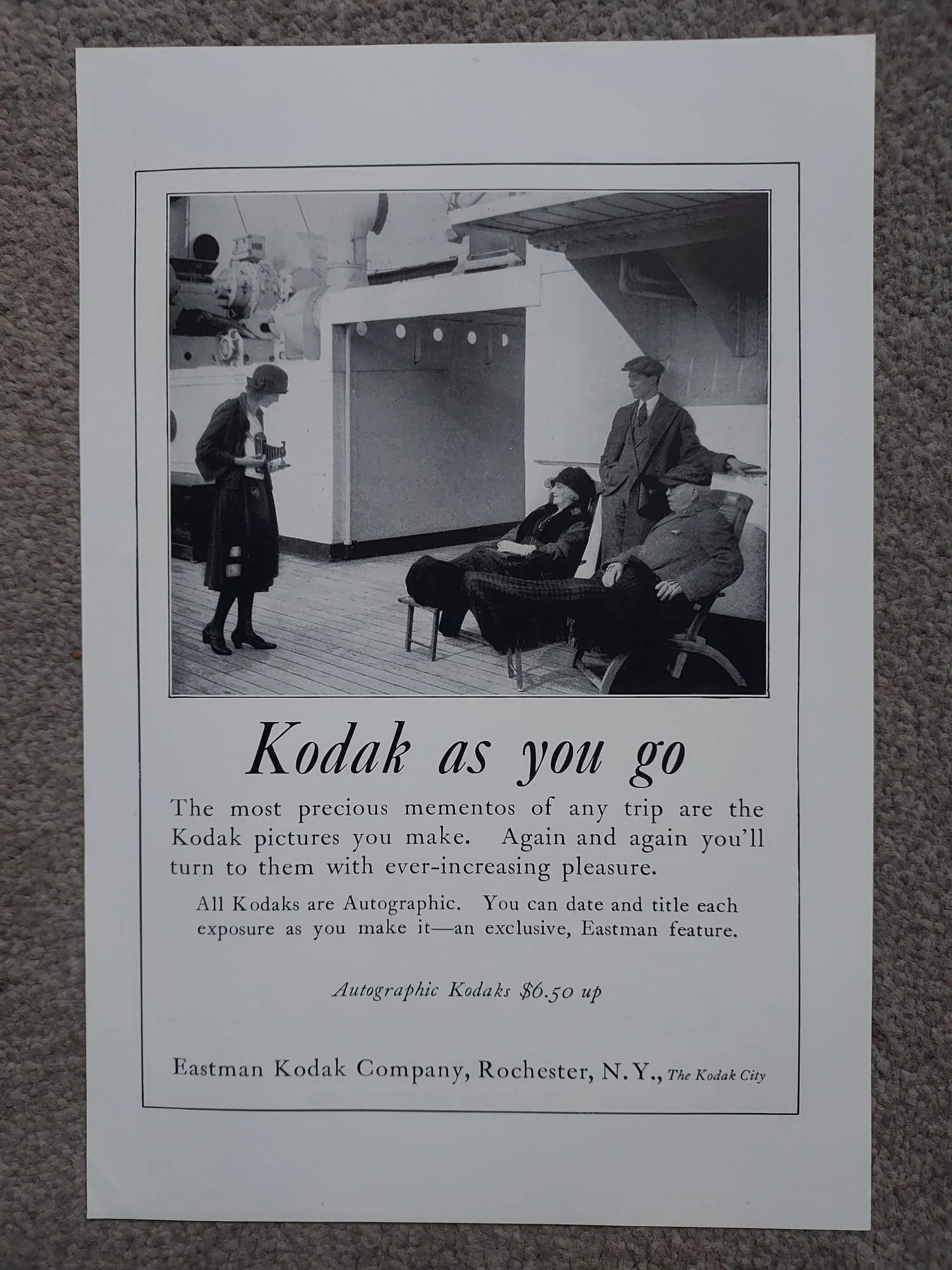
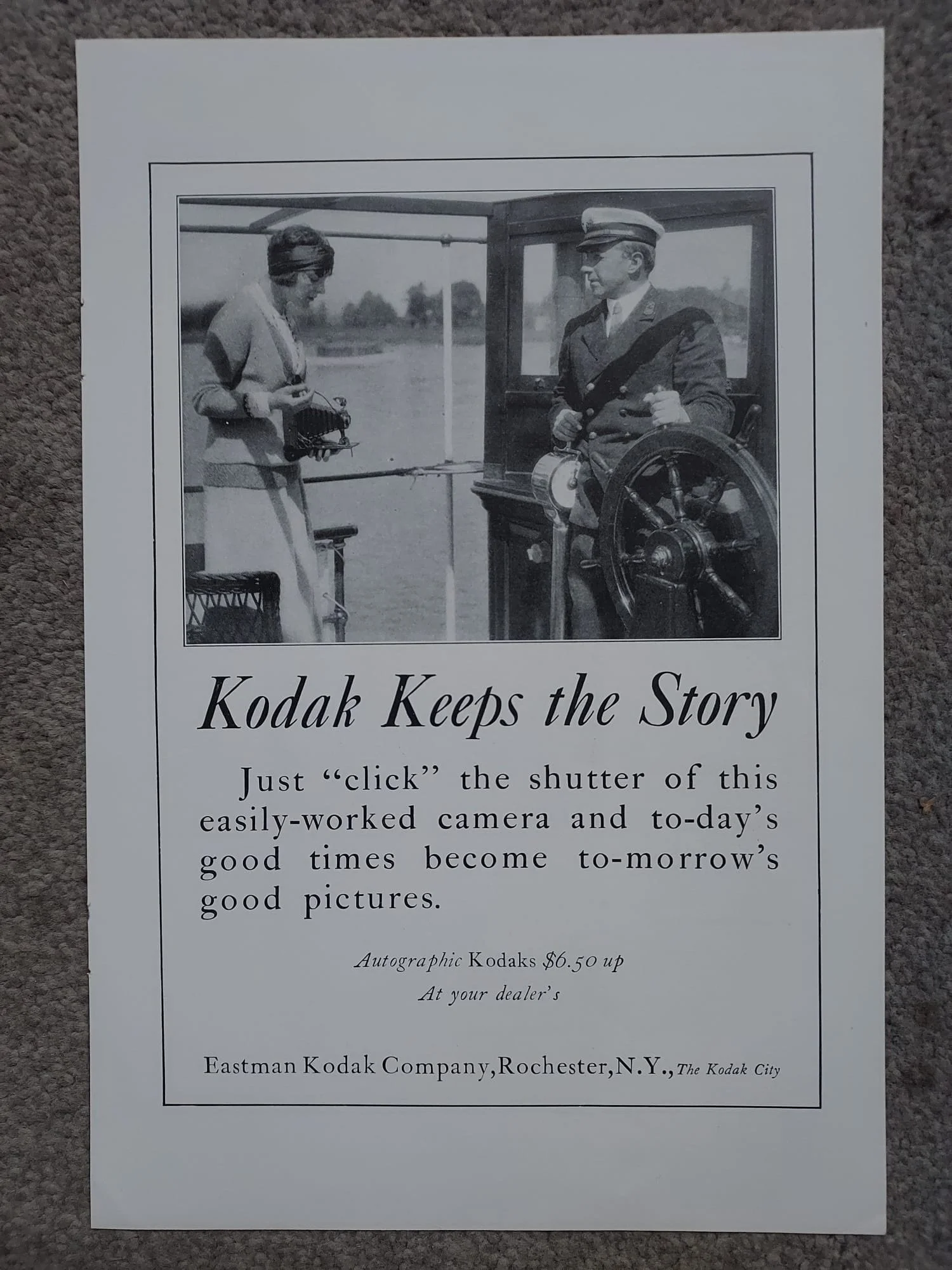
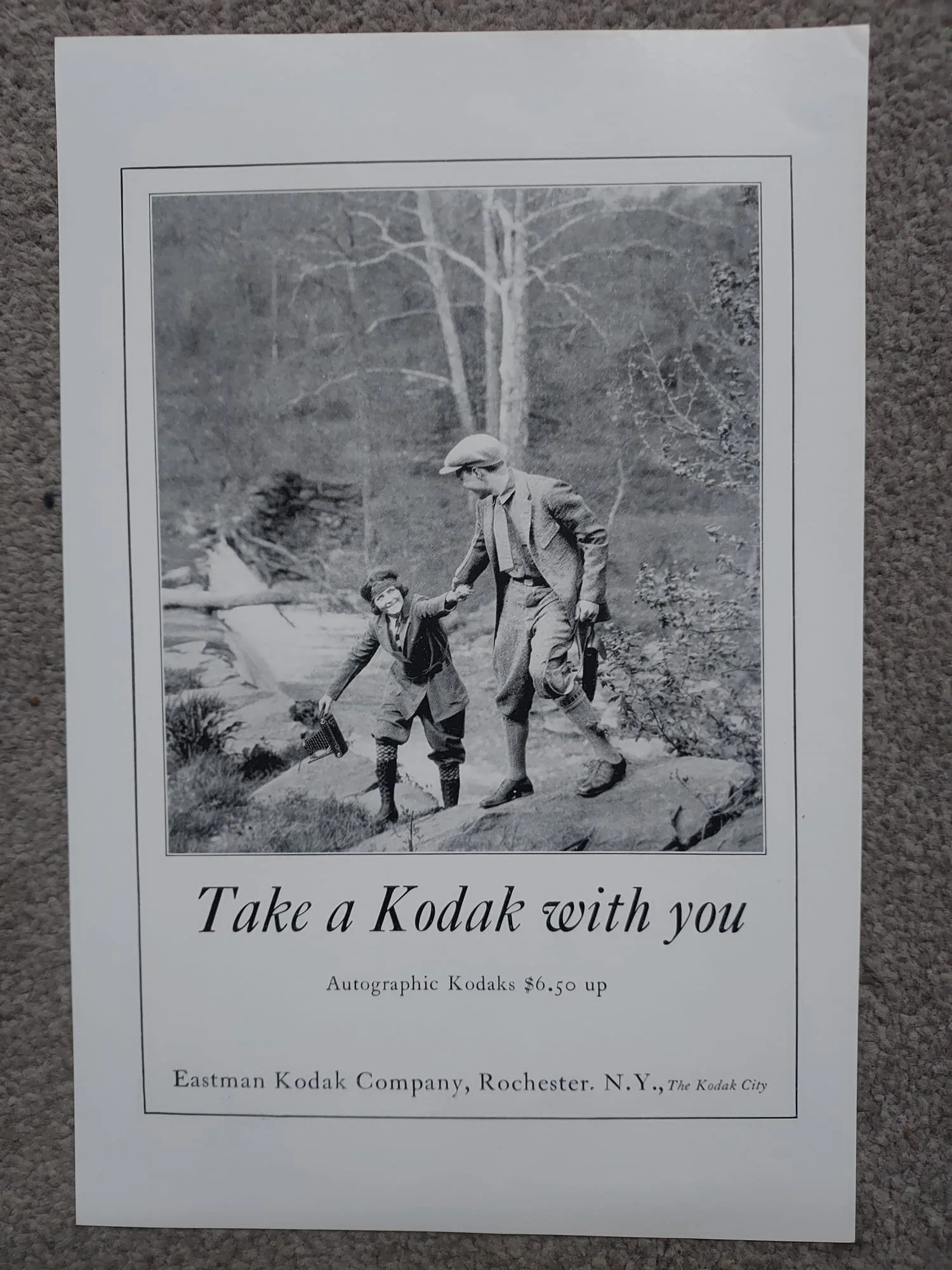
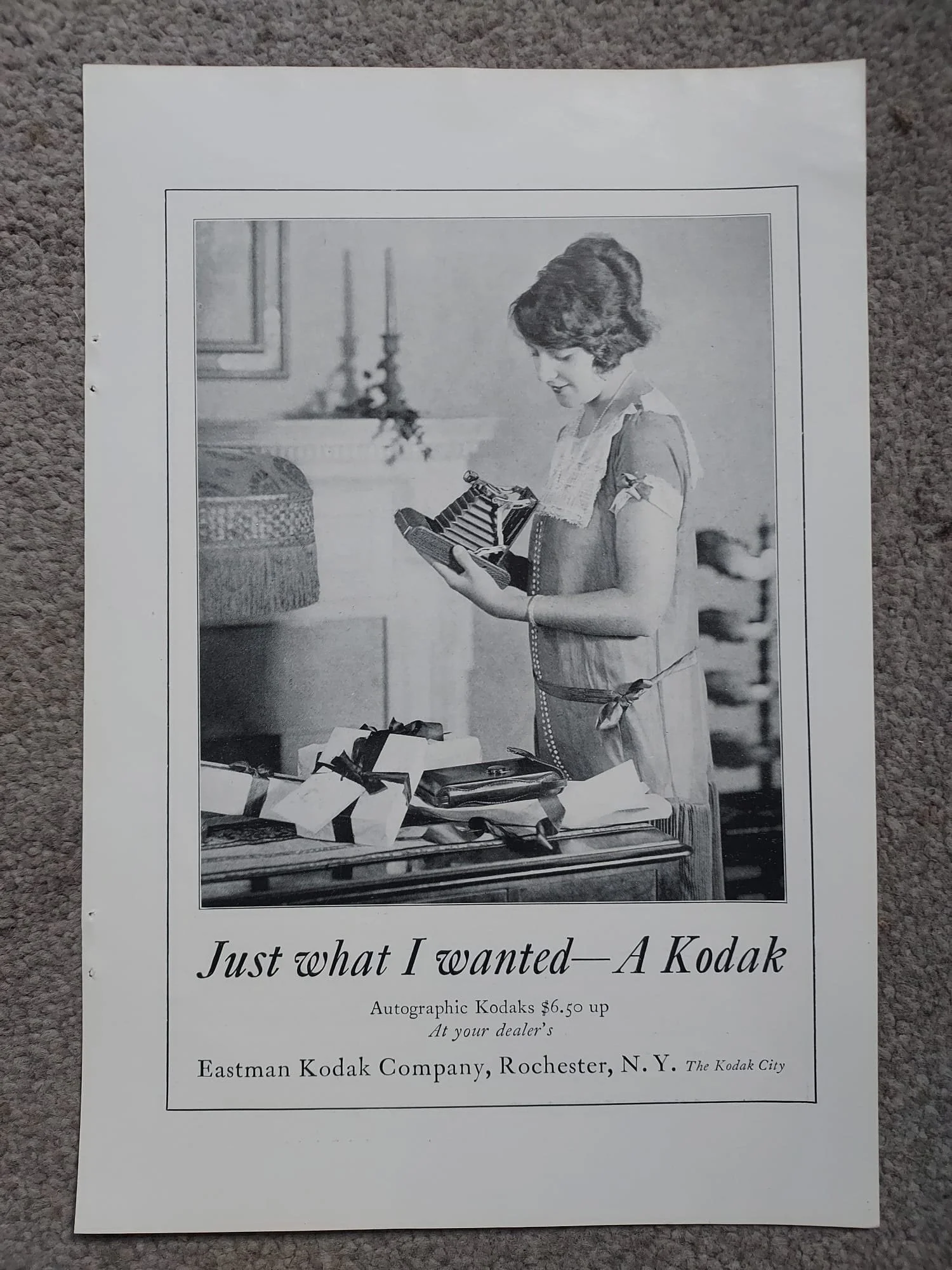
Flicking through the file for Eastman Kodak I came across the range of pocket-size box cameras (Autographics) sold in the 1920s and 1930s. Most of the ads have been culled from National Geographic, whose readers were fair game – they were likely to be outdoorsy, and with enough disposable income to afford the equipment. Sold on the slogan ‘You press the button; we do the rest’, they brought affordable amateur photography to a much wider public. The ads shown here use get-up-and-go types (usually women) out and about with their cameras and ready to take snaps at any time. There seem to have been two models – the No. 1 Special for about $50 and the No. 2C Special for about $65.
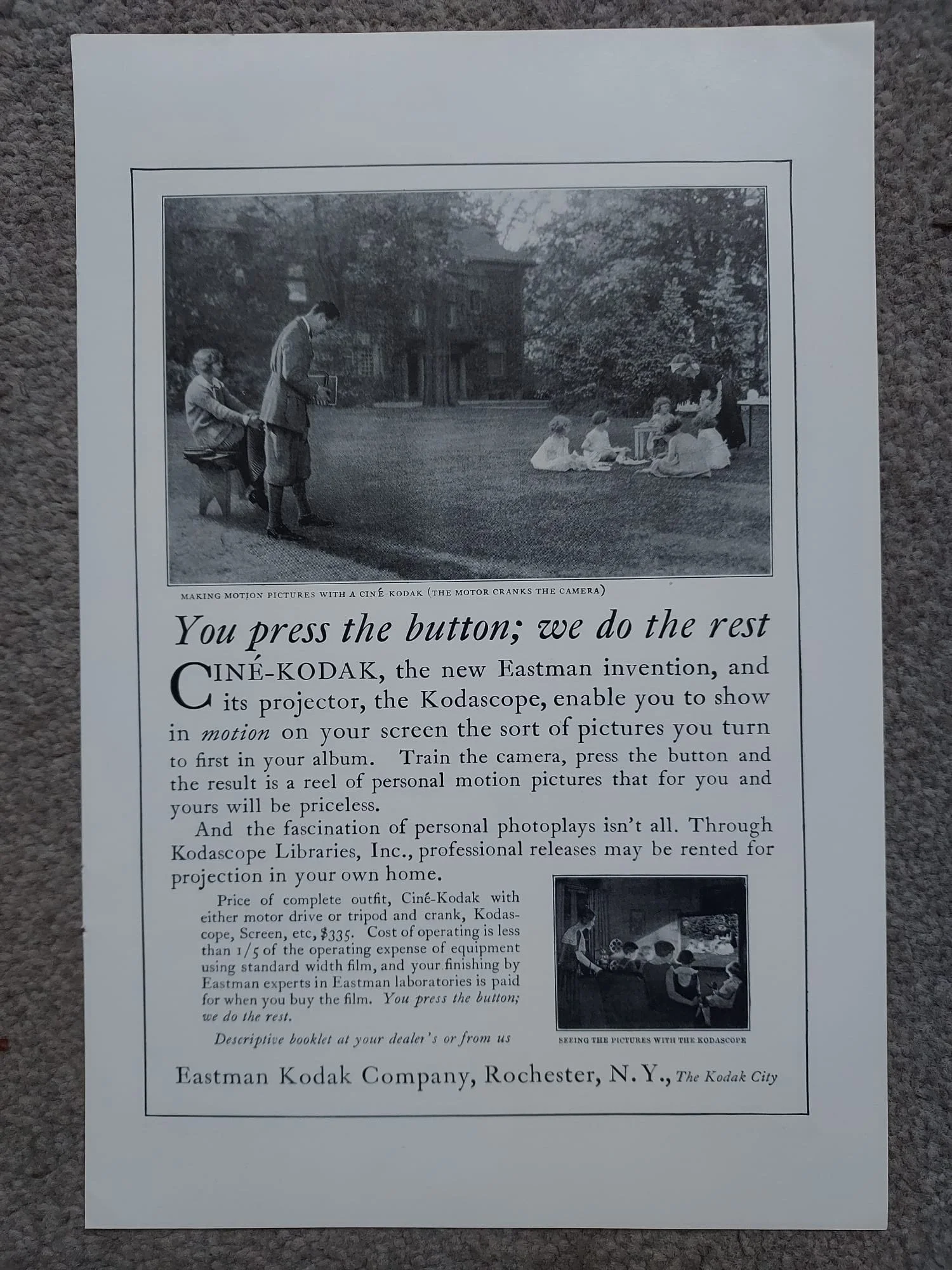
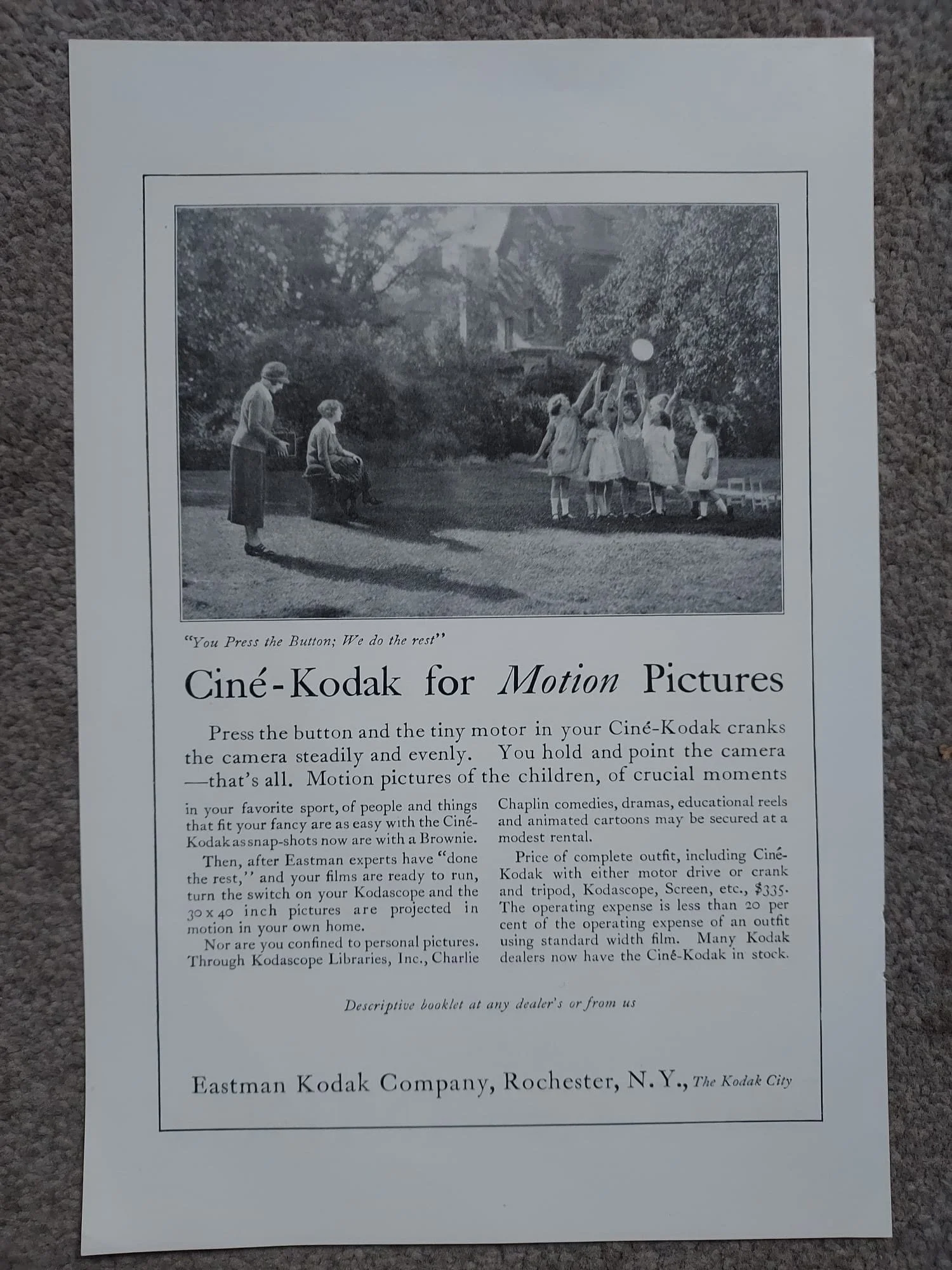
The first ad we have for a Kodak movie camera is 1924. With what was essentially a box with a lens on the front, the same slogan was used. No winding on yourself – by pressing the button a motor was activated which cranked the camera at the right speed. It must, then, have used batteries of some sort and I suppose these needed constant changing. S’funny, the blurb never mentions this. The price is, of course, in a different league: $335 for all the gear, including projector and screen. This Cine-Kodak was claimed to be as easy to use as the Brownie camera that Kodak had introduced a generation before.
Interestingly, one selling point, having invested in the projection gear, was that you could also rent ‘professional releases – dramas, comedies etc’ from Kodascope Libraries. It seems this included Charlie Chaplin movies and cartoons, all available to rent.