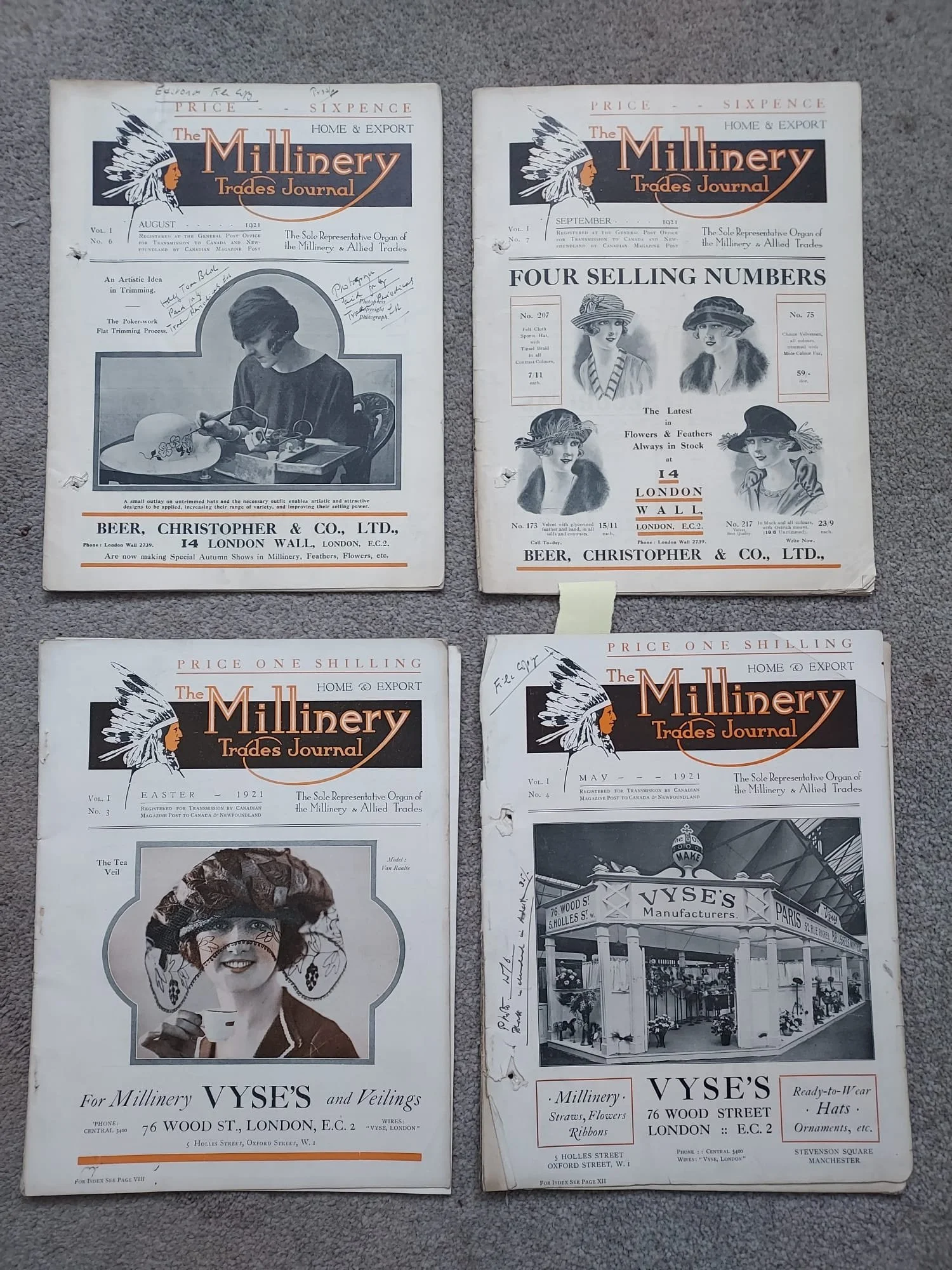
We recently came by the first eleven copies of the Millinery Trades Journal for 1921 and 1922. It appeared as a monthly in January 1921, costing a shilling, but by January 1922 (the Early Spring copy) it was down to 3d and renamed the Drapery and Millinery Trades Journal. With that price trajectory, and seeing there are precious few ads by the last copy, I’ve a sneaking feeling it didn’t linger much longer, and maybe our copy is the last. Certainly, the editorial explaining the change of title ties itself up in knots trying to reassure milliners that this is the magazine for them, while at the same time acknowledging that millinery as a term was becoming obsolete. In the end, though, there was no getting away from it: call the industry what you will, but this was still a magazine about hats.
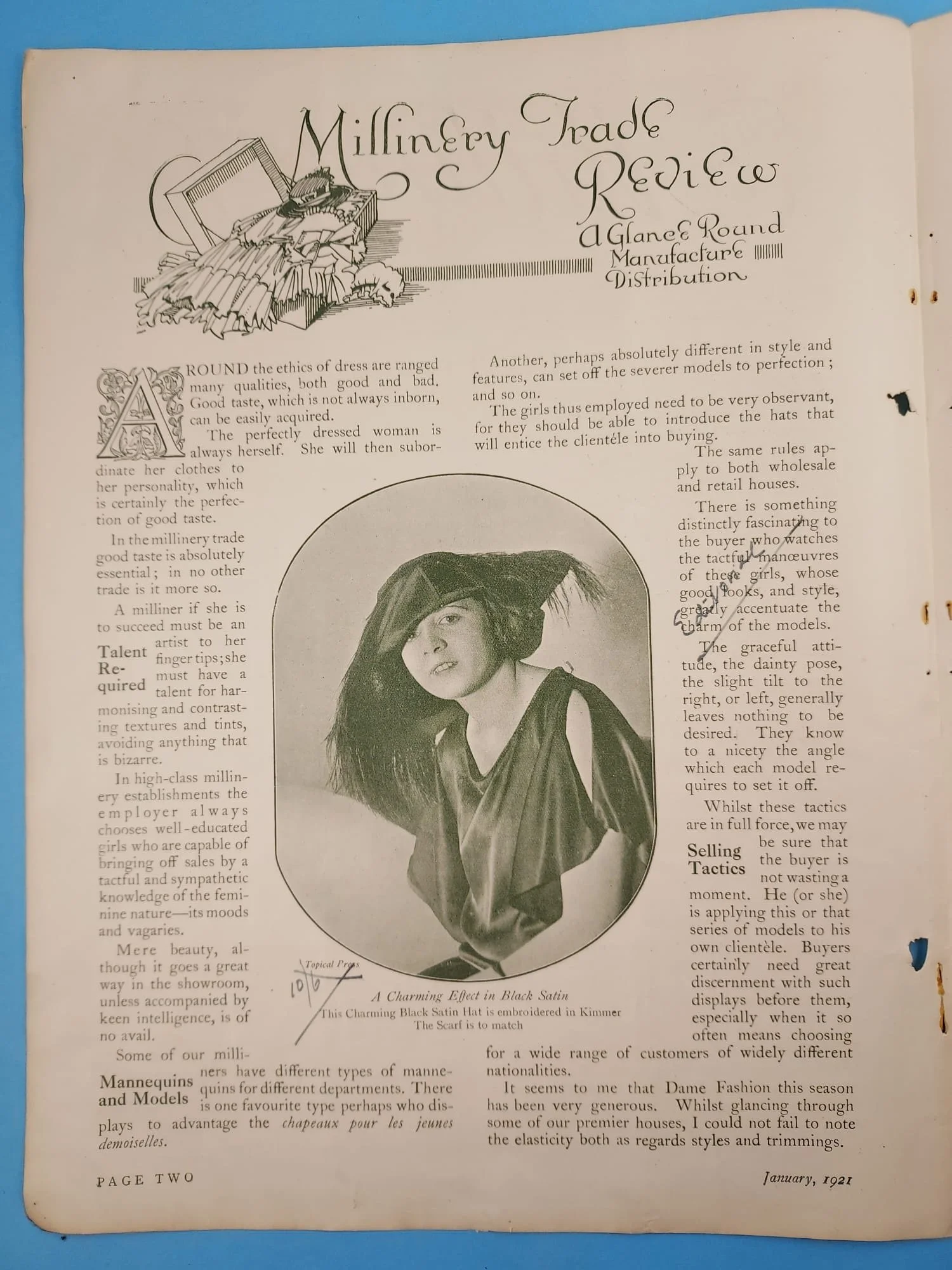
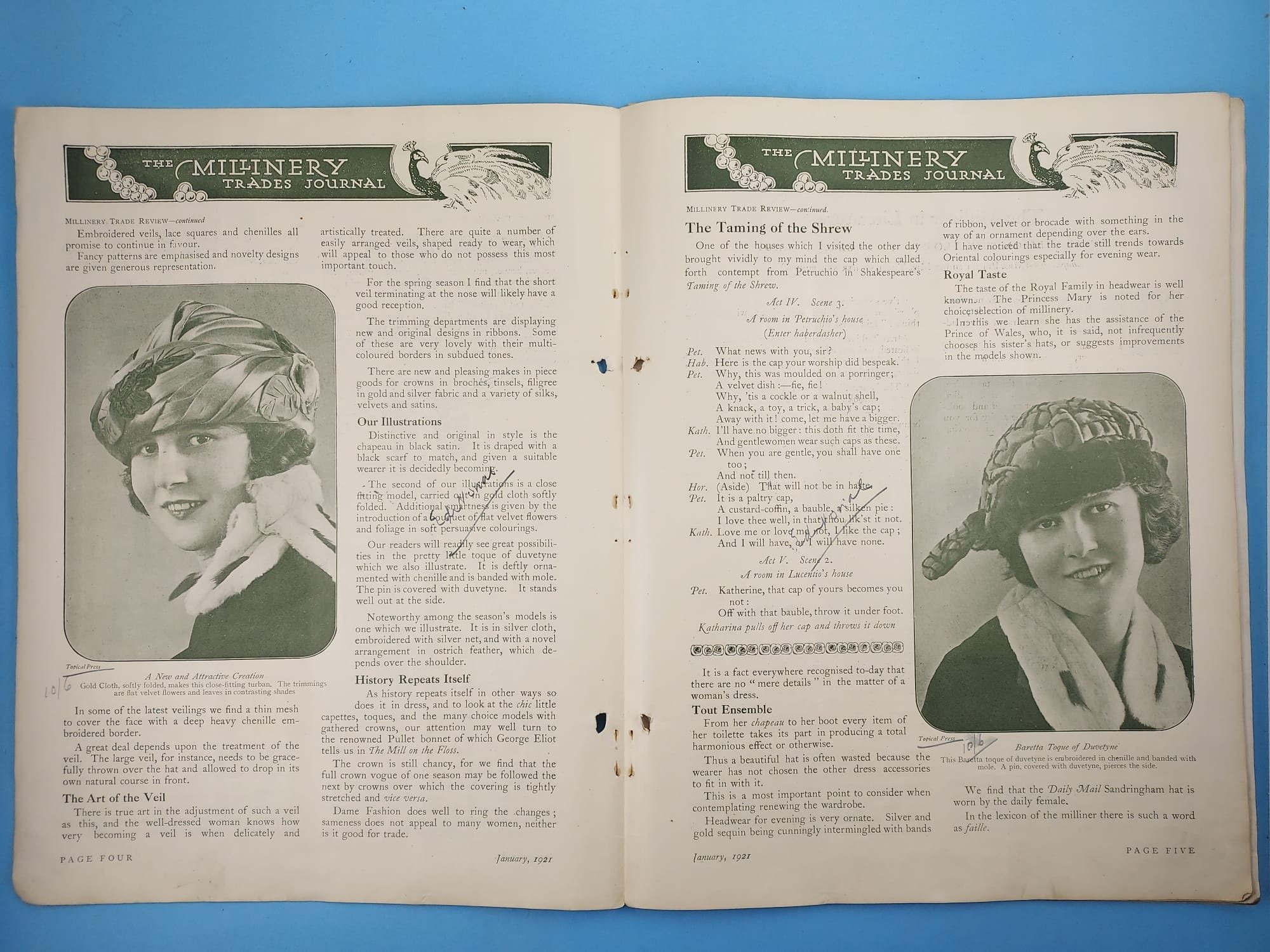
But what hats they are! We have a black satin hat, embroidered in Kimmer; a turban in gold cloth; and Baretta toque of duvetyne, embroidered in chenille and banded with mole. Trust me, that sample hardly touches the surface of the breadth and variety you’ll find within.
Another publication by E.T. Heron, the magazine is printed on quality art paper, with hand-drawn illustrations and photographs, all in black and white, plus sepia. With a claimed circulation of 5,000 at the beginning, it looks more like a society or fashion periodical than a trade journal. But what’s particularly special about our set is that all copies are marked up by the production team in pen, giving the amount paid for each article, illustration and photograph. So, in the first issue we learn that the anonymous article ‘Where Millinery is Made: Luton’s Industry: the story of the trade told by one who knows it’, is in fact by A.F. Pope, who, for his text and two photographs, was paid £1 11s 6d. In the same issue, the ‘Gallery of Parisian Millinery’, presented by ‘our Paris correspondent’ is S.R. Markham (doesn’t sound very French to me..?), who was paid £10 for the text and 18s for each of the 14 photographs, that is, another £12 12s. Meanwhile F.M. Mitchell got 1½d per line for his or her trade news and notes.
Meanwhile, as a trade journal, hourly rates for workers are given, and here, just as in the price of the magazine, wages were being reduced. The Ministry of Labour was dropping female hourly rates in the retail sector from 9½d to 7½d. Hard times indeed.
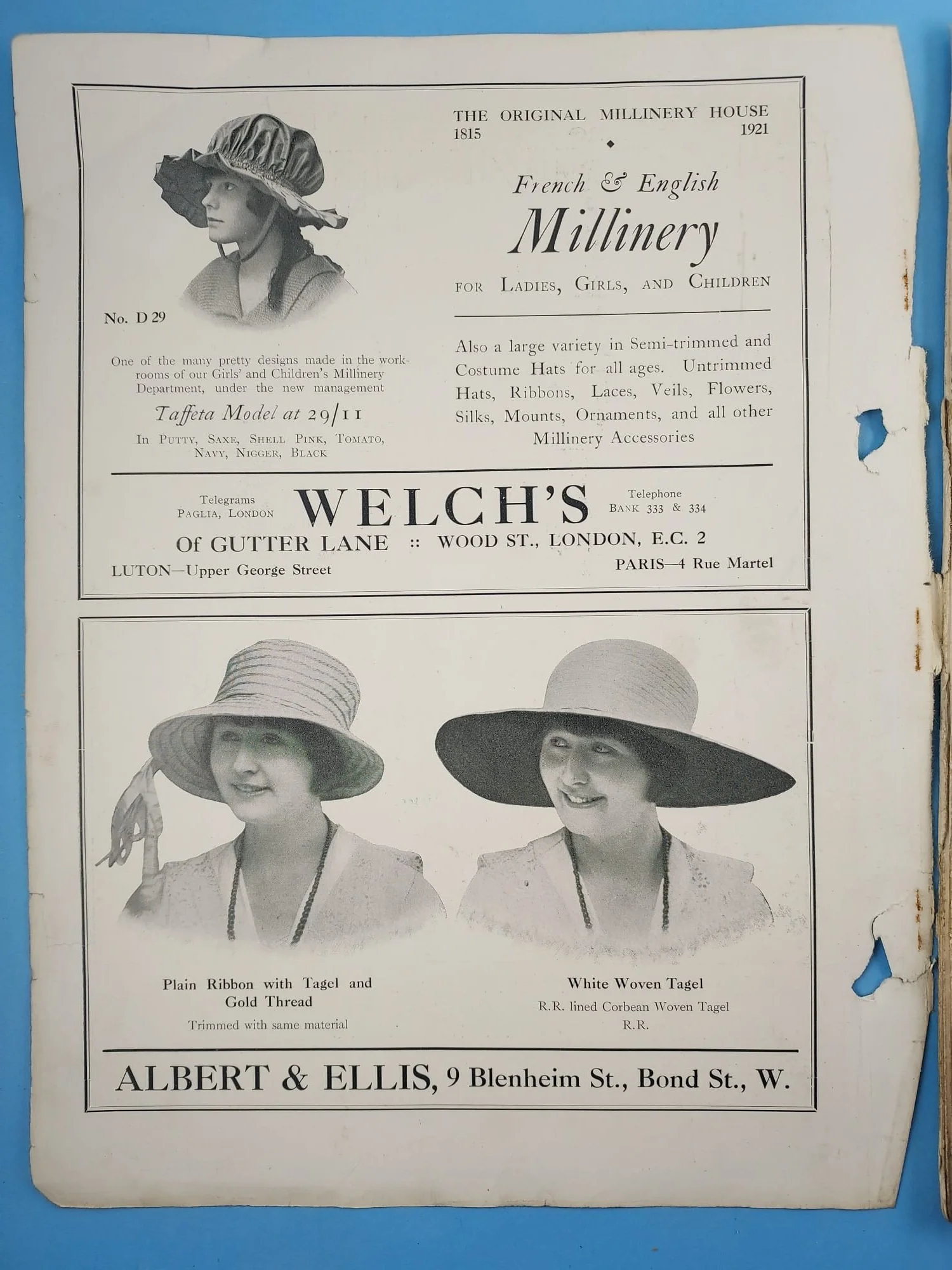
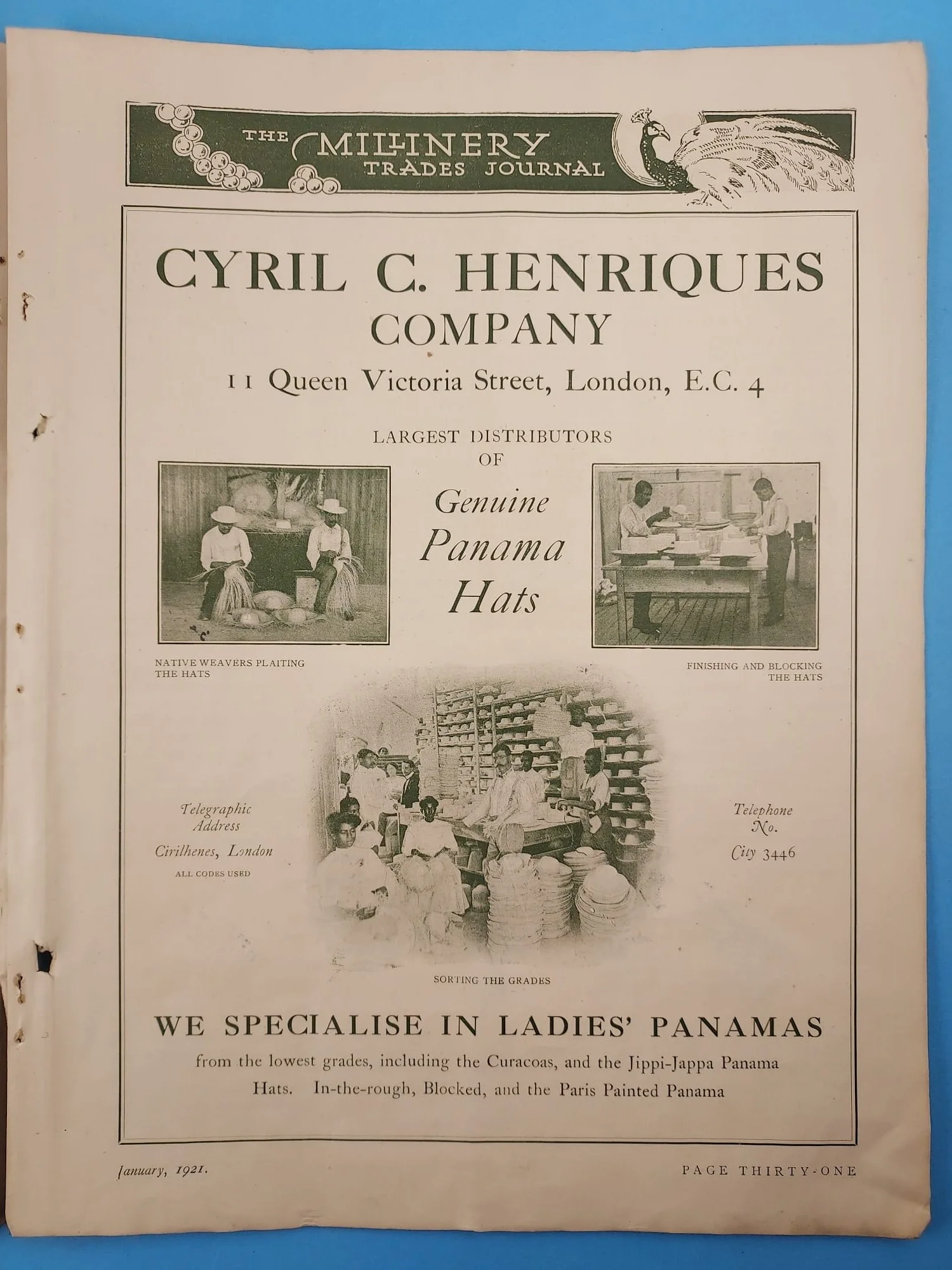
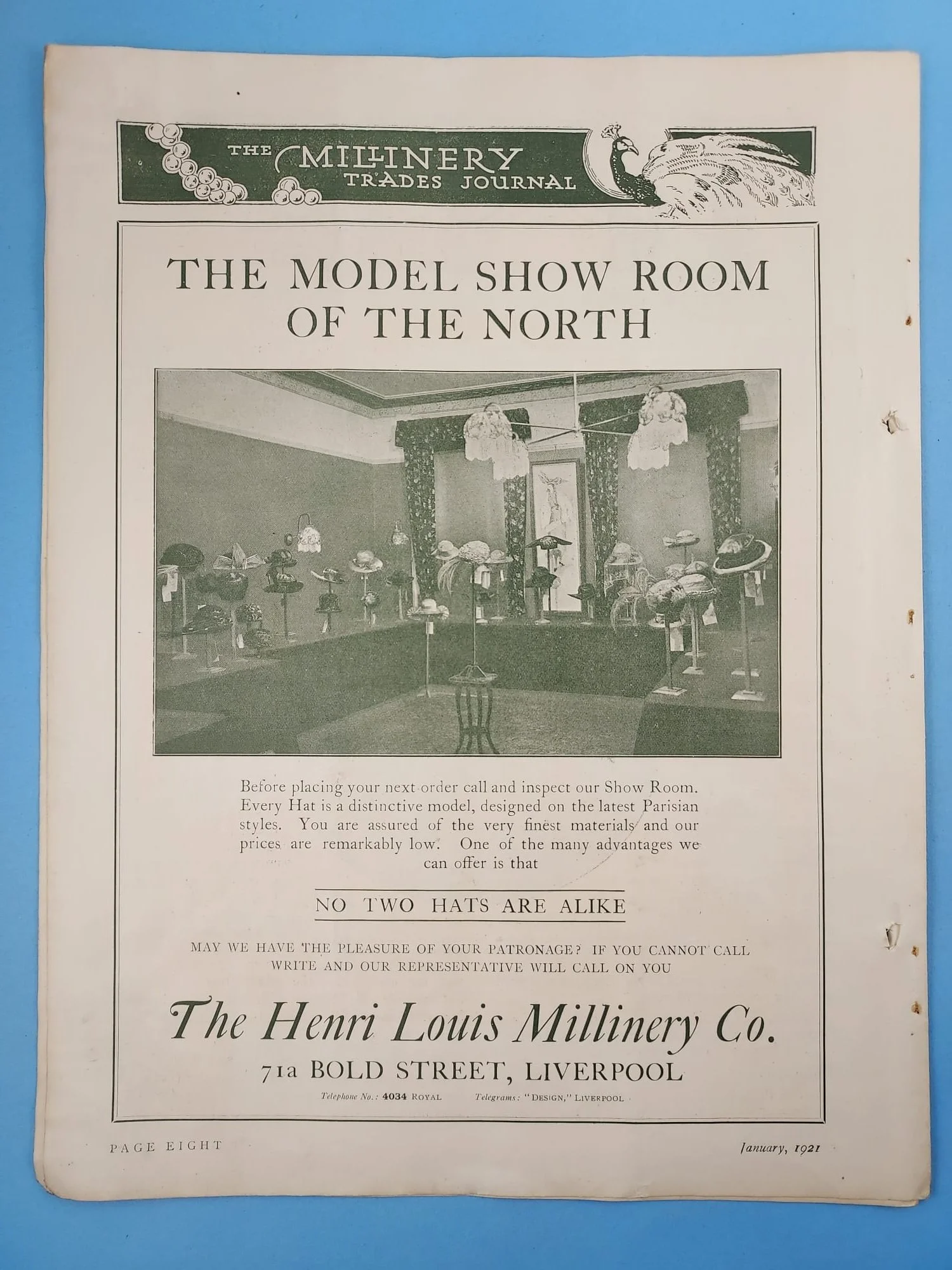
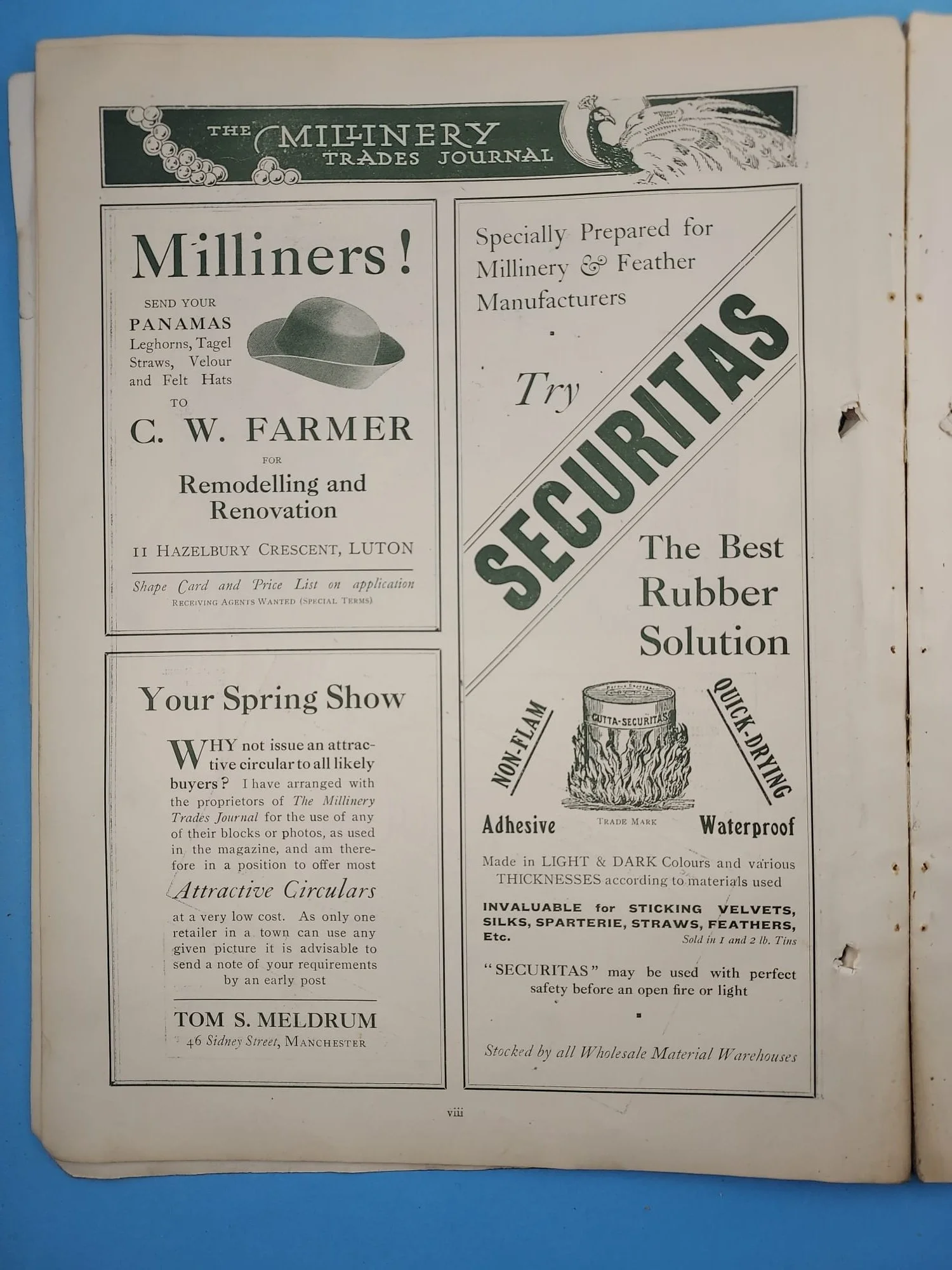
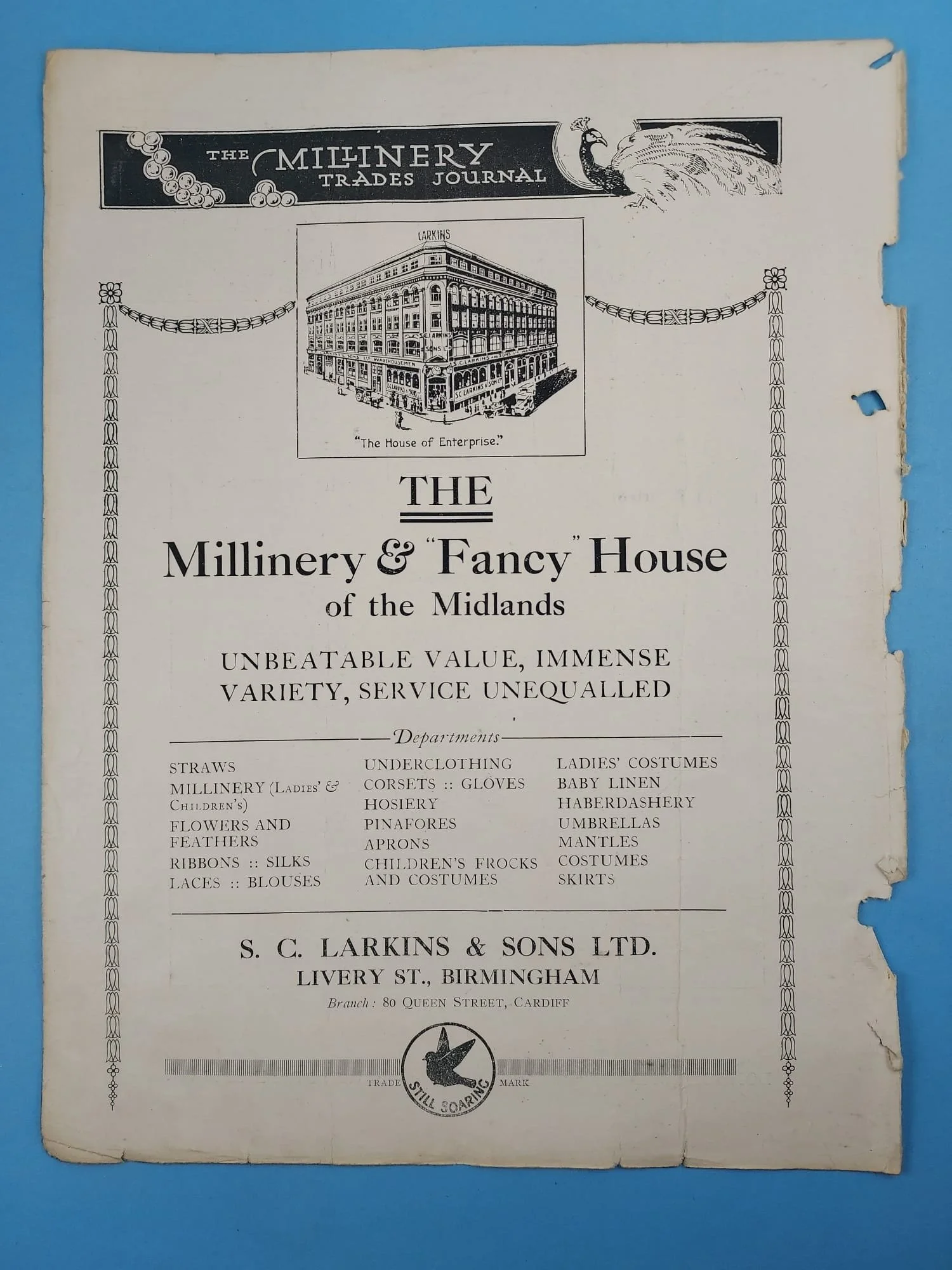
Mostly, the content was editorial, and many of the full-page ads were for the magazine itself. A selection is presented here. As can be seen, they are mainly for fancy millinery shops and individual milliners. There’s a clear impression that the advertising editor had his (or her) work cut out in those straitened times.