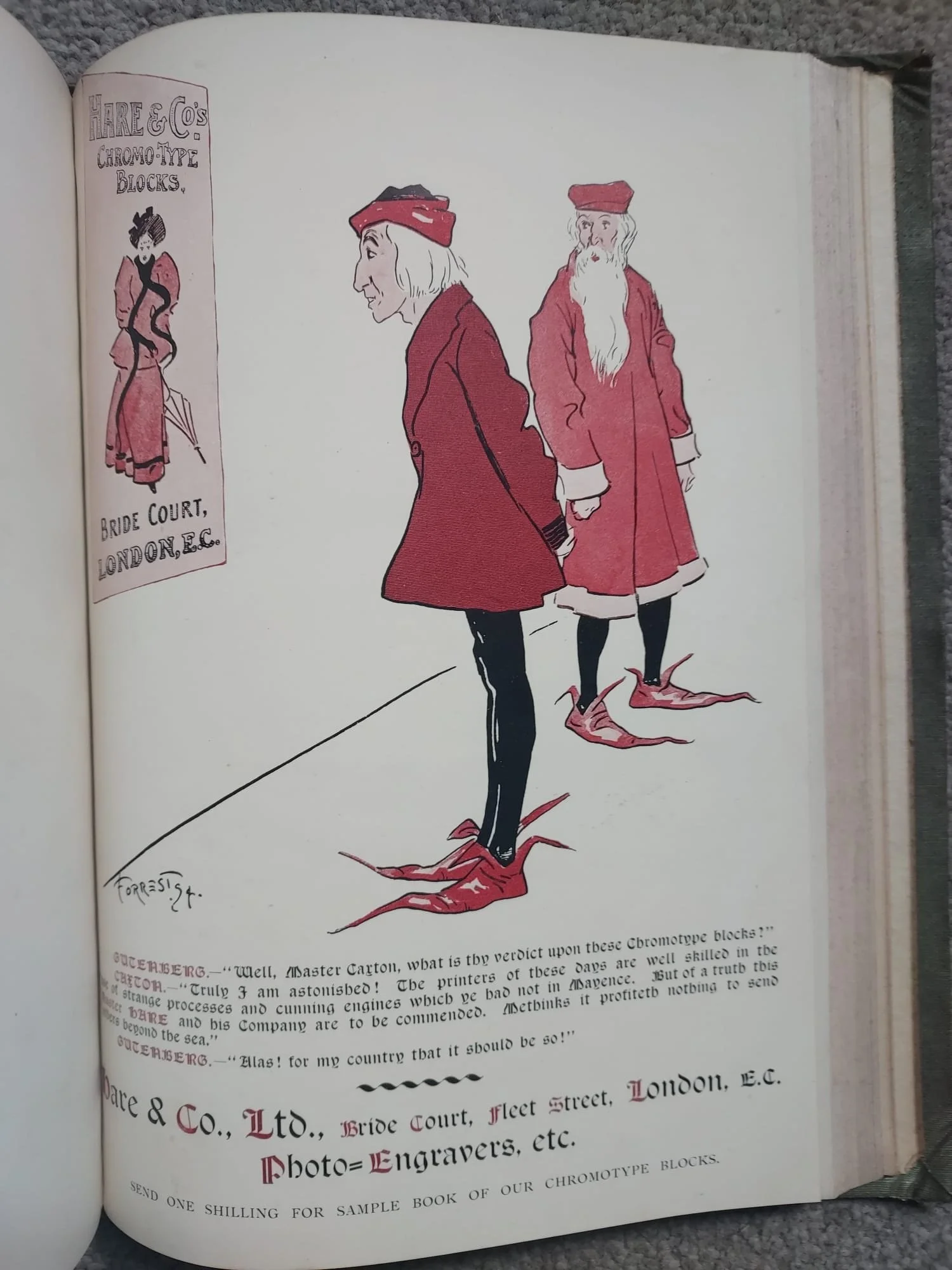
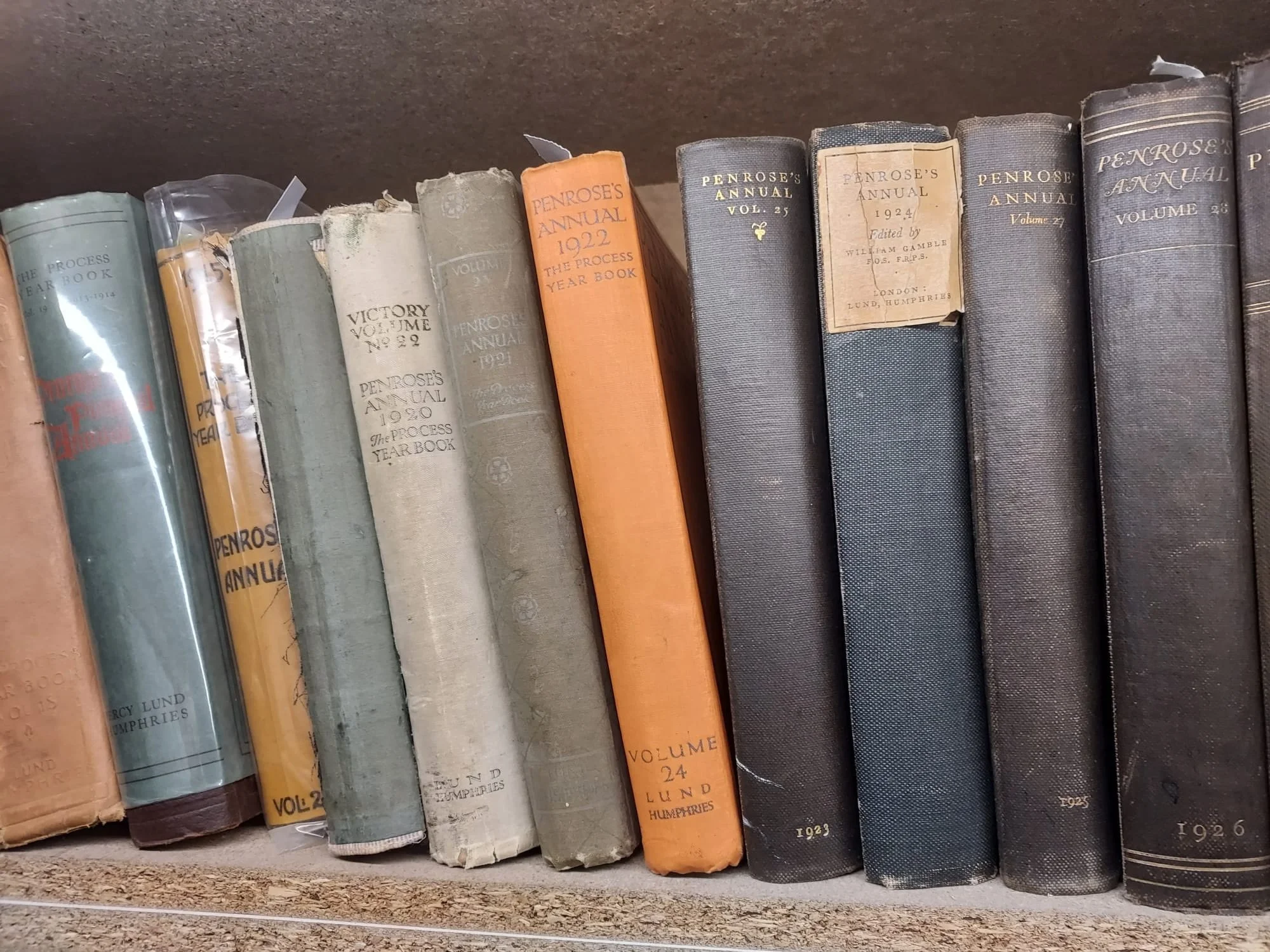
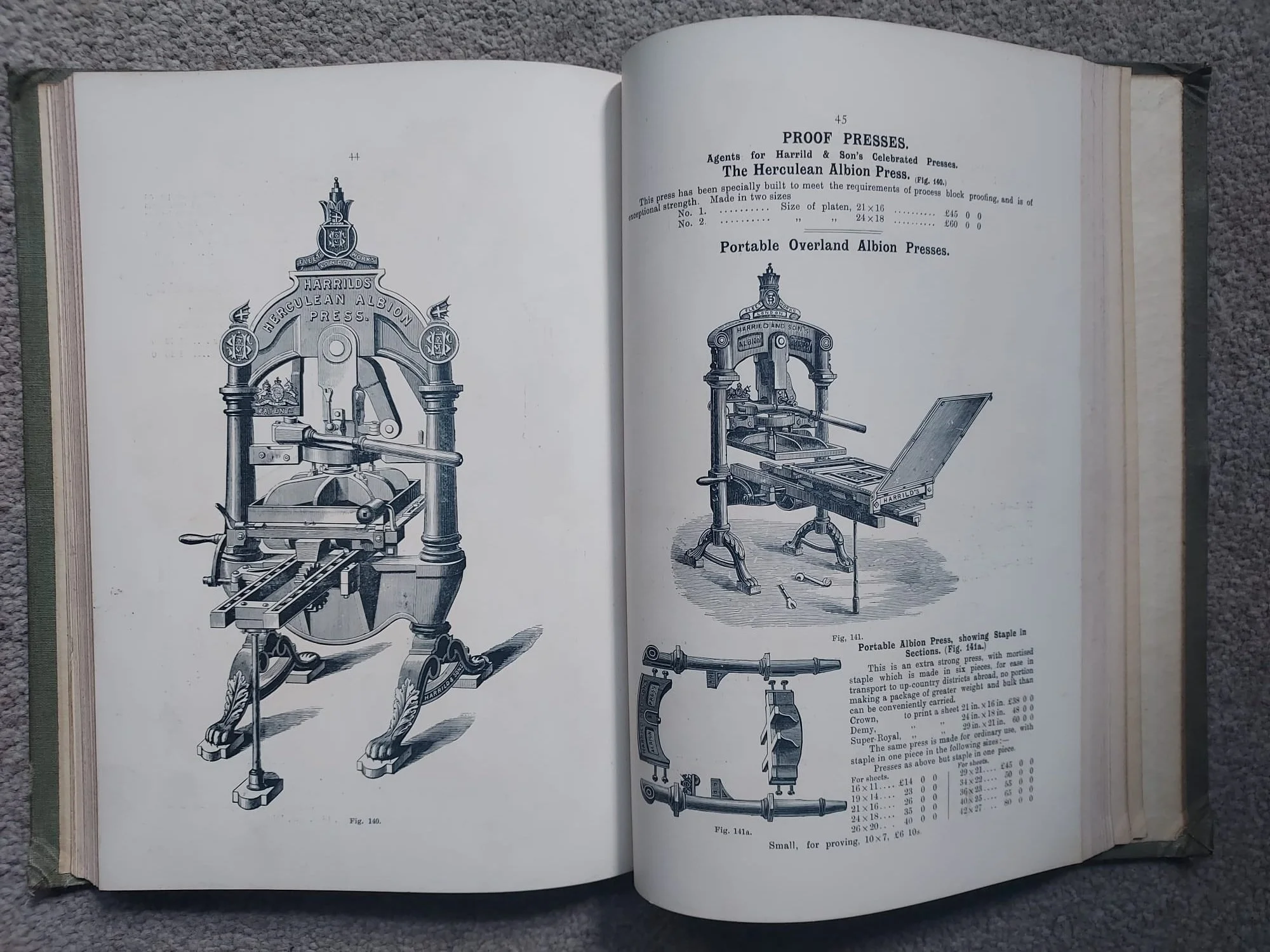
In a recent blog on Harmsworth’s Natural History, we mentioned some printing techniques – half-tone and photogravure – which hastened the reproduction of colour in print media around the end of the nineteenth century. Identifying techniques such as these brought to mind our collection of the ‘Penrose’ annual. Billed initially as ‘The process year book; a review of the graphic arts’, this was a substantial volume which ran from 1895 to 1982 (taking in 74 volumes), and we have a full set, less volume 2.
A yearbook, it showcased the state of the art of print media and offered technical articles explaining methods and included bound-in examples of the techniques discussed. Penrose’s catalogue ‘of all requirements for photo-mechanical processes’ was appended in those first few volumes, allowing us to see just how much the equipment to achieve all this cost – there’s a snap shown here.
The ‘Penrose’ was initially, then, a fancy catalogue given out to potential customers as a freebie. Soon, though, it had become a marker of annual progress, year on year, an edited collection, and printing companies instead bought space to advertise their printing techniques.
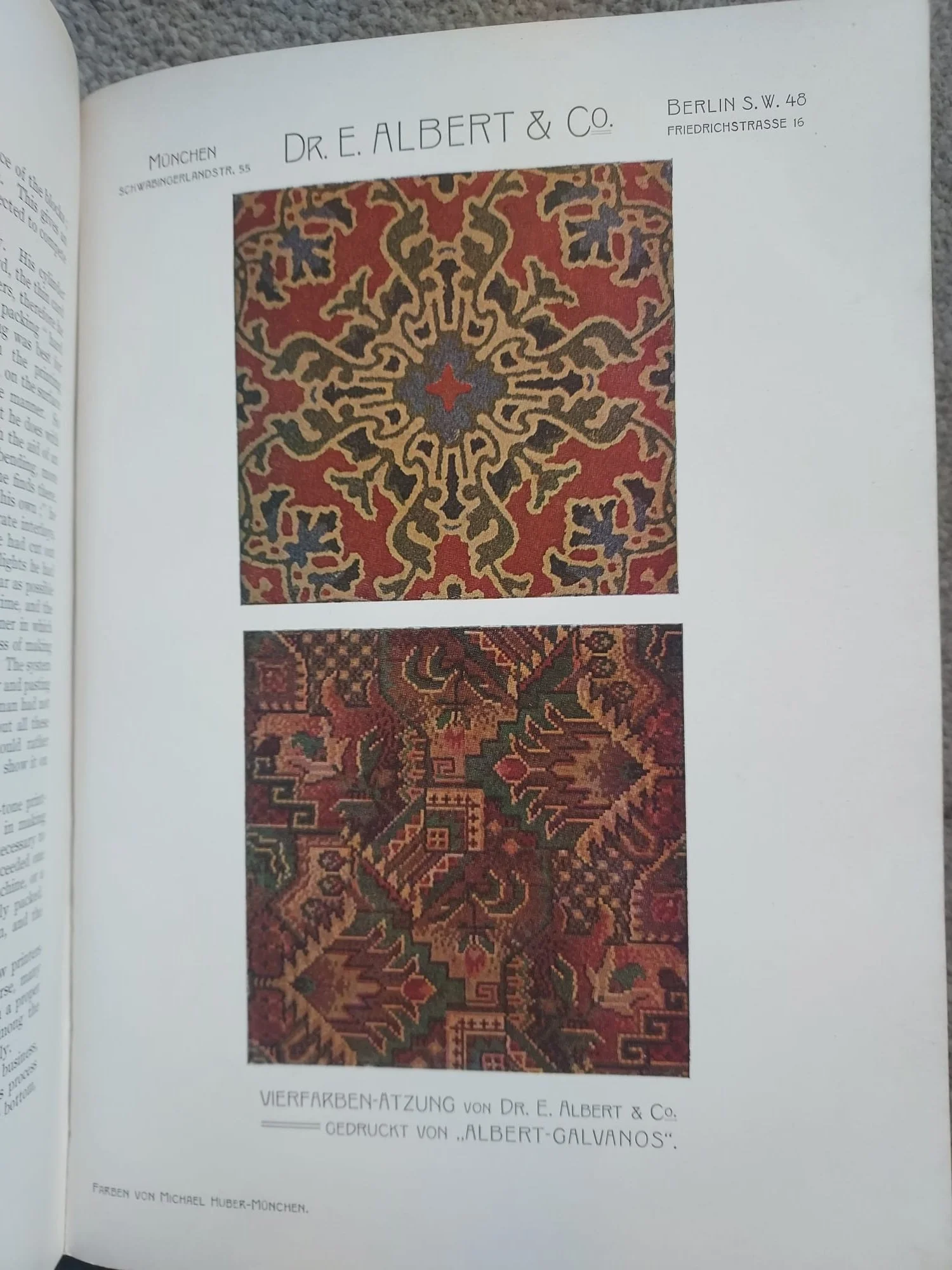
Flicking through the first few volumes of the ‘Penrose’, we see no colour, only monotone – seen here. This wasn’t because colour couldn’t be done - it could. But it was very expensive, needing an engraved plate to be cut for each colour. Each plate then had to be aligned correctly to overprint onto the previous colours. Another picture shown here is from the 1904-5 edition and shows the first attempts at full-colour reproduction - this used half-tone with no need for multiple plates. This new technique, with photogravure, caused the rapid decline in engraving, so that by about 1900 engravers had almost entirely disappeared.
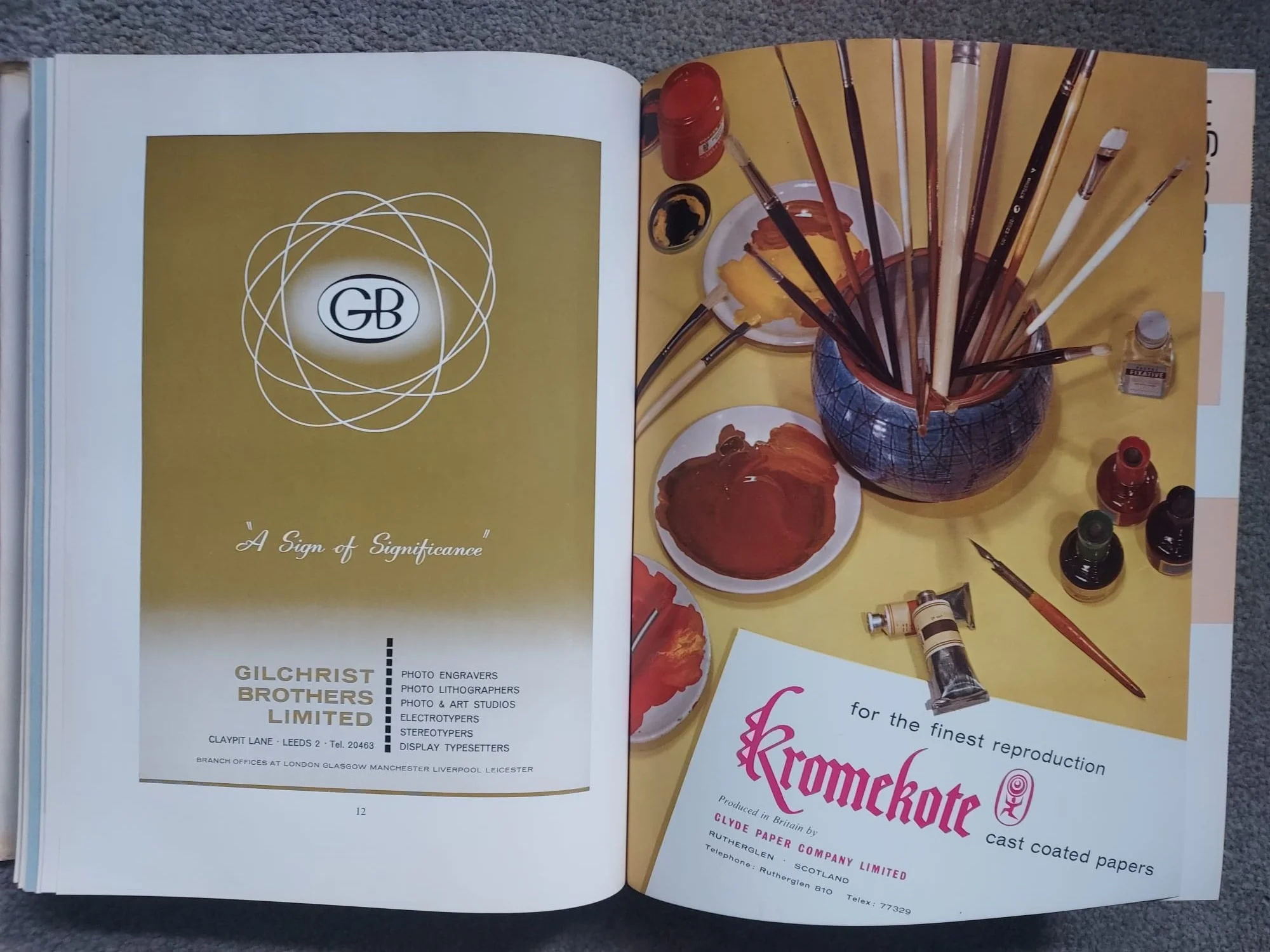
Just imagine, then, how impressive a colour cover, such as our 1911 Harmsworth’s Natural History, would have looked on the newsagent’s shelves in the period just before the First World War. The next picture here is randomly from the 1962 edition, by which time the use of colour was a given.
Now, if you know of a copy of volume 2 for sale, let us know…