78rpm record sleeves
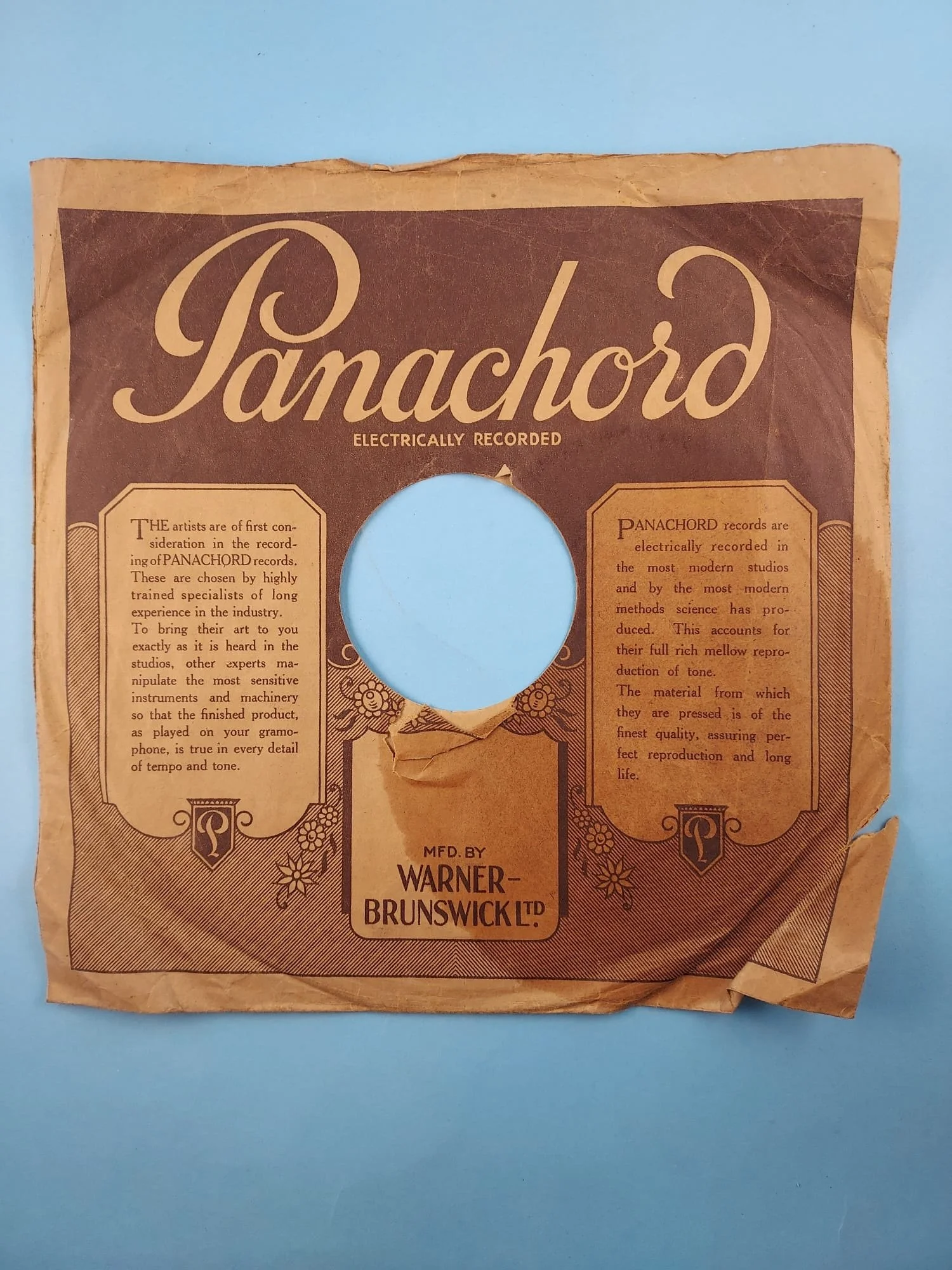
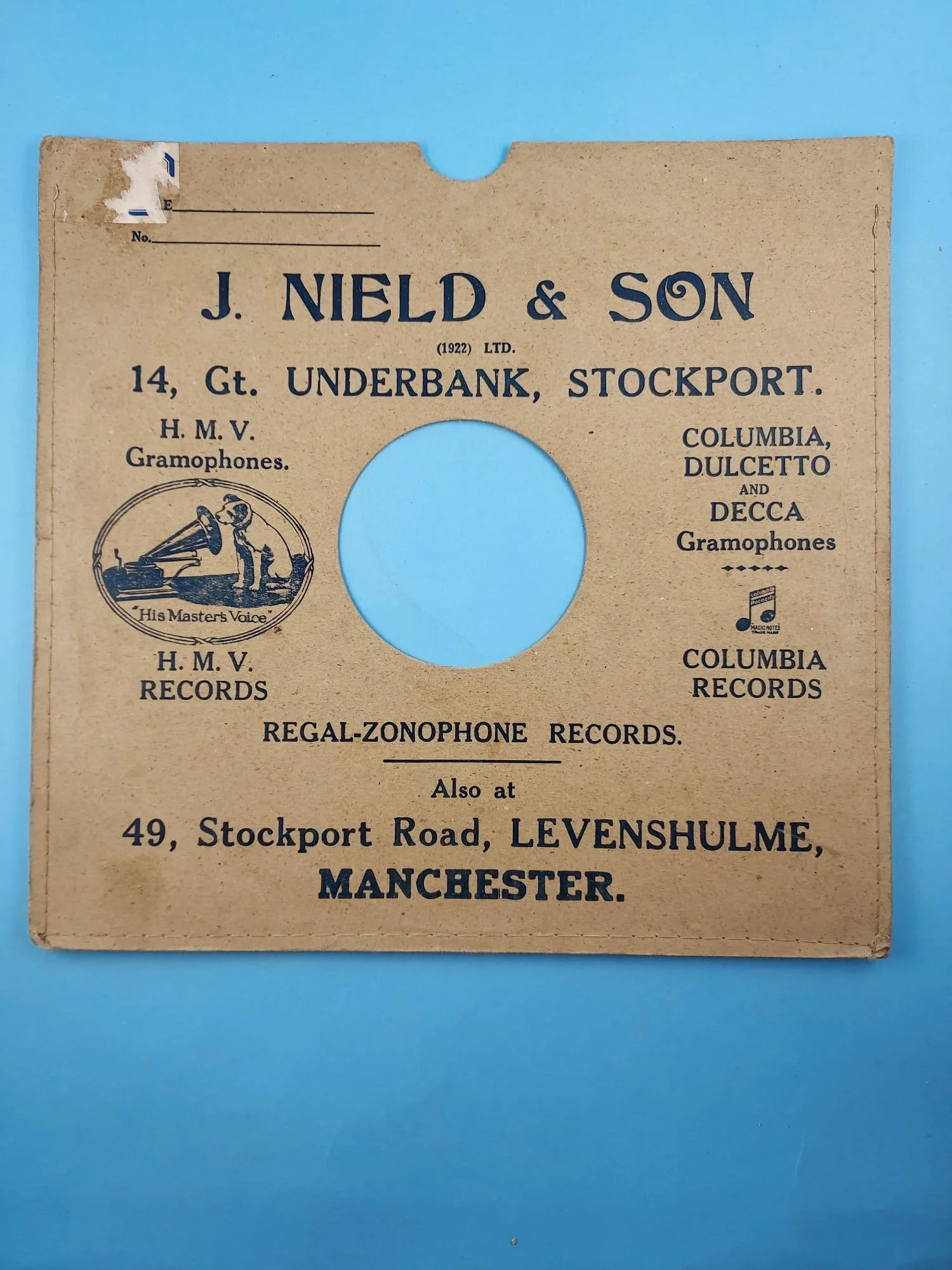
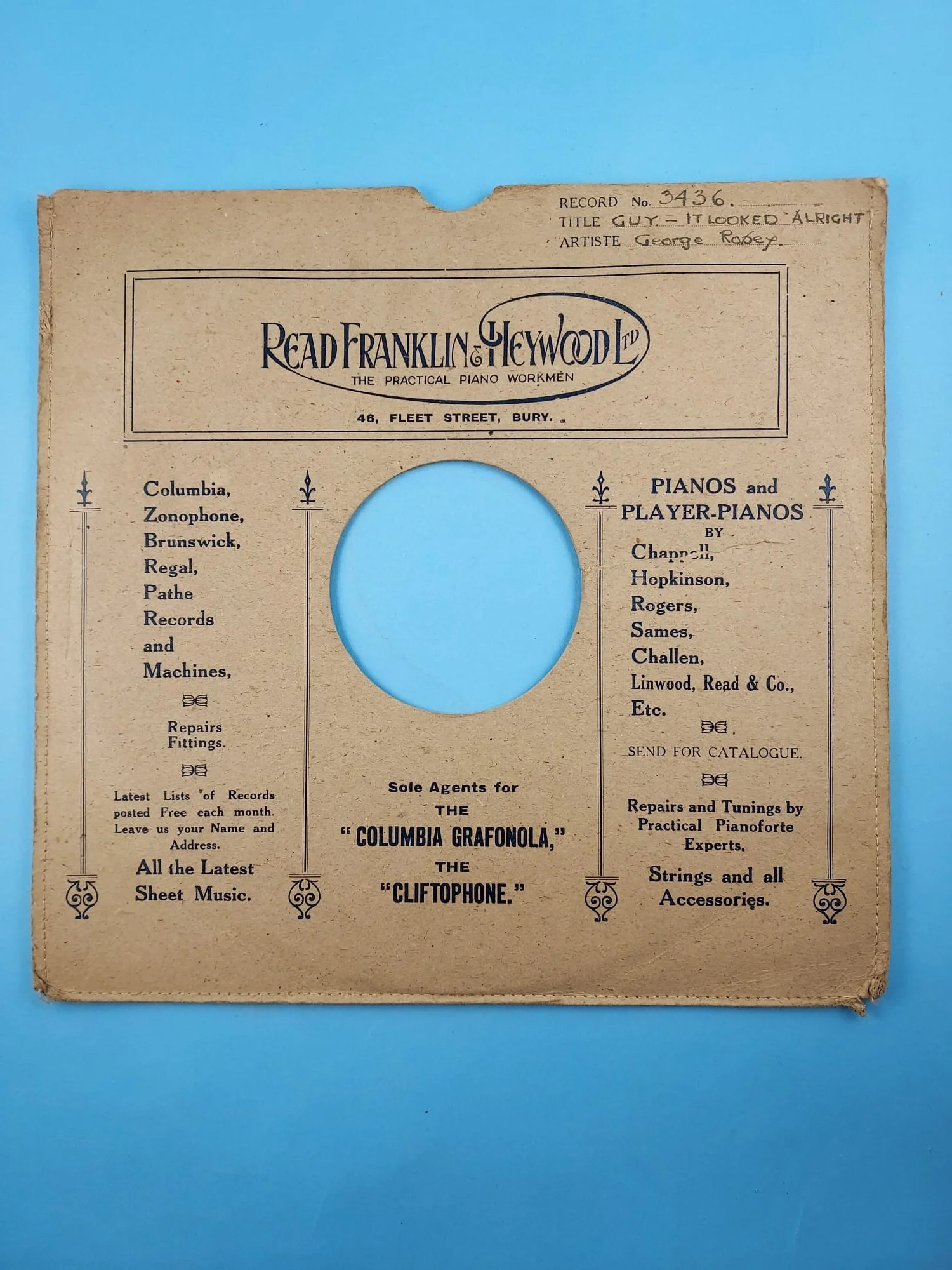
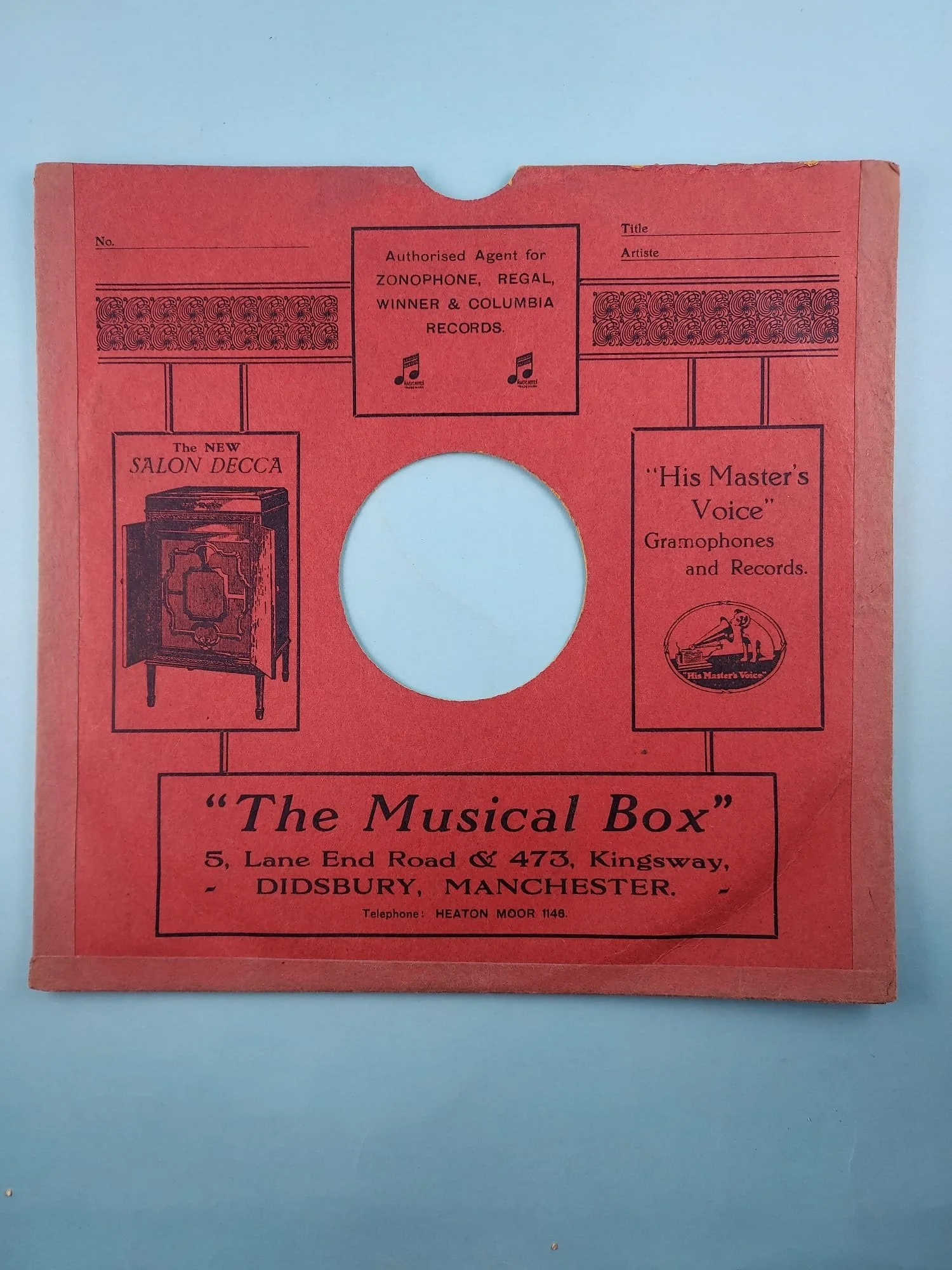
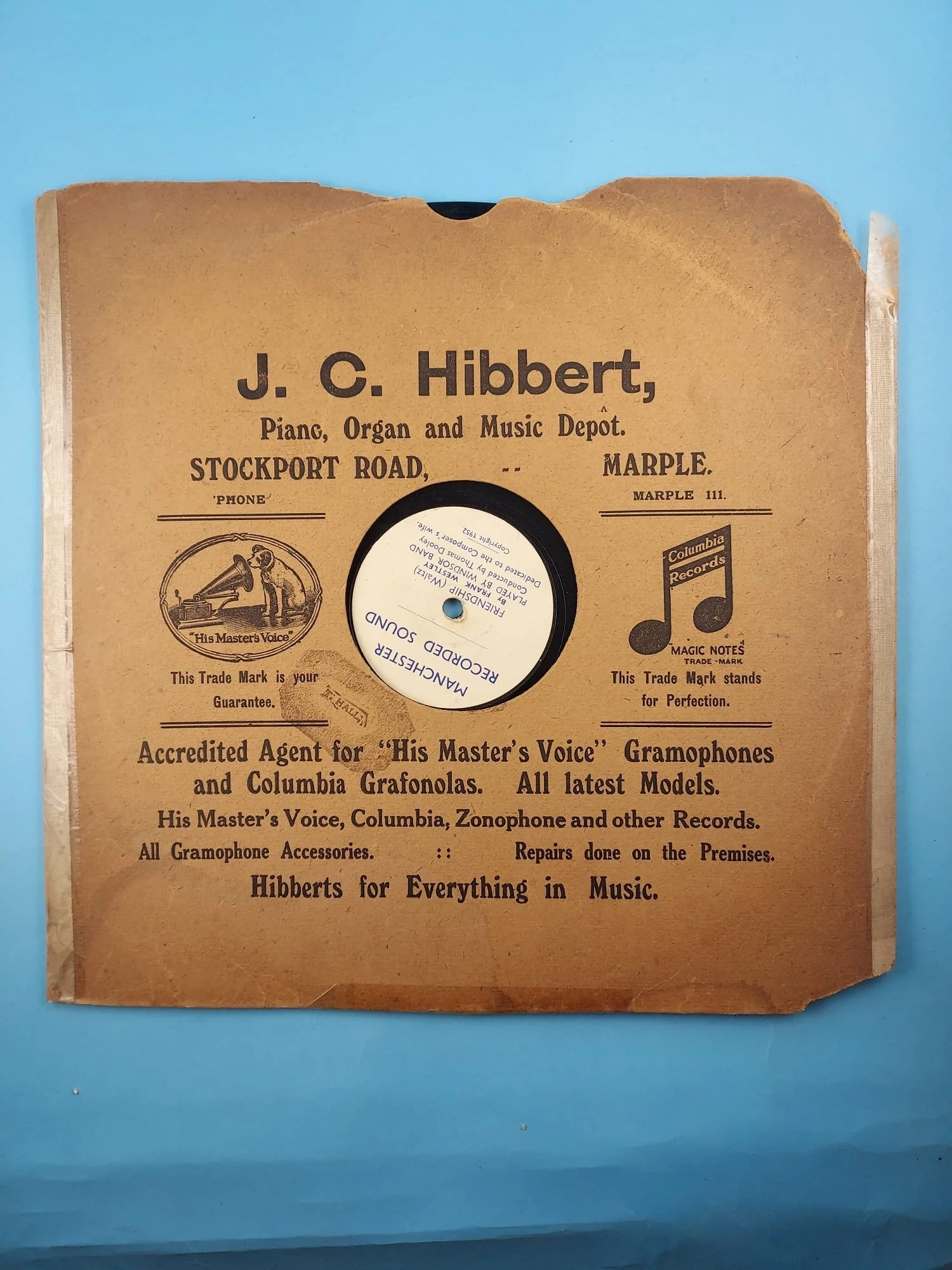
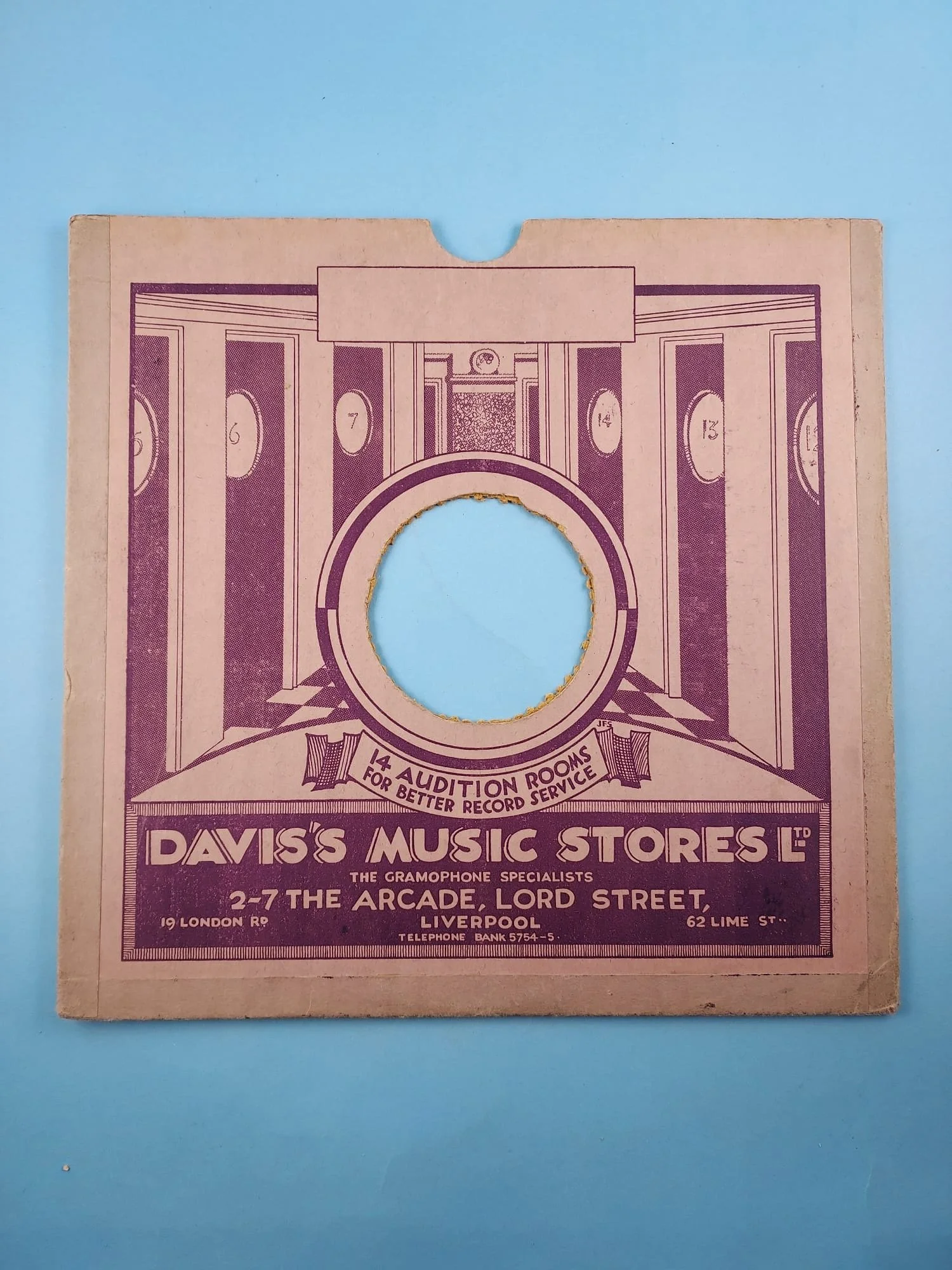
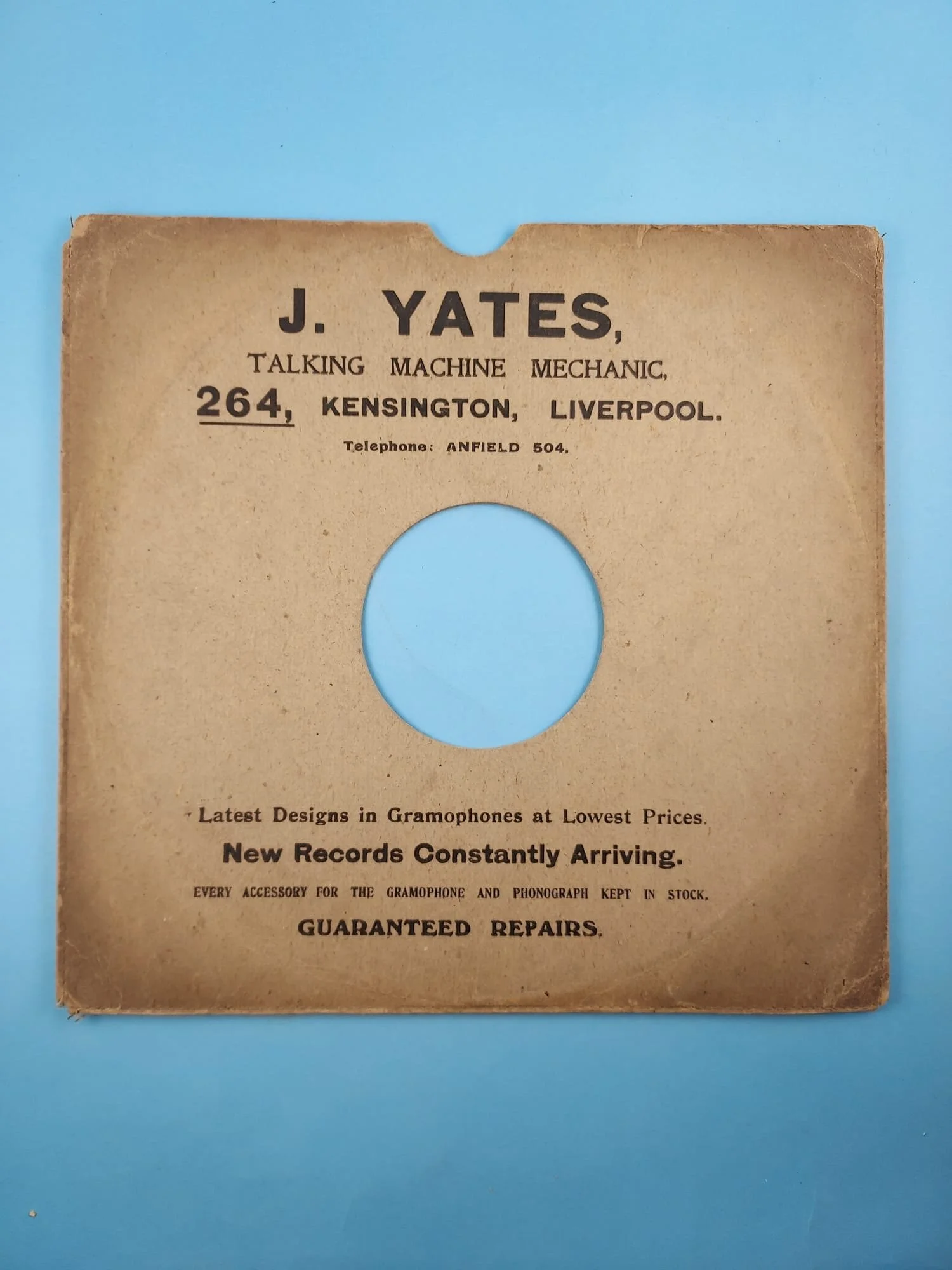
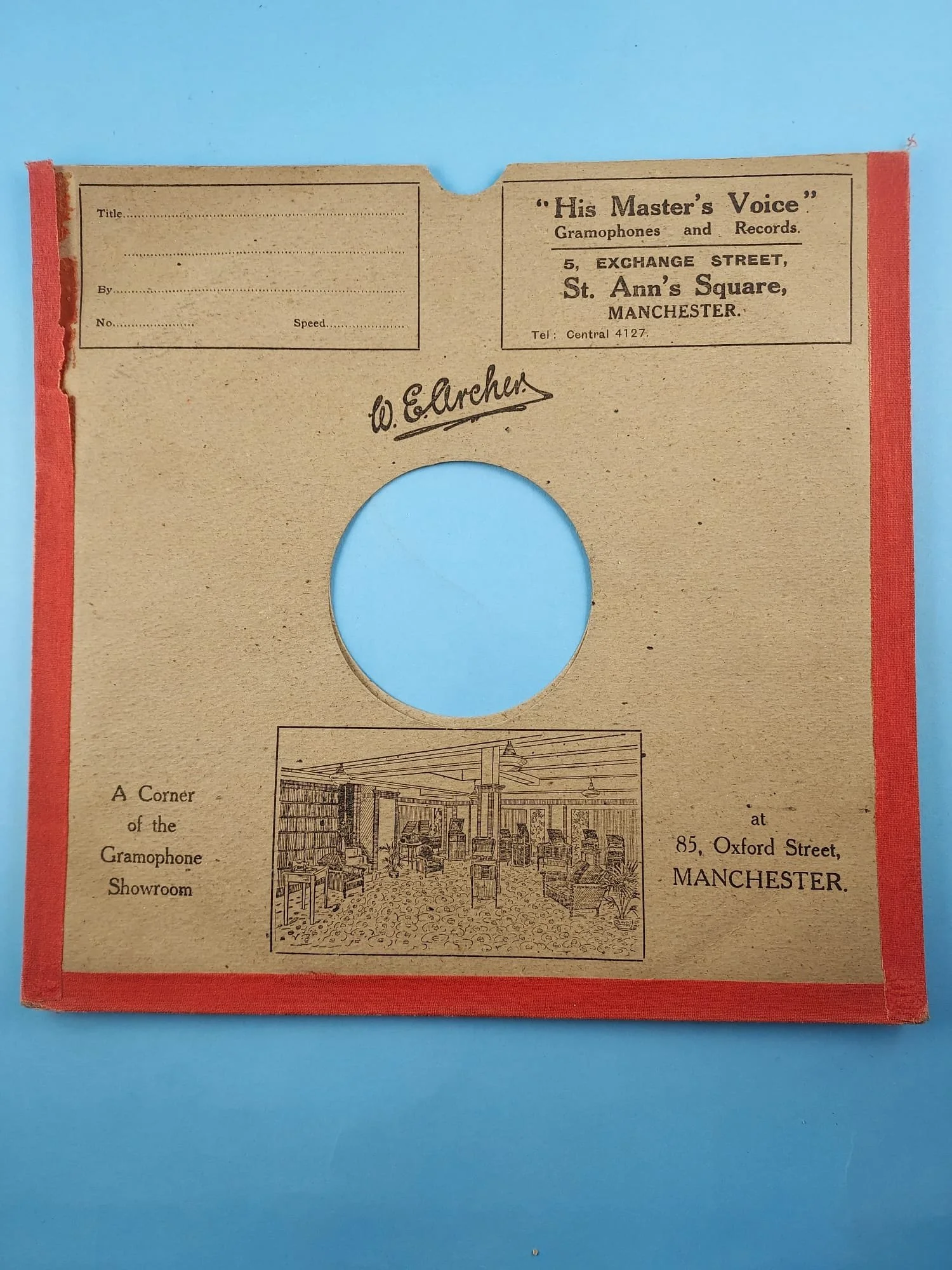
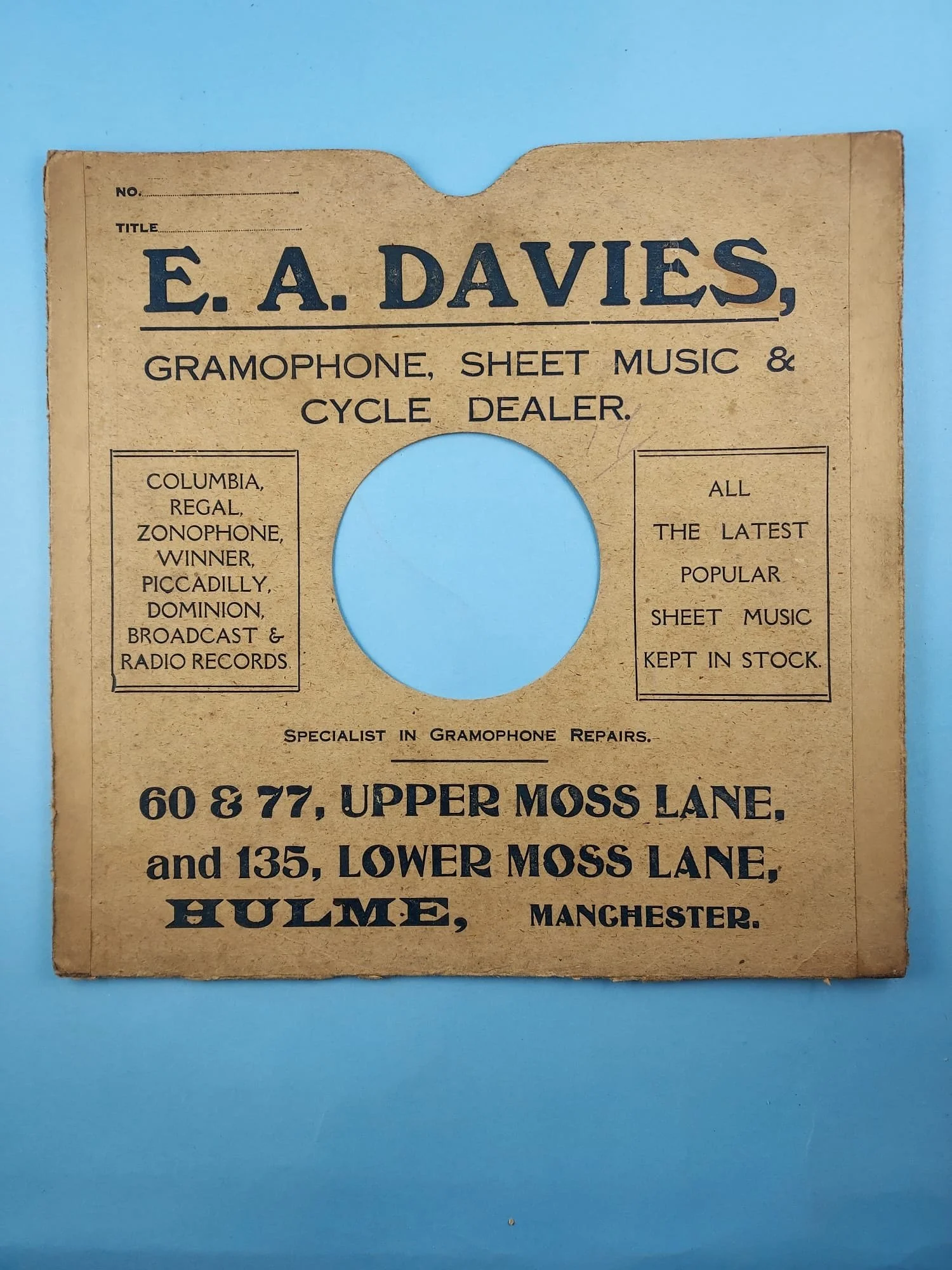
Just when I thought we had all bases of advertising covered – magazines, beer glasses, even bricks for goodness’ sake – I now find there is another. This is the record sleeve, and entirely coincidentally, we received three batches of them – about thirty in all – all in the same week.
Now that the ‘vinyl’ record is having something of a revival, most of us will know of the 33⅓rpm 12-inch record, or the 45rpm 7-inch record. These are all made of PVC or vinyl, using a technology that allows up to 25 minutes or so of playing time per side. These will all come with highly stylised covers unique to the record within.
I now realise it wasn’t always like that. The vinyl ‘long player’ (LP) was something of a johnny-come-lately, only really appearing from the 1950s. Before that, records were (usually) all 78rpm, and 10-inch. They were made of ‘shellac’ which, with the dizzying rotation speed, only allowed a few minutes’ playing time. Plus, they all came in a flimsy paper sleeve provided by the record manufacturer, itself a bit of advertising – see the Panachord picture – identifying the company but telling you nothing about the record within. When the customer bought the record, the assistant would then exchange the sleeve for one of their own, made of stout cardboard with, printed usually just on one side, the name and credentials of the record shop. Thus, the customer gets a better cover to take their precious record away in, and the shop has performed a crafty bit of advertising.
Our record sleeves, then, are from the 1950s or earlier, and are intended for any record. Indeed, some of the sleeves have space for the customer to write in the artist and song for the record within. Instead, the information they do give promotes the record shop. See, for example, the J.C. Hibbert sleeve, which tells us it was a ‘piano, organ and music depot’ based on the Stockport Road in Marple. Hibbert’s were ‘accredited agent for “His Master’s Voice” gramophones and Columbia Grafonolas’. They sold, we learn, ‘all gramophone accessories’, with ‘repairs done on the premises’. I see that the archive at Marple Local History Society has one of Hibbert’s sleeves, but their layout is different, giving us evidence that the designs evolved, probably as the function of the shop changed.
What’s clear immediately is just how many record shops there were. Every small town would have had one. Our sleeves are for the Manchester and Liverpool area, and taking the former, we find J. Nield’s were in Levenshulme, Shepley’s in Rusholme, Wagstaffe’s in Openshaw, Stephenson’s in Denton and so on. E.A. Davies in Hulme were a ‘gramophone, sheet music and cycle dealer’. Stephenson’s also sold radios and televisions. J. Yates of Liverpool was a ‘talking machine mechanic’. Several sold pianos and other musical instruments. This all points to a number and variety of shops on everyone’s high street long since gone.
We’re looking out for more of these record sleeves, so please let us know if you have any to donate. Meanwhile, our next task with the ones we have is to try to date and catalogue them. If you’d like to help us, get in touch!