The Wide World, ‘The true adventure magazine for men’, 1939–63
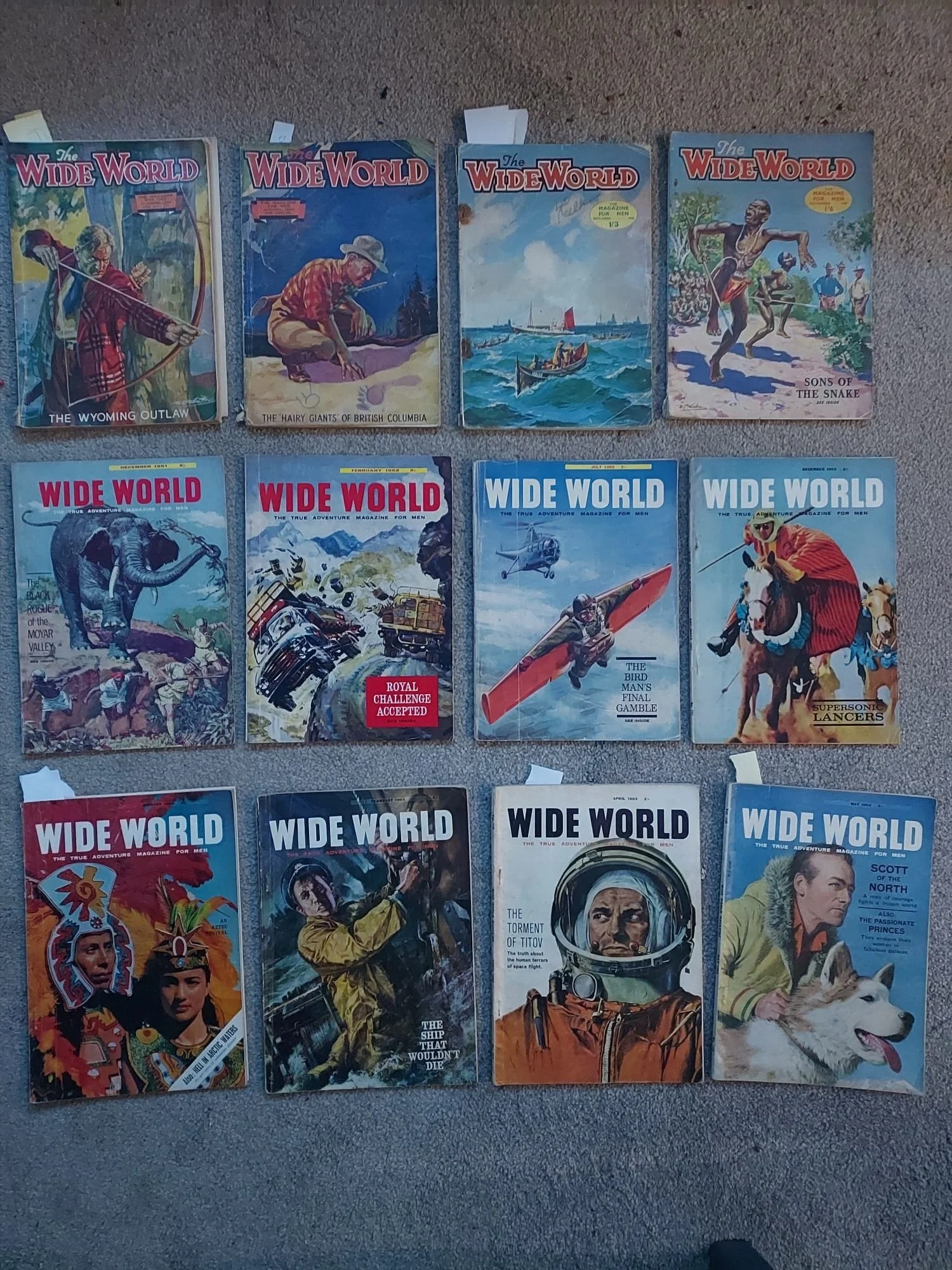
The British magazine The Wide World, subtitled ‘The true adventure magazine for men’, would have had a solid readership when it was first published in 1898. After all, there was the Boer war kicking off, and Africa was still being carved up by the British and the Europeans. By the 1960s, though, it was a rather different world, and with the rise of cinema news reels, television and countless similar magazines, the format had had its day: The Wide World closed in 1965.
We already had a set of The Wide World from 1952 to 1965, and other scattered earlier copies, but twelve new copies recently came to our attention. These are from 1939 to 1963, with most in the later period. This means we’ll now have duplicates, and we will have more ads for our product files.
The magazine had a small format, probably a bit bigger than A5. In 1939 it was a shilling, rising progressively to two shillings in 1963. It was published on good quality paper, and is entirely in black and white apart from the cover. Within are accounts of daring expeditions and discovering lost tribes, all, as far as I can tell, based on some sort of reality. By the 1960s the contents are organised by featured country. Taking the May 1963 issue, we come across the trader who lived on Baffin Island, the hidden village in Bali, the slaves and concubines in Saudi Arabia and the quest for the lost city of Paititi in the Andes.
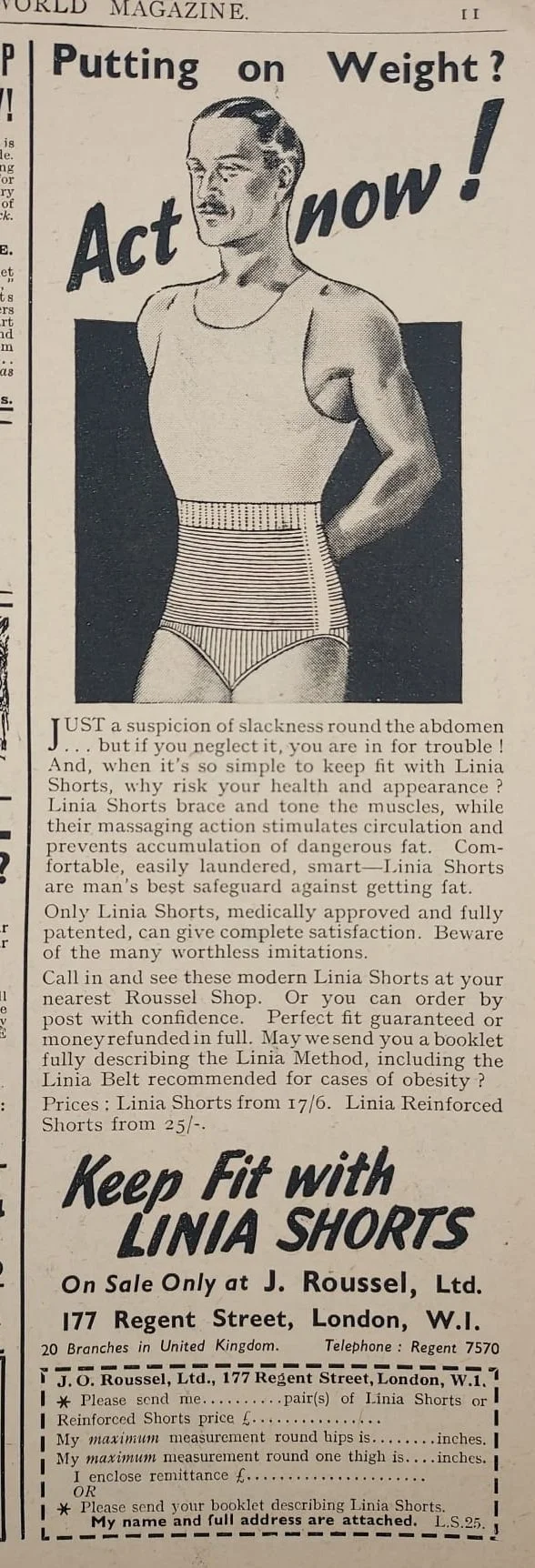
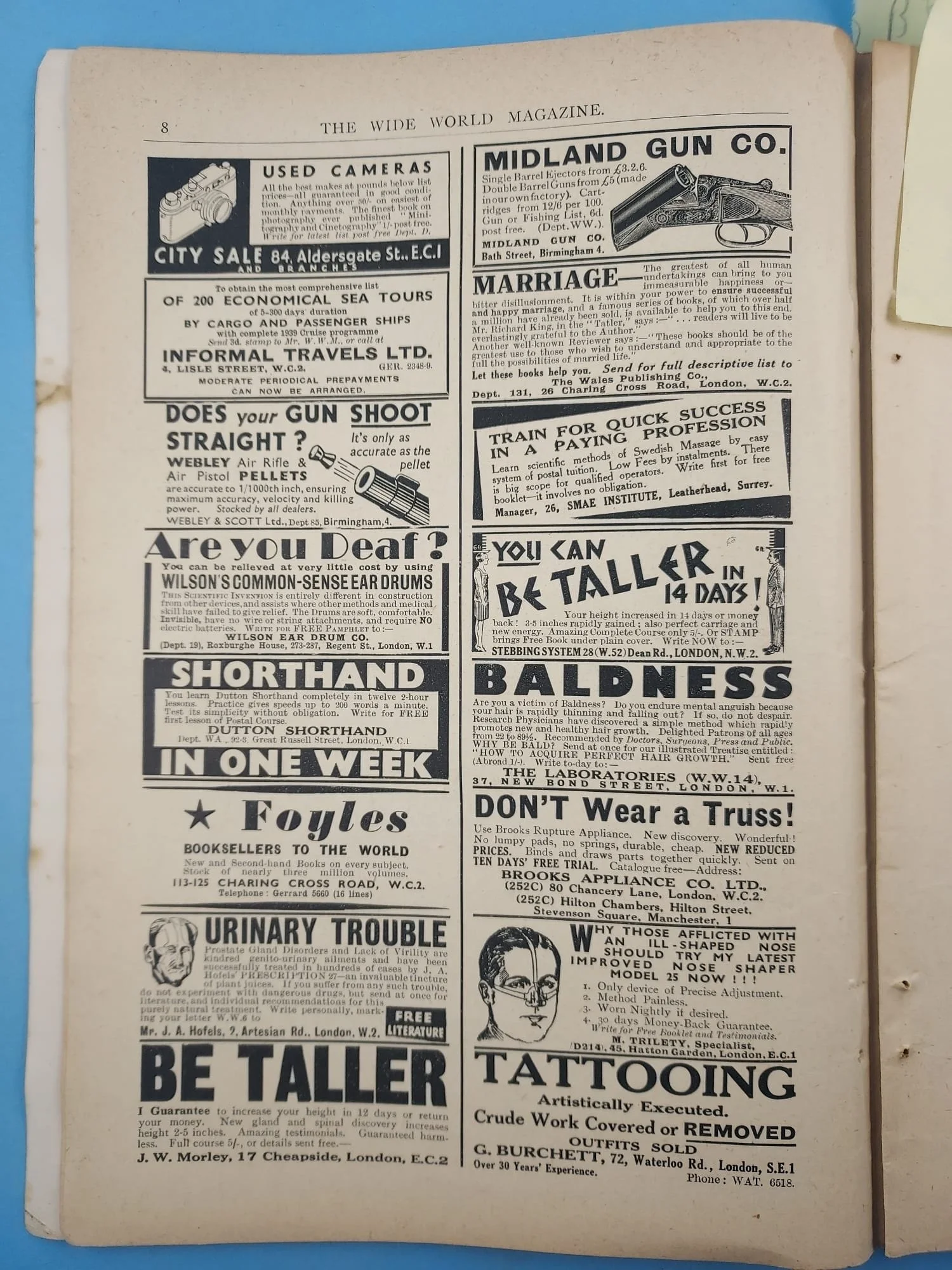
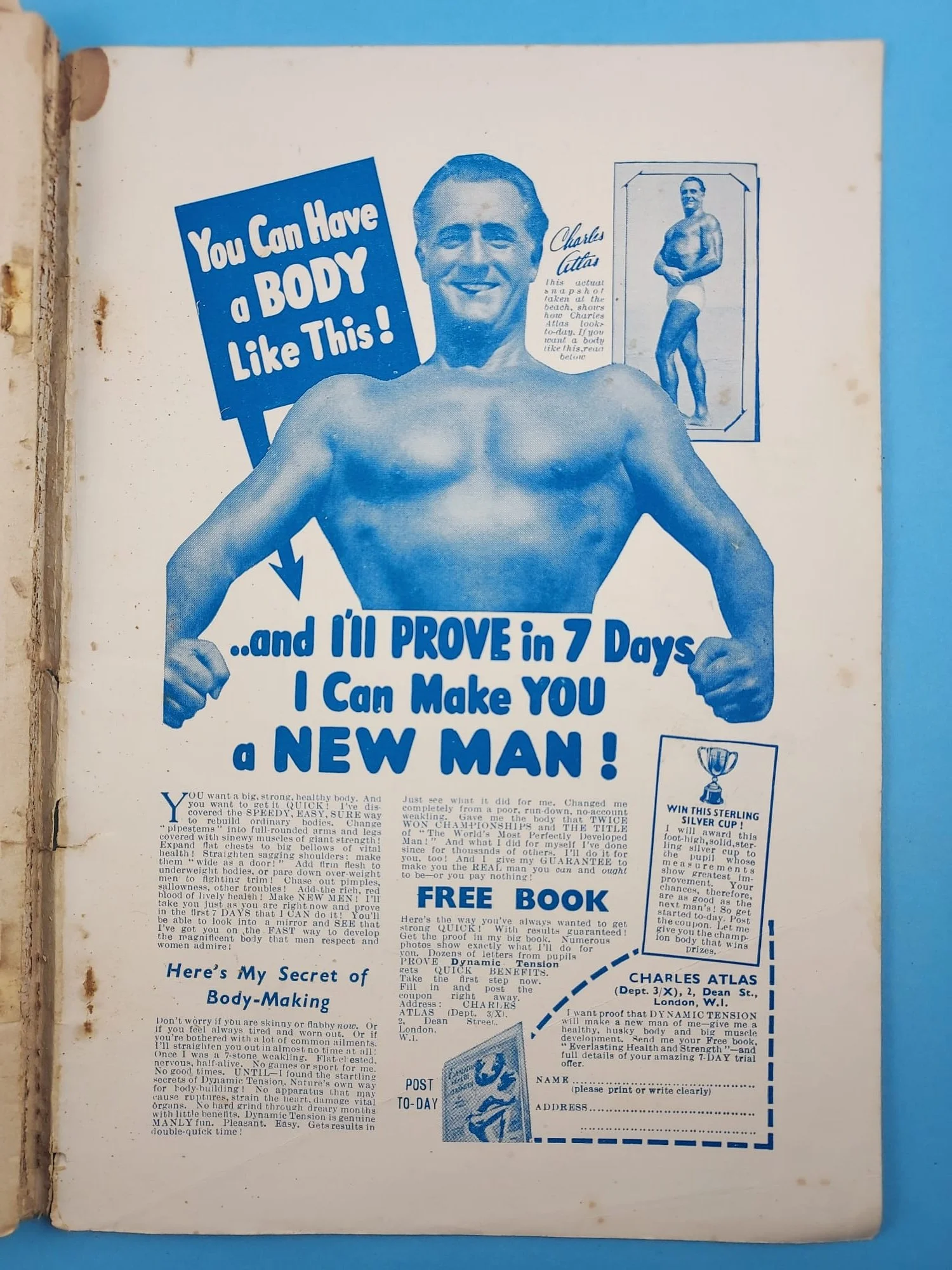
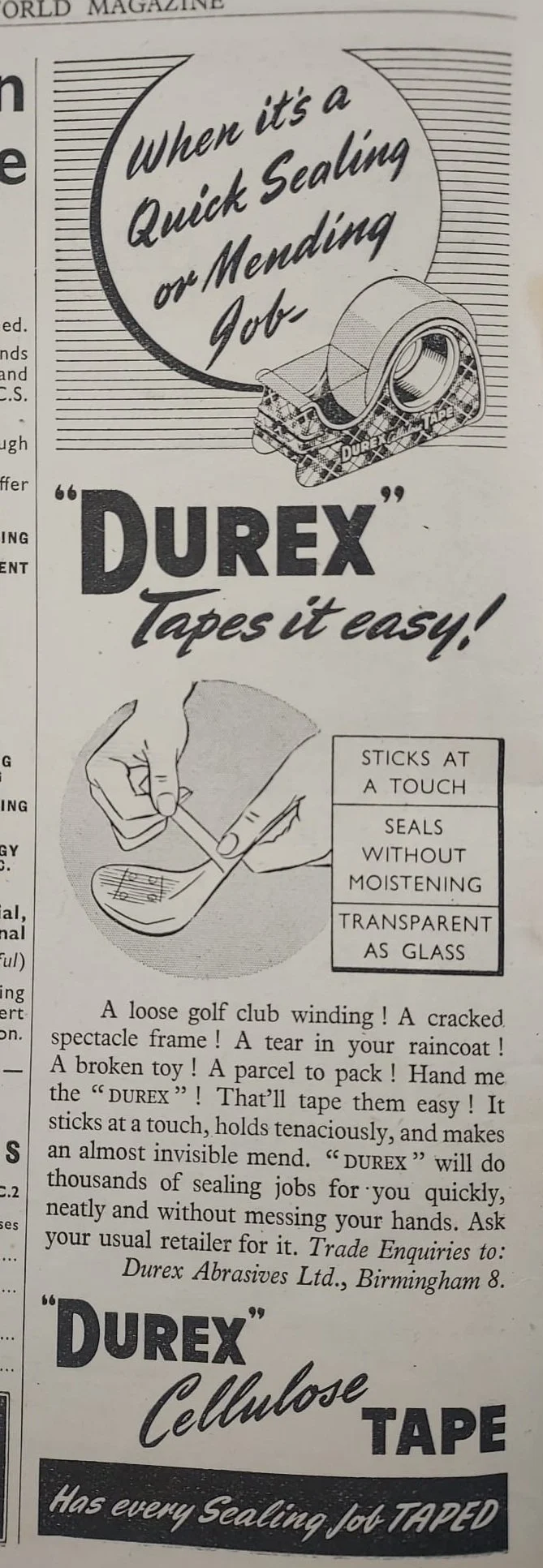
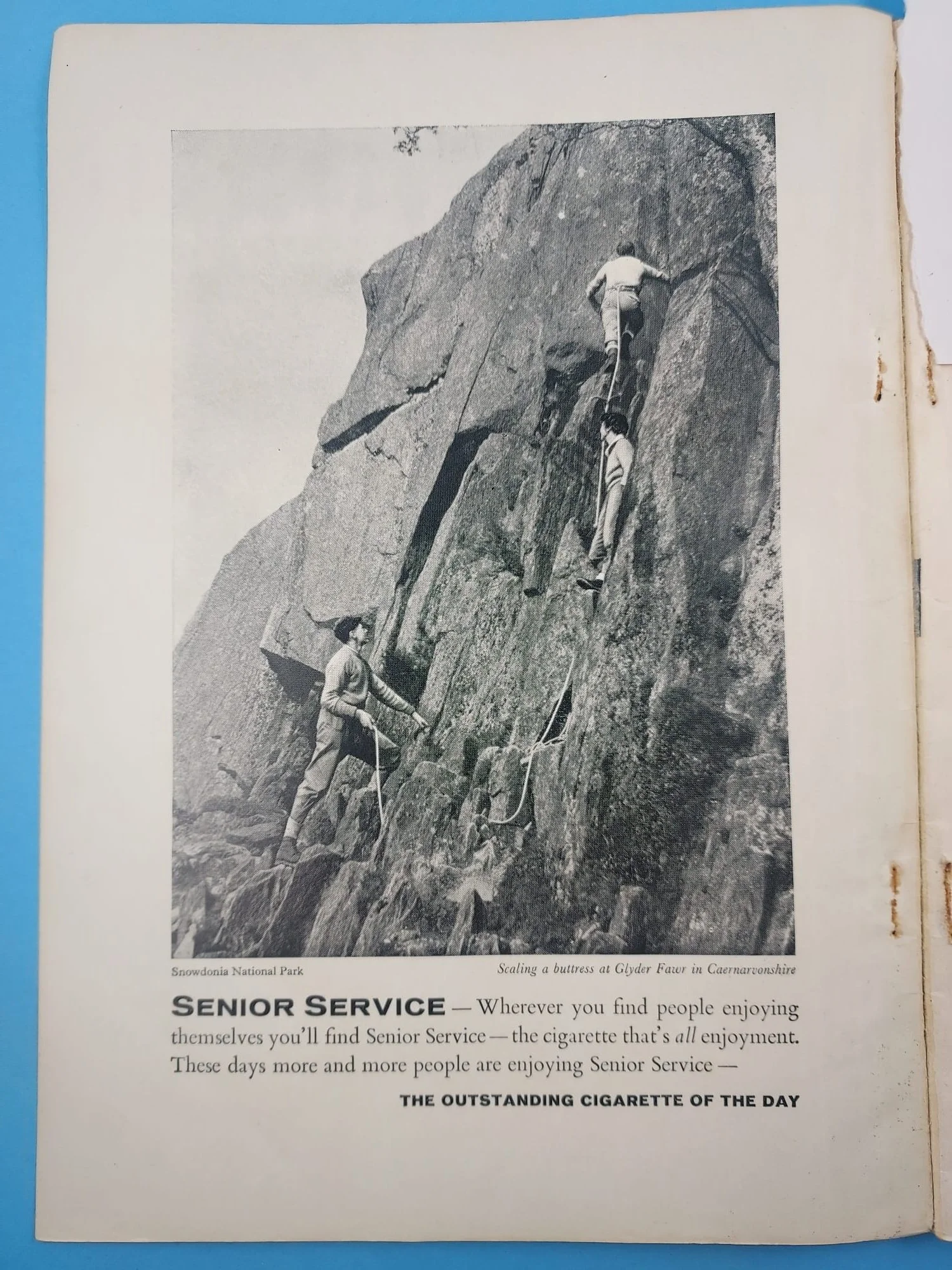
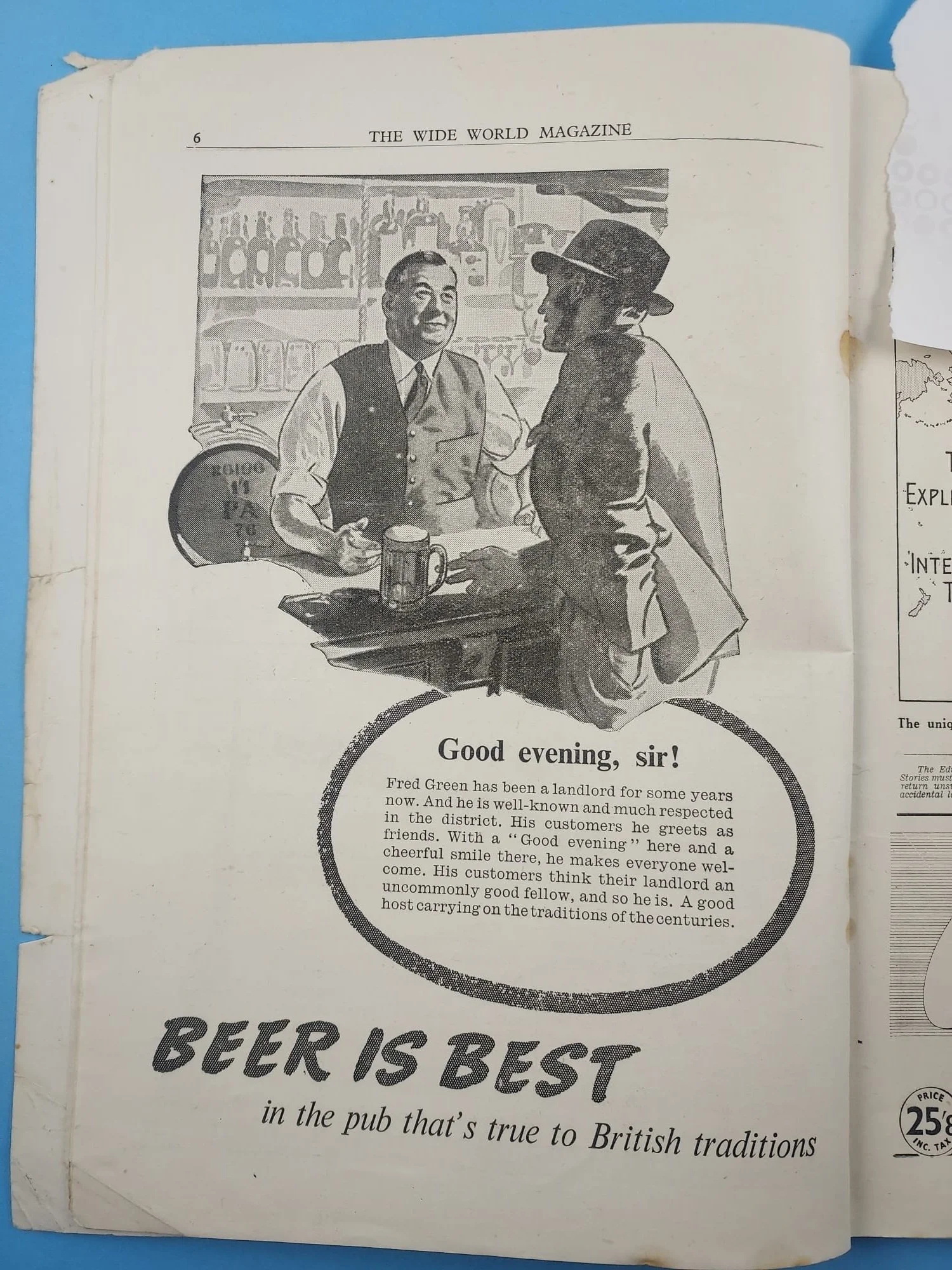
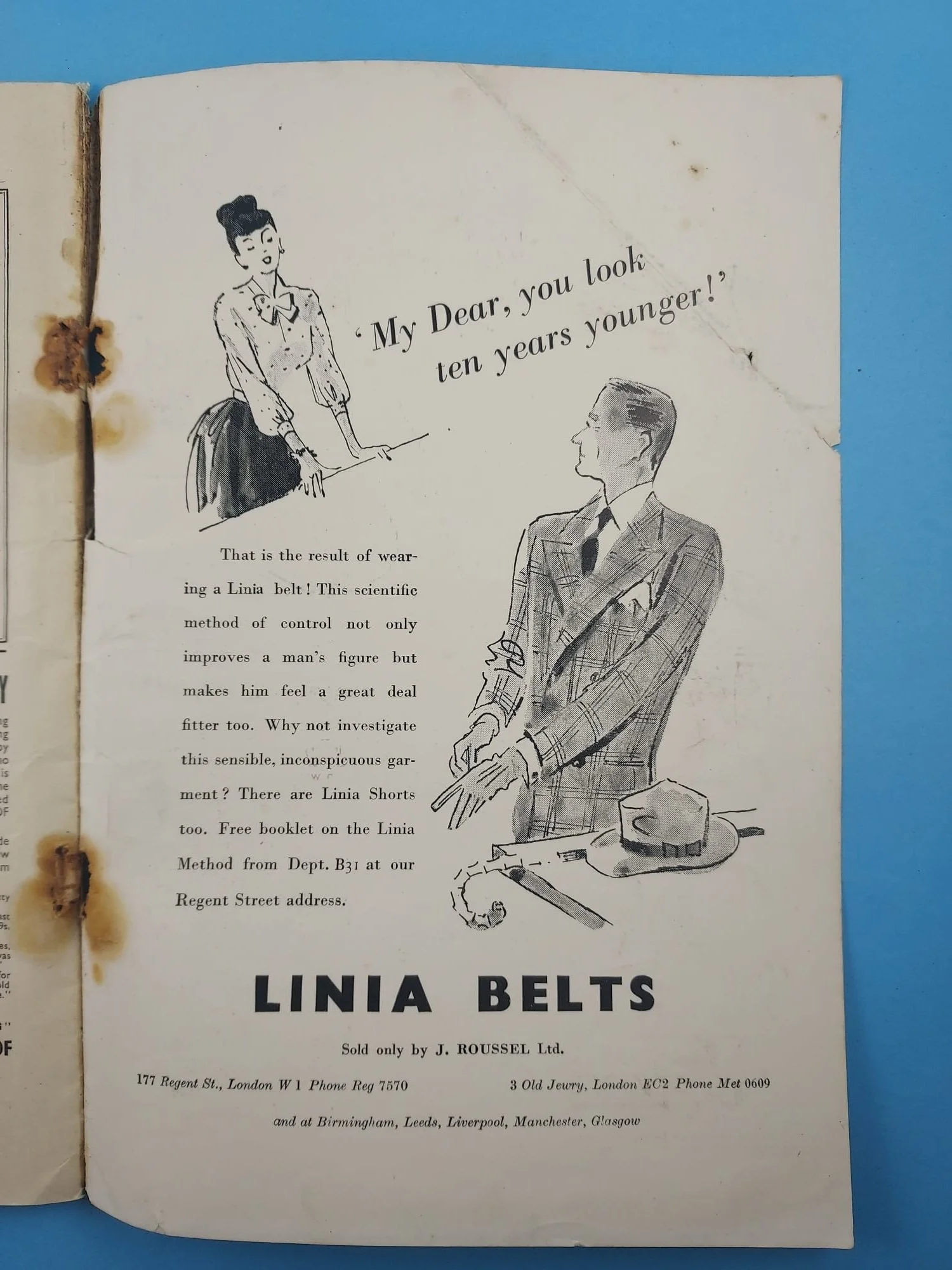
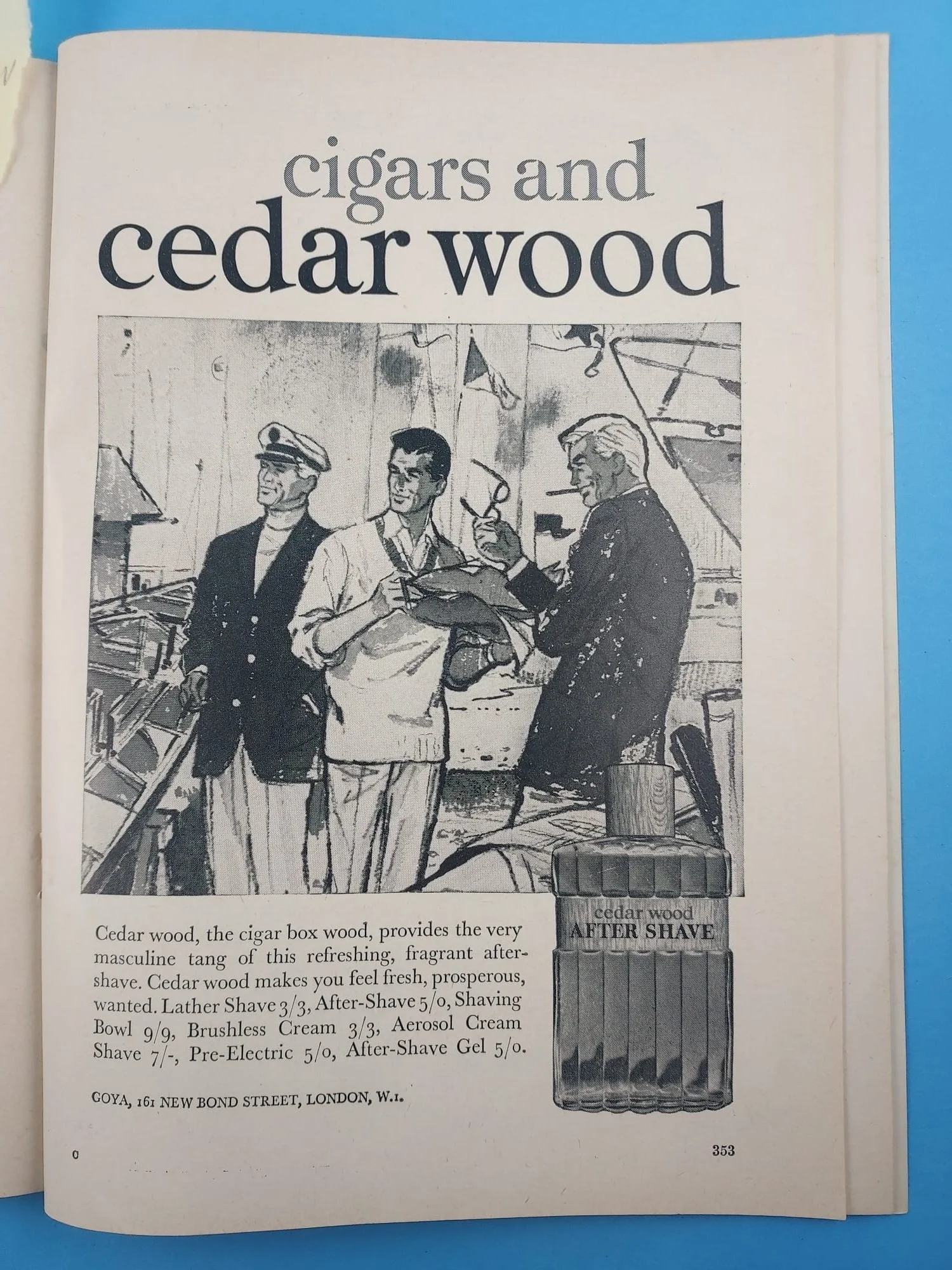
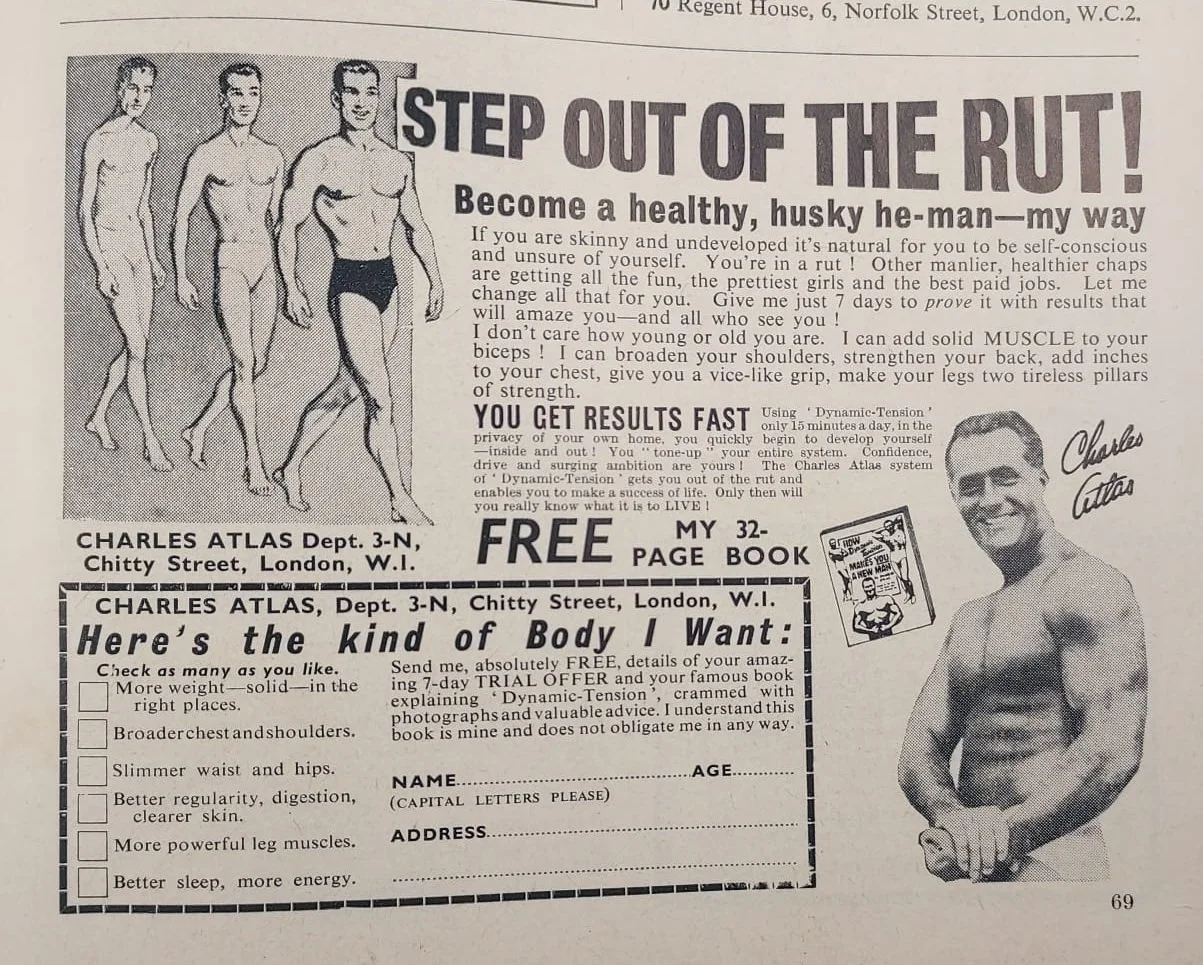
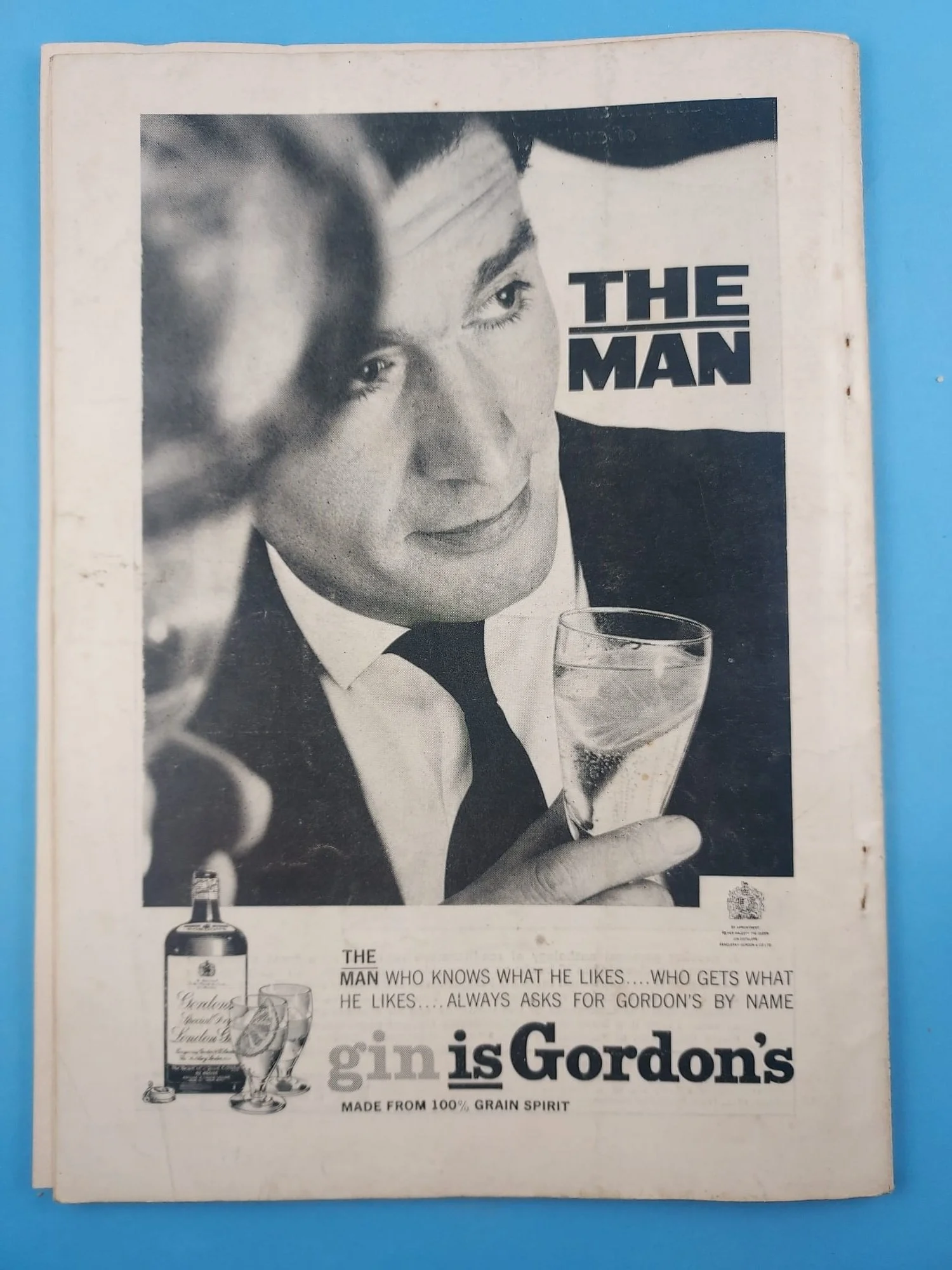
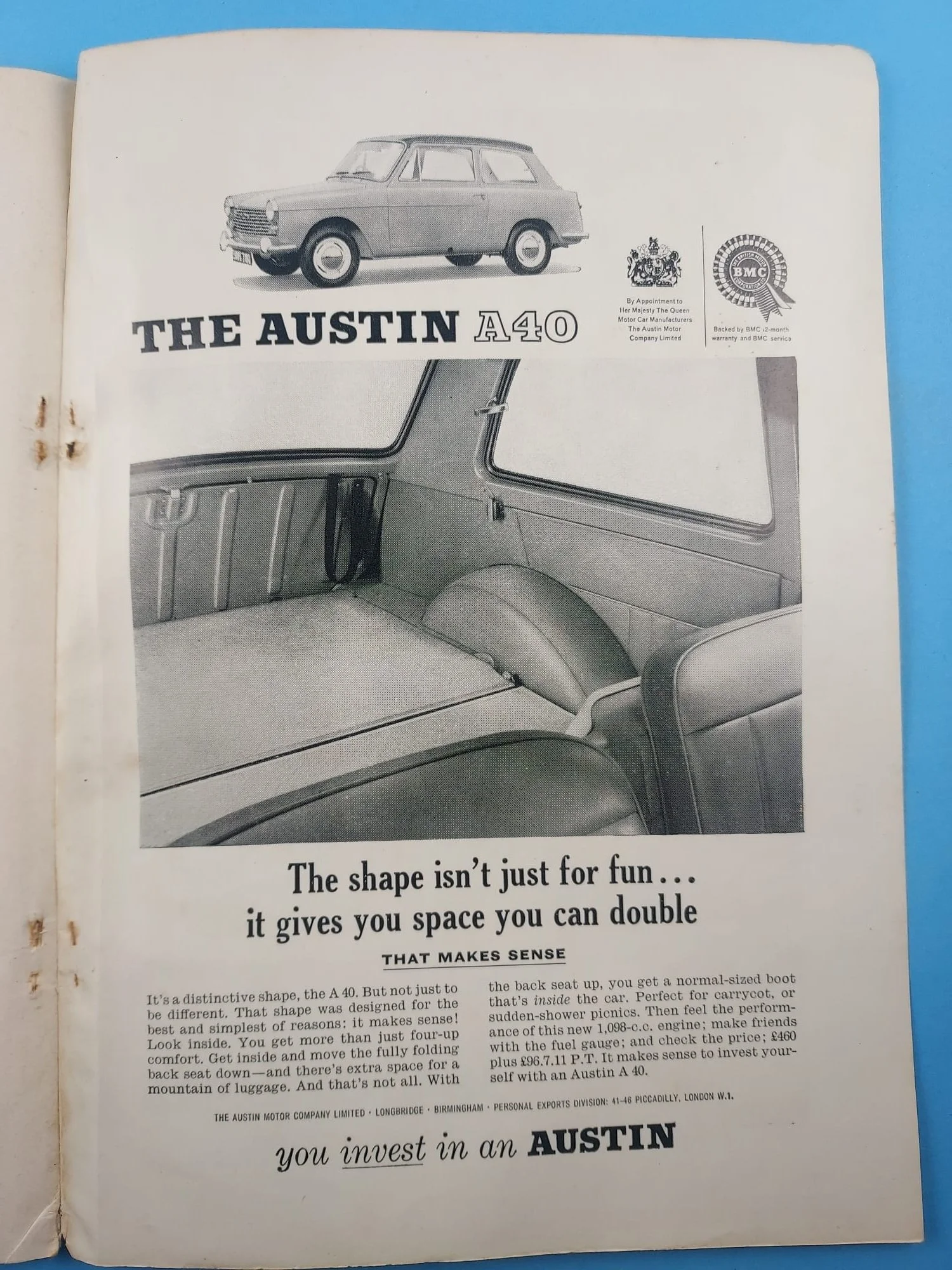
By the 1960s, as closure beckoned, ads are starting to get thin in proportion to editorial. Skimming through, there are a lot of ads for the man who wants to be, well, a real man, hence the Charles Atlas bodybuilding course. Then, having become that real man, you’ll be enticed by ads for alcohol (Gordon’s gin), cigarettes and tobacco, after shave, shotguns, hair dyes and cars. (And, one supposes, having indulged all those, you’ll next be interested in the ads for Linia shorts and belts.) The ad for Durex is not for what you think. An unattributed ad ‘Beer is best’ was presumably placed by a brewing industry or publicans’ marketing board, and describes a cheery publican welcoming the punter. About as realistic as the ads for Charles Atlas, then…