Our nineteenth-century serials
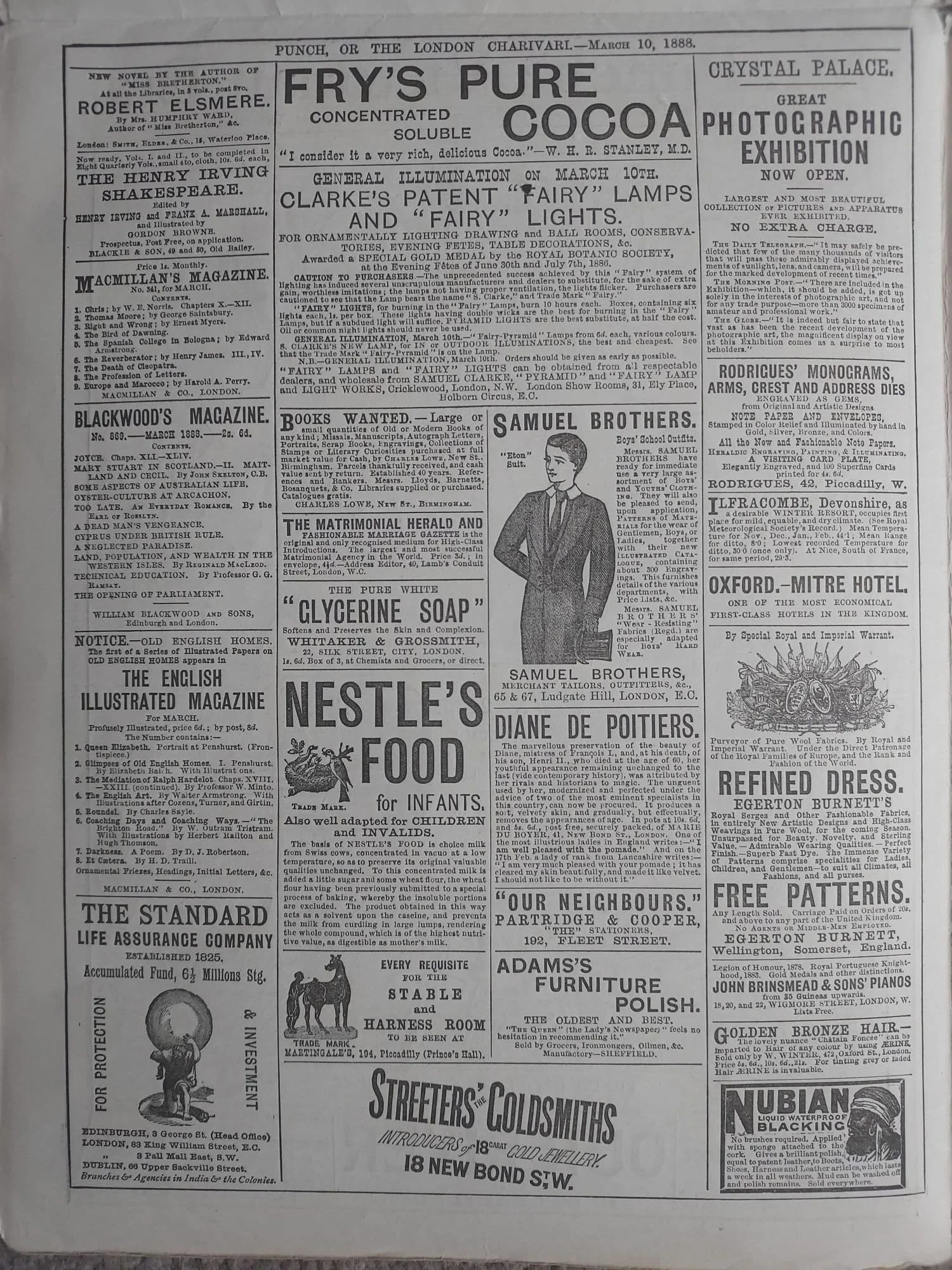
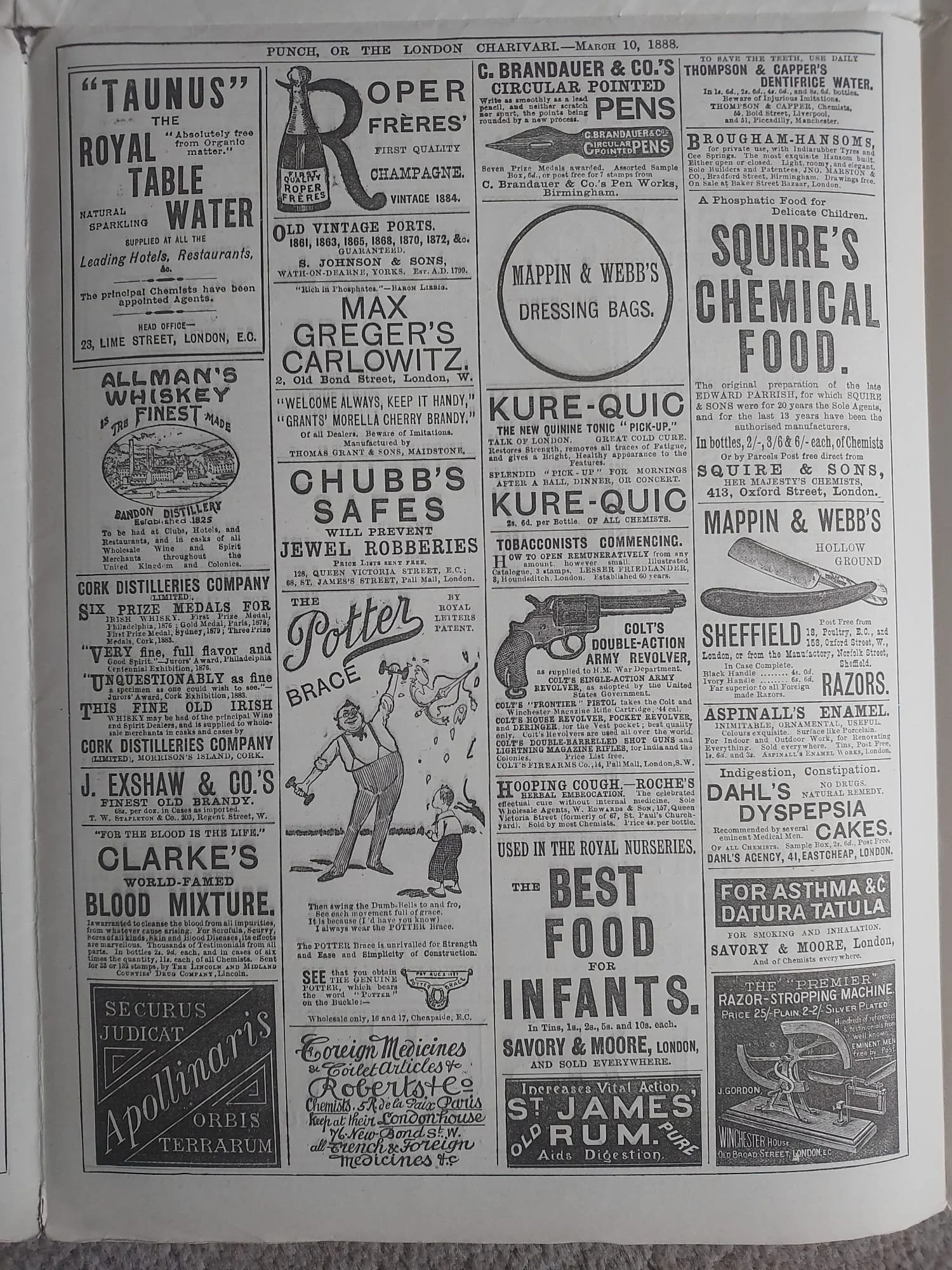
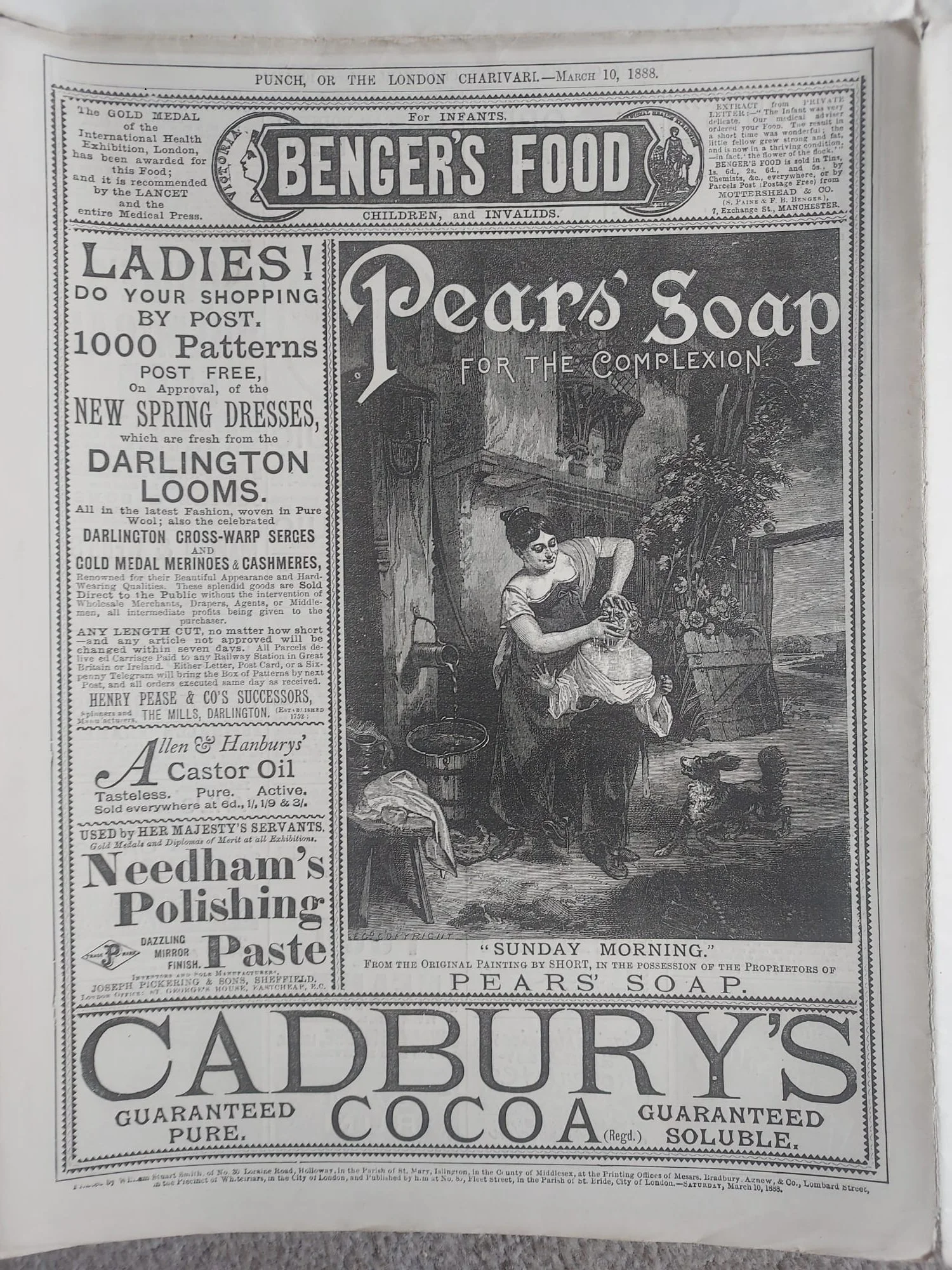
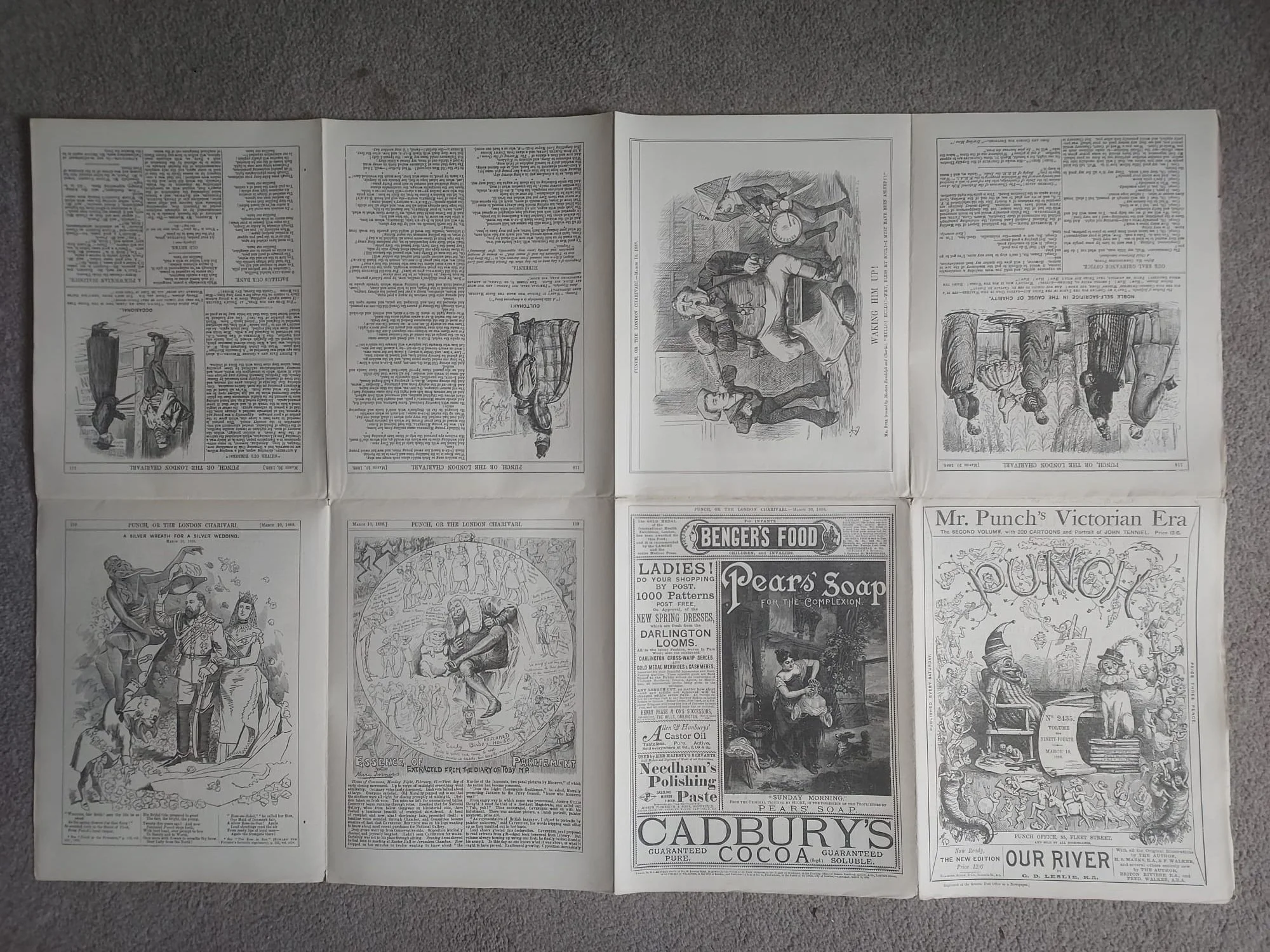
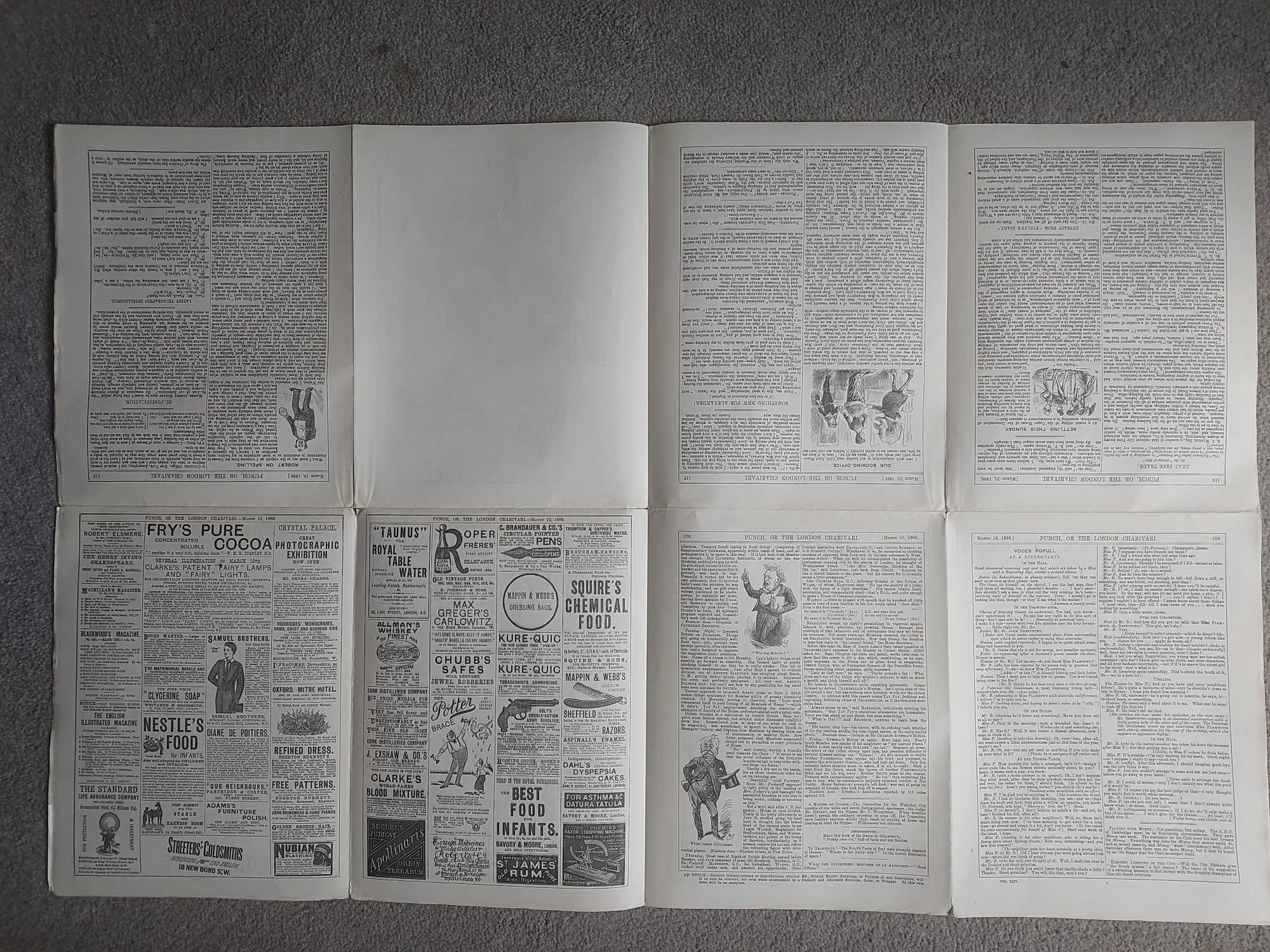
We have a near-complete set of Punch, from the start in 1841 to the demise in 1992. Almost all of our collection is bound. Now, it was normal for a binder at the end of each year to strip out and dispose of the covers and ads before binding. Because the ads for many periodicals into the first half of the twentieth century were printed on their own separate sheets, it was easy to separate and keep the editorial.
This means that much of our Punch collection doesn’t have any ads. Recently though we uncovered a single issue of Punch, for 10 March 1888, which is not just complete, but is printed on both sides of a very large single sheet of folded paper – see the images. We’re not sure if this was a printer’s proof, or whether that was how it was bought in your W.H. Smith’s, when, I guess, your staff would cut the folds for you to make a ‘normal’ magazine. Can anyone advise?
But now we can see the ads! The largest ad is for Pear’s soap, with what looks alarmingly like waterboarding going on. The small ads cover most bases, from piano dealers to Nestlé milk, and Kure-Quic tonic ‘pick-up’ to revolvers.
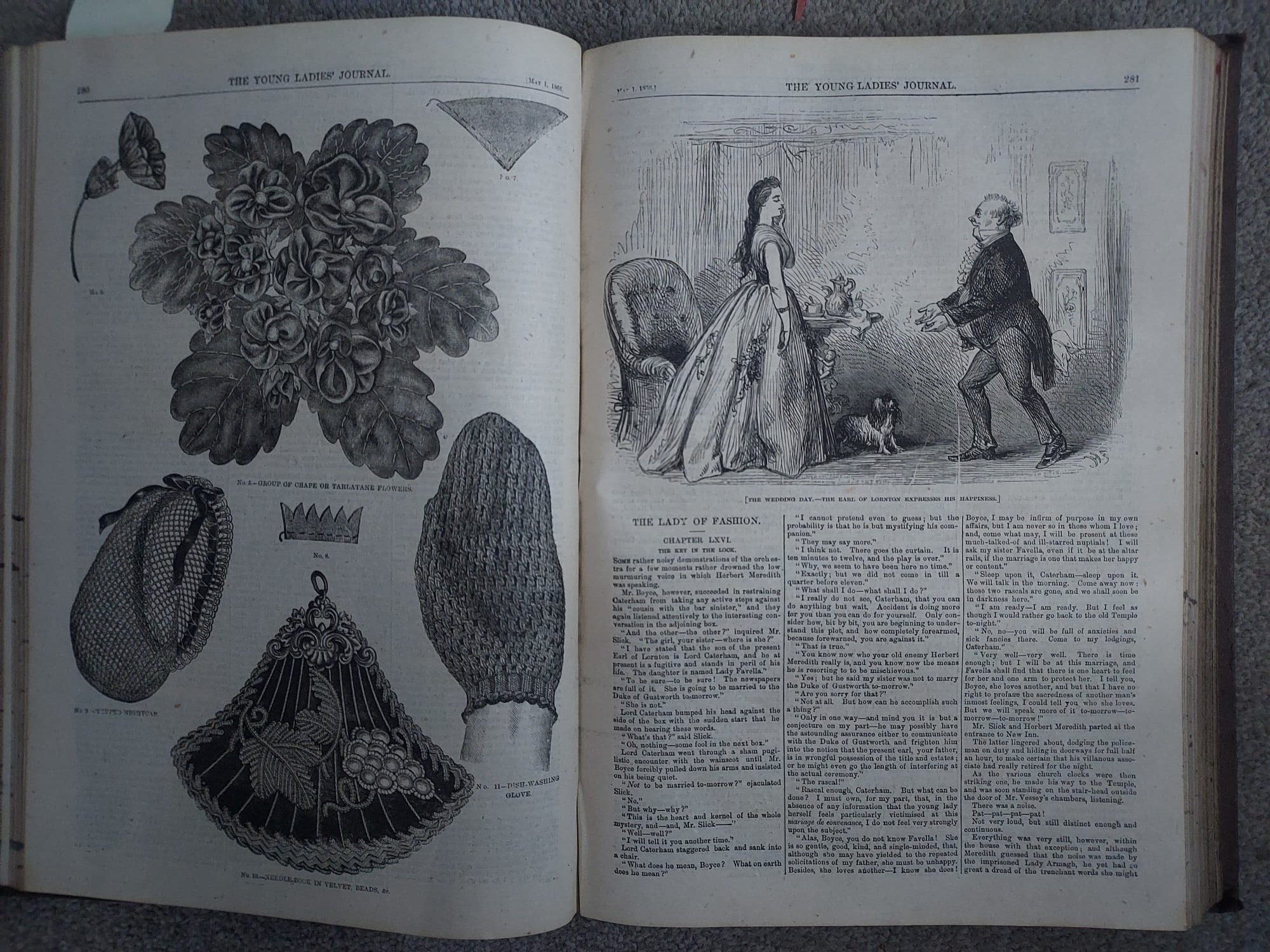
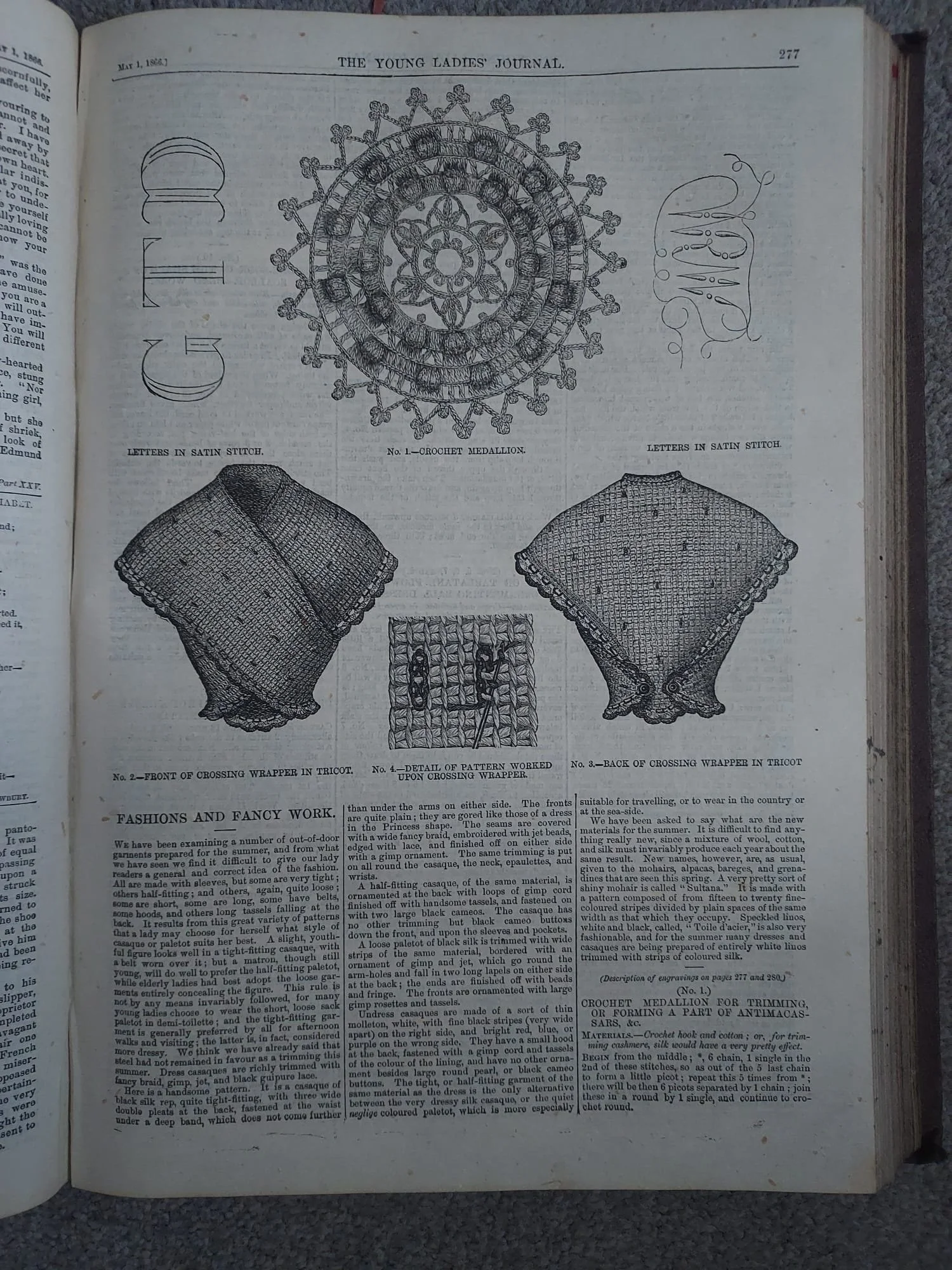
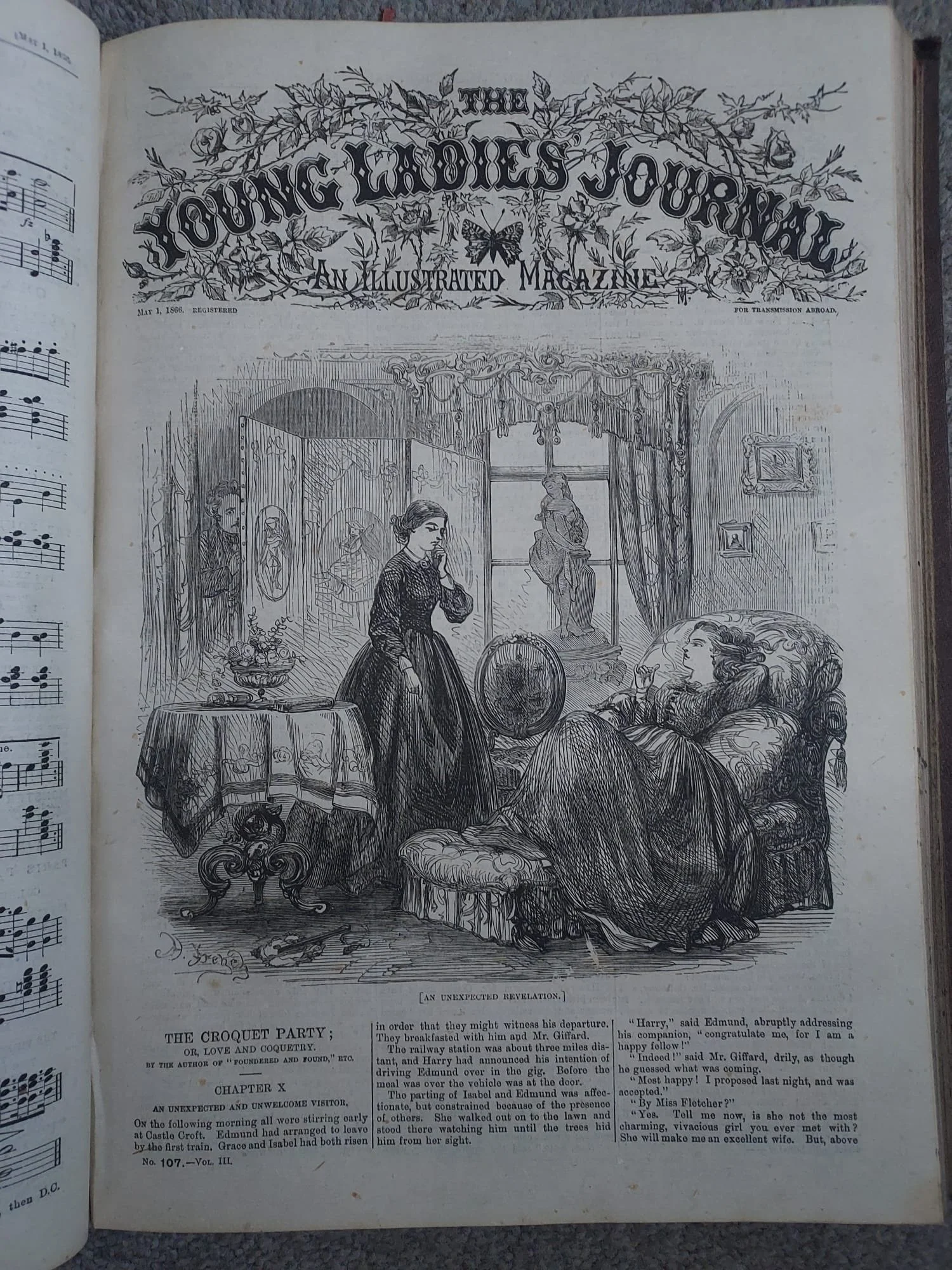
This got us thinking about other serials we have for the nineteenth century. In fact, Richard had recently made the chance find, in the depths of the archive, of a bound volume of the Young Ladies’ Journal from 1866. Again the ads and covers are stripped out, and what’s left are life-affirming short stories usually ending with her getting her man, fashion guidance and crochet patterns, responses to correspondents (the nearest thing you’ll get to an agony aunt), and sheet music. Everything a middle-class girl could need, I’m sure.
We have runs of other nineteenth-century serials, such as Illustrated London News, the Strand, the Sphere, the Graphic, the Quiver, Baily’s Magazine and Leisure Hour. Get in touch if you want to check if we have other titles.