Early DIY magazines: Practical Householder, 1957–64 and Do It Yourself, 1963–67
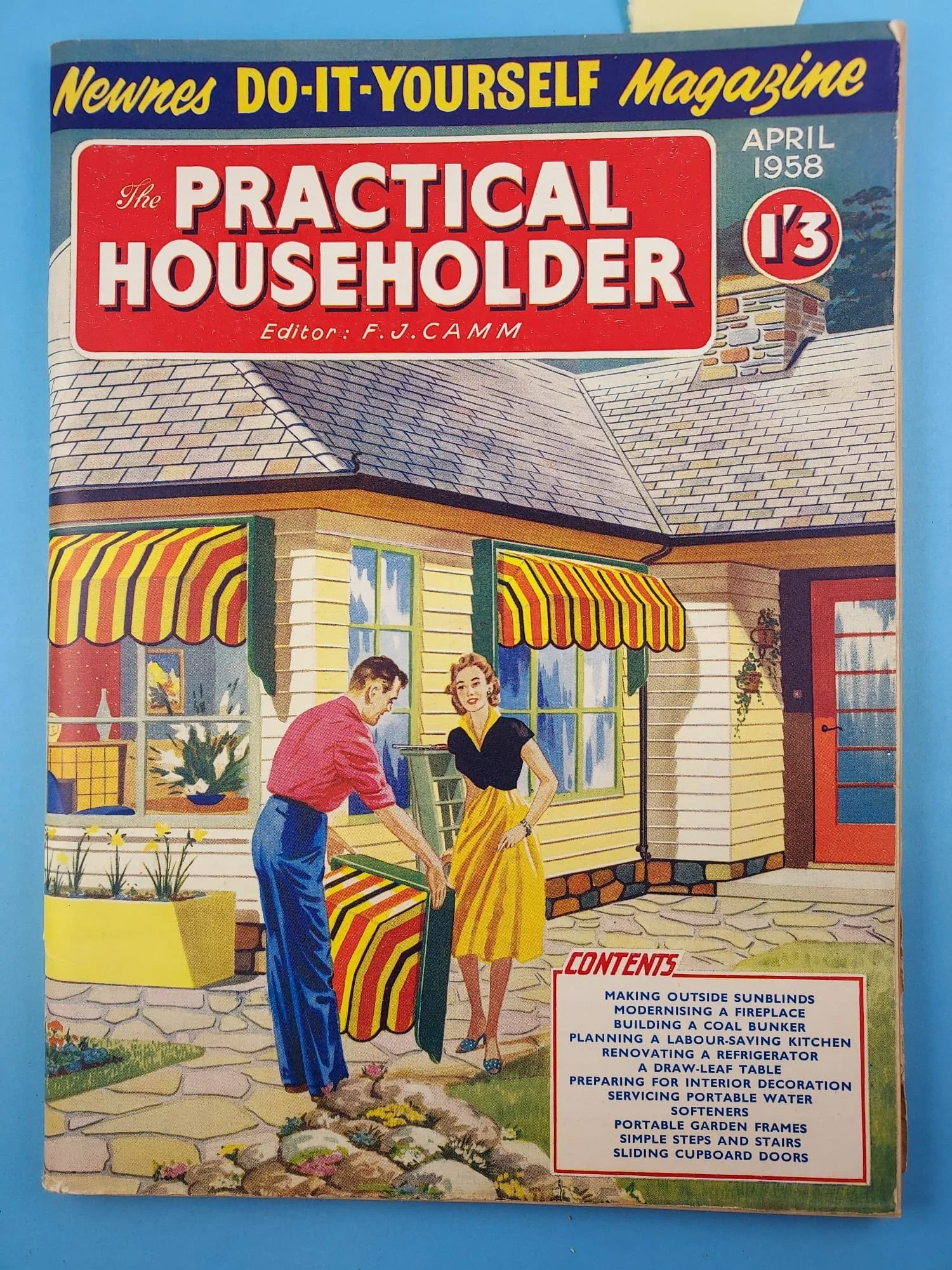
Practical Householder magazine started in 1955. The publisher Newnes had been publishing self-help magazines (Practical Mechanics, Practical Wireless and so on) since the 1930s, all edited by Frederick James Camm (1895–1959). Other titles followed in the 1950s including ours, and all featured the hand-drawn full-colour covers by the same unknown artist, with the busy husband getting on with some DIY task with the wife as a glamorous assistant. This was DIY before you could nip down to B&Q. It’s normal now to buy mass-produced cheap tools that we will use a handful of times before discarding them. However, the tools that the readers of this magazine would have used would have been expensive, possibly passed down, and would be carefully sharpened and stored after use. Indeed, those were the days when everything was repairable or buildable – how about, say, making your own wheelbarrow? That was exactly what this magazine provided for.
We already had 327 copies of the magazine, from 1955 up to 2002, which is about the time it expired. In our new batch here, courtesy of our friend Ken, we have about twenty copies mostly for 1957-60 and then some for the 1960s. The price was 1s 3d, rising to 1s 6d.
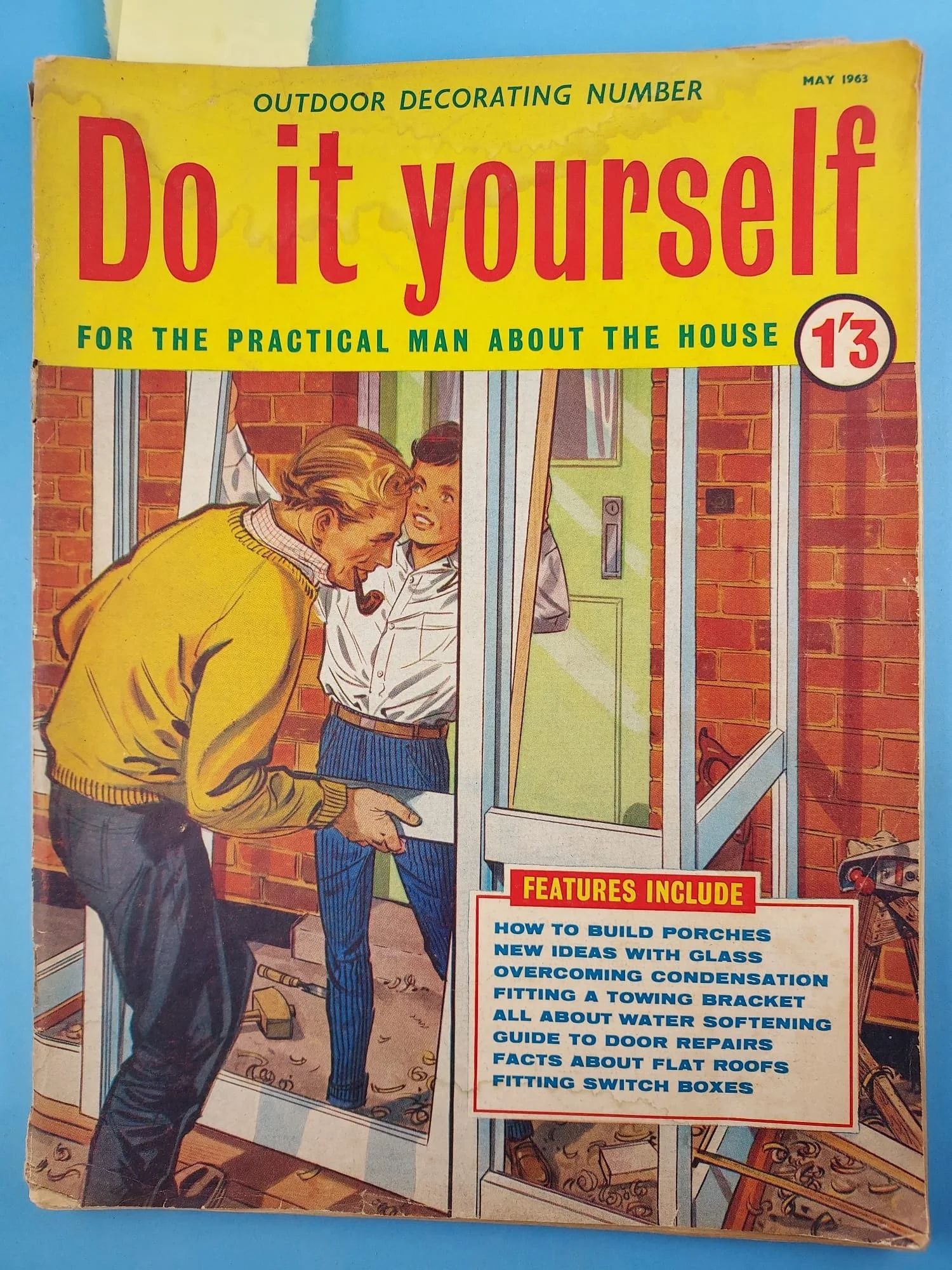
Do It Yourself magazine first appeared in 1957 ‘for the practical man about the house’. A Link House publication, at 1s 3d it undercut Practical Householder. I cannot find when (or if) this magazine expired. We have just two new copies of Do It Yourself here, but already have in the stacks 266 copies between the start and 1992. The magazine is meant to appeal to the same buyers as Practical Householder, and similarly have hand-drawn full-colour covers, but this time of father-and-son at work.
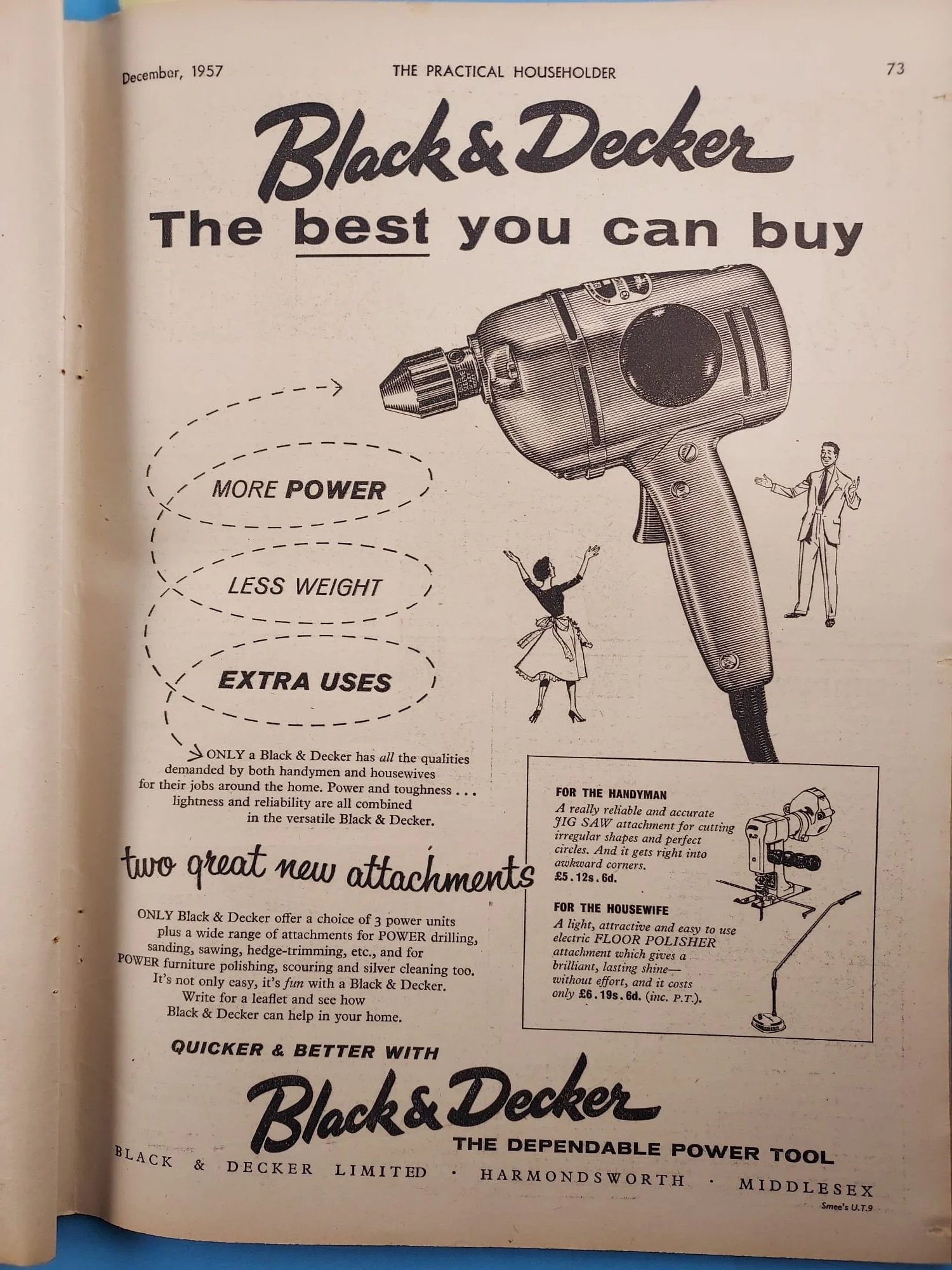
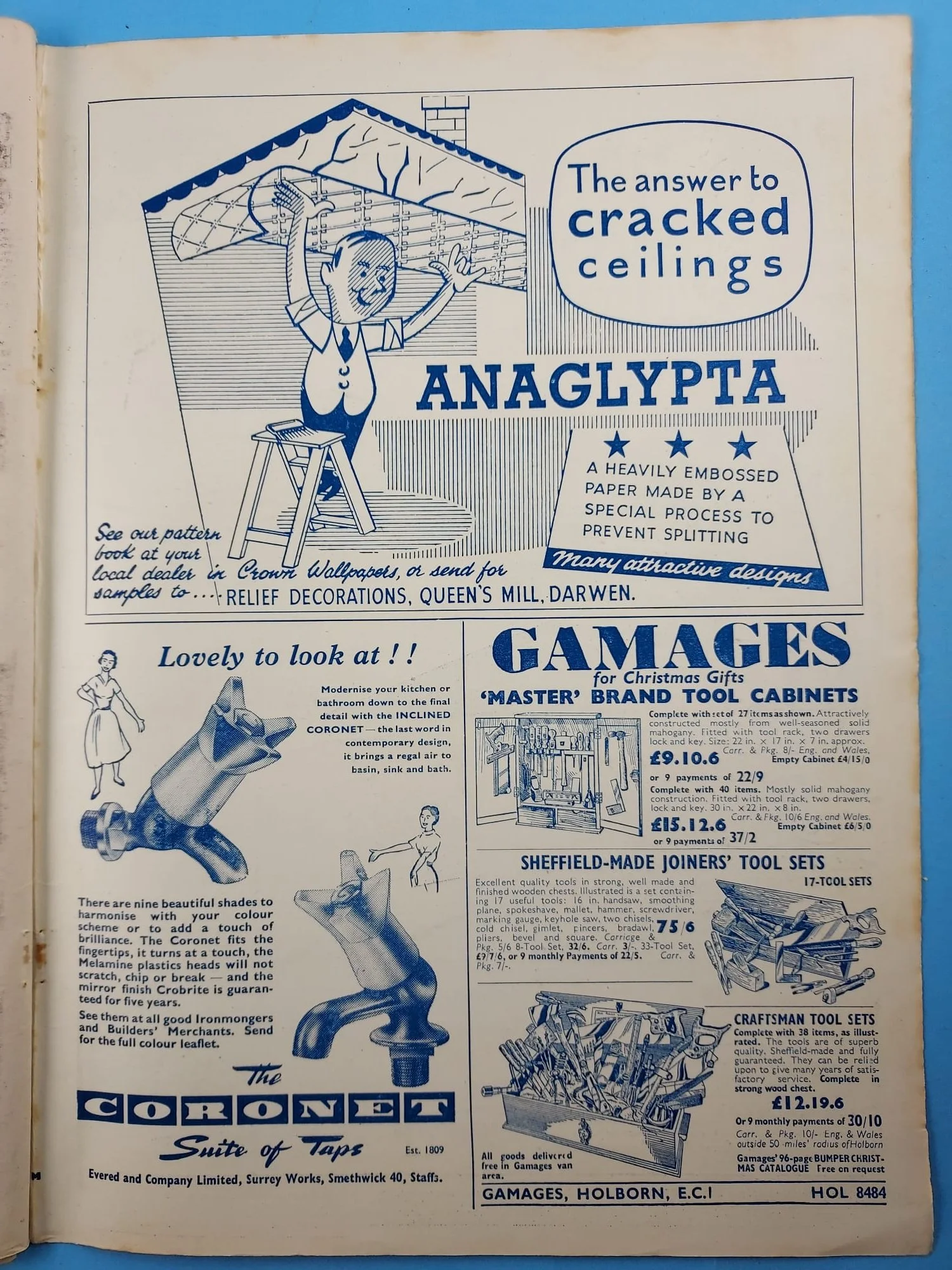
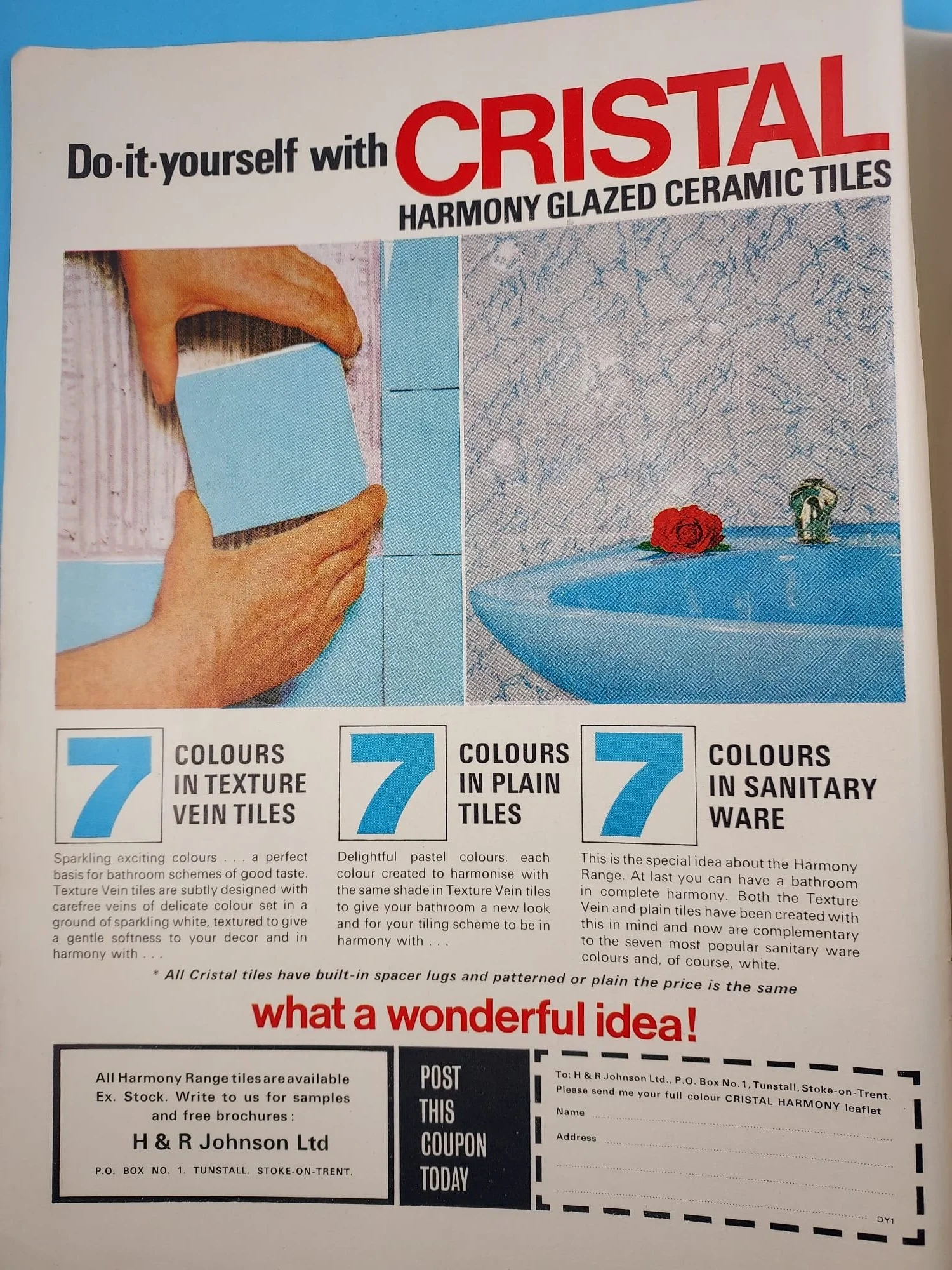
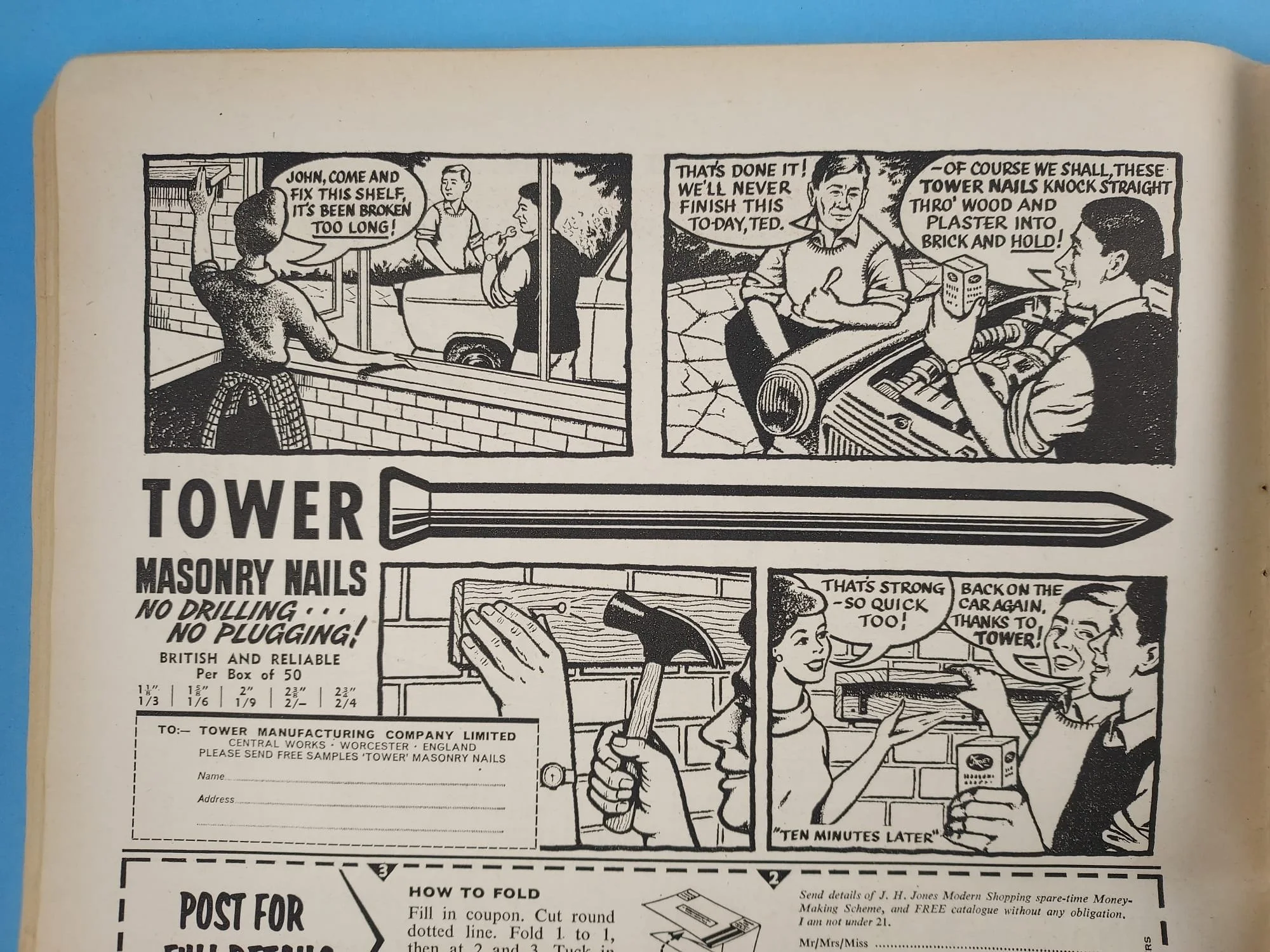
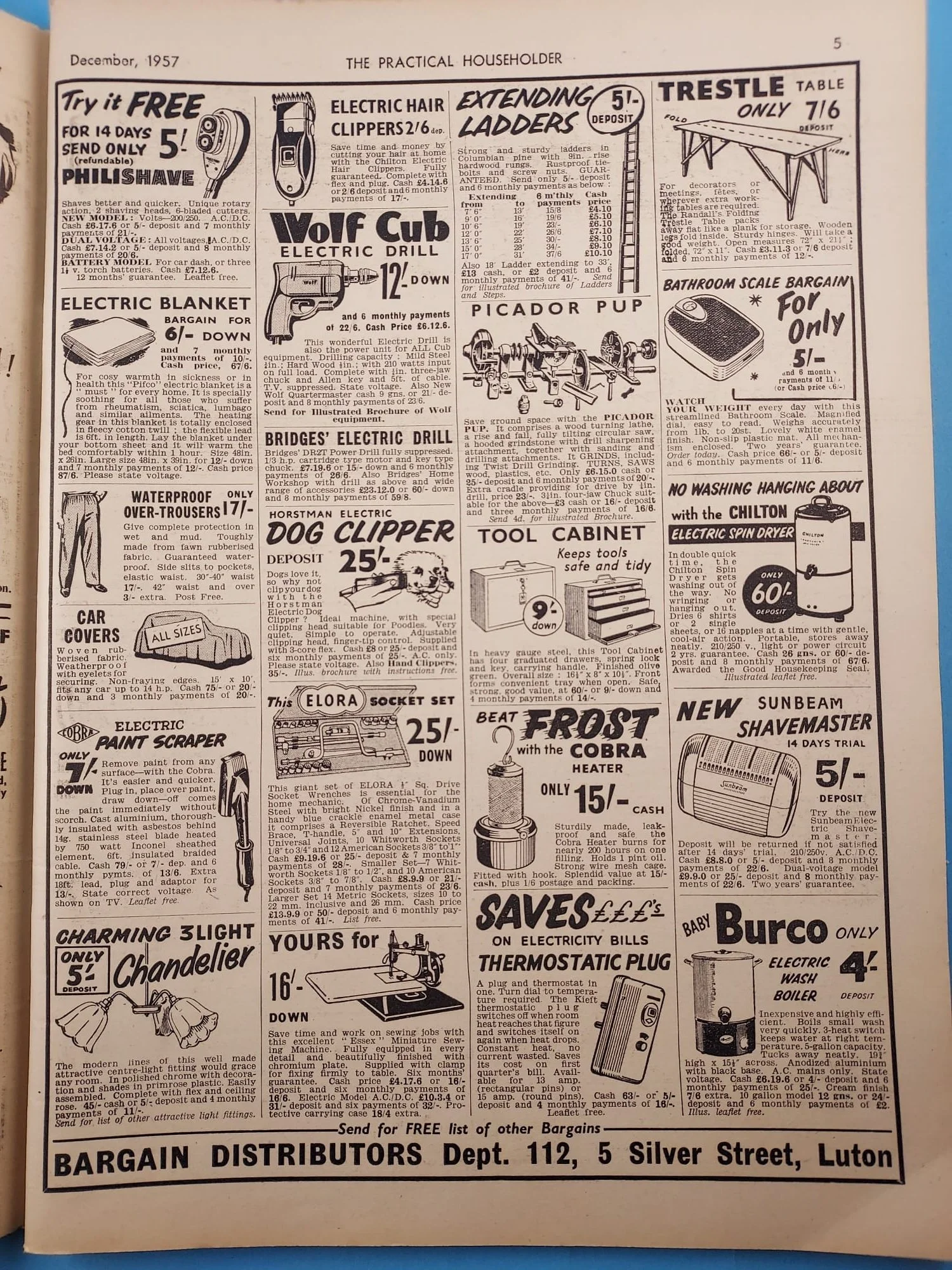
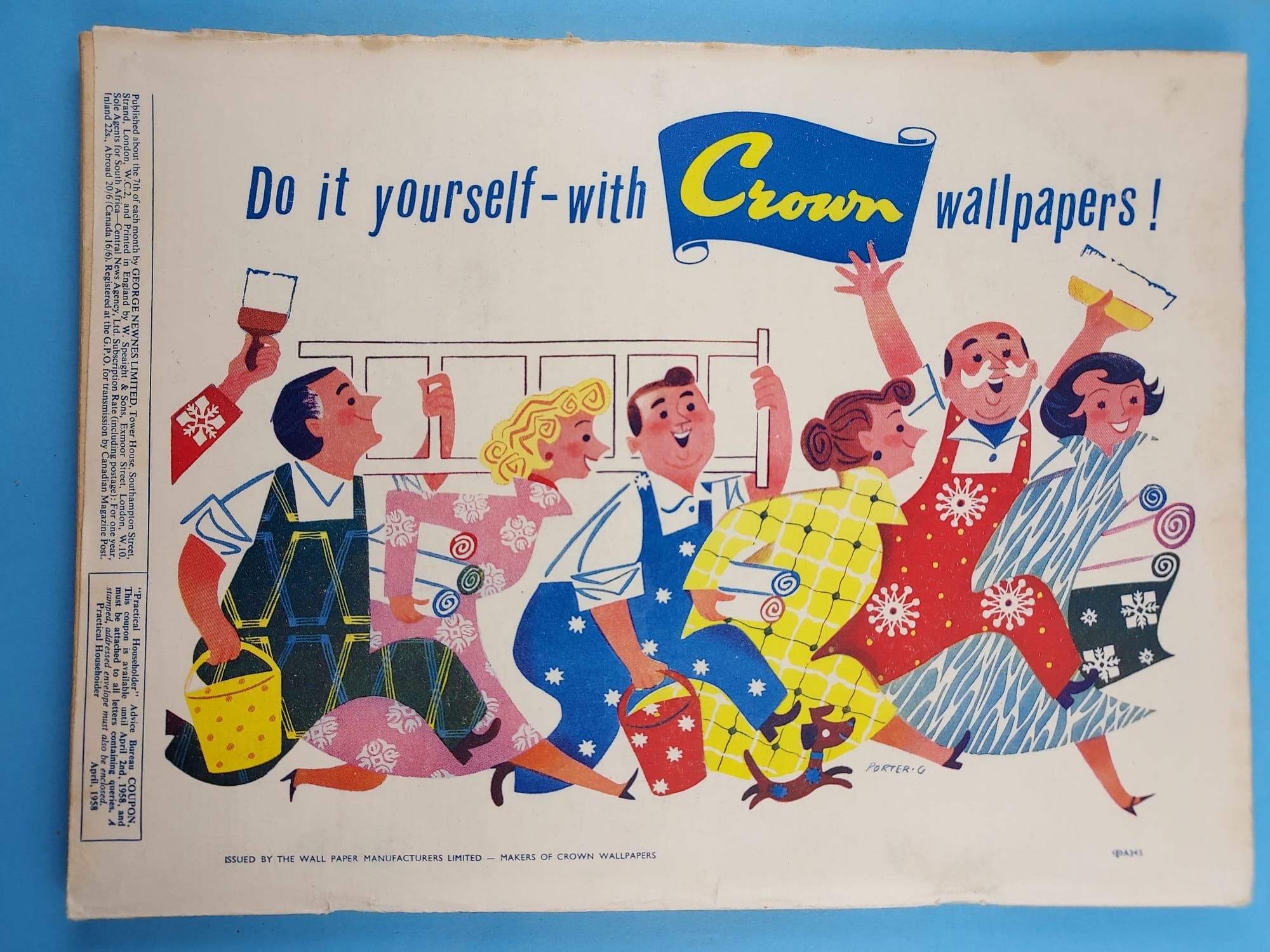
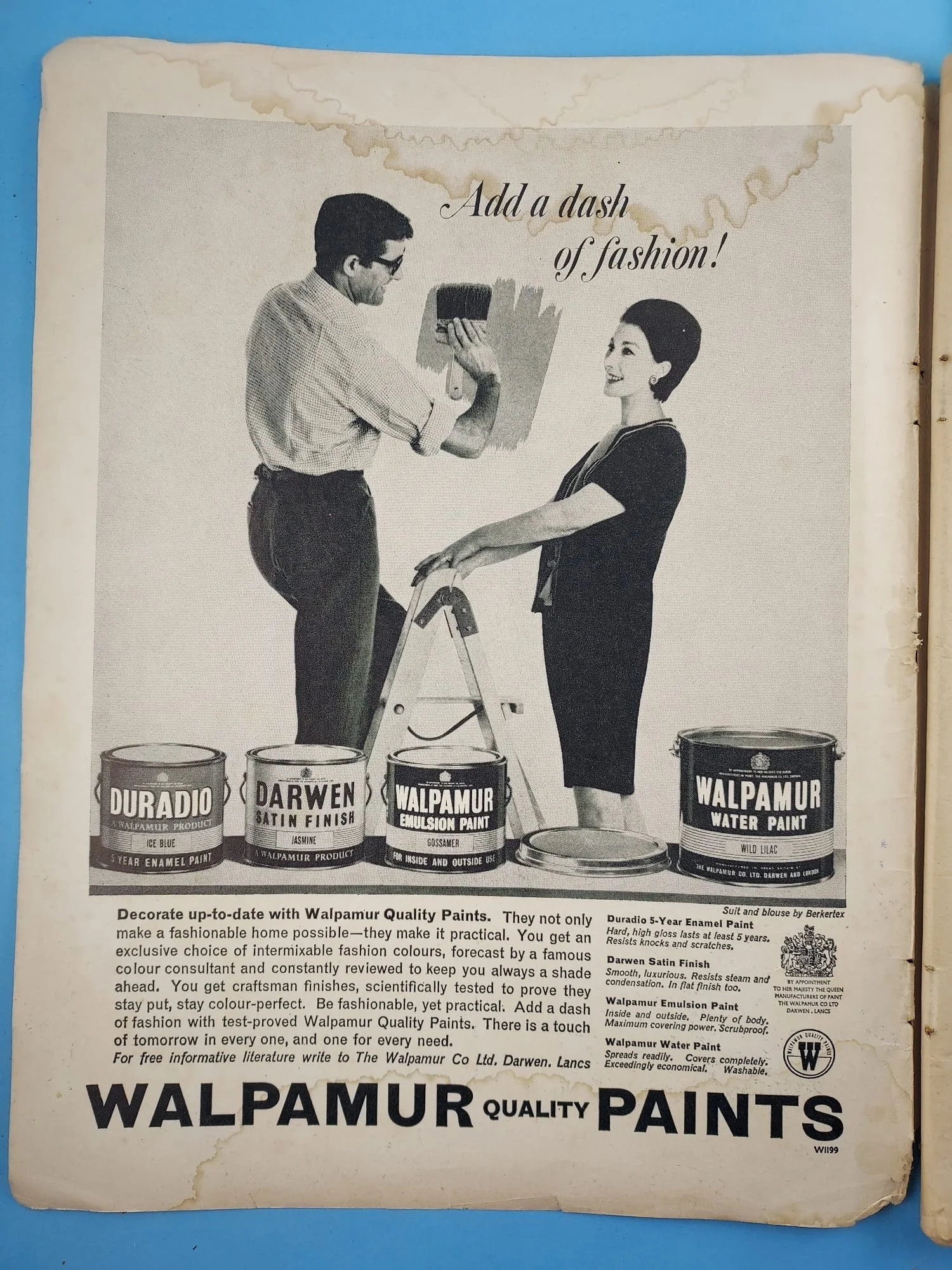
The ads from each title broadly appeal to the same audience, one that was prepared to do the household jobs themselves rather than get in the specialist. Ceramic tiles for bathrooms were a new thing. Walpamur paint features a trendy young couple, while Tower masonry nails use a cartoon depicting a husband who just wants to work on his car but has to break off to attend to the demands of his nagging wife. Crown had a colour ad for their wallpaper range. A page of small ads gives a sense of the cost of tools – all items give a price which is merely the deposit, to be followed by monthly payments. A small socket set would cost you £9, an electric drill £6. Wallpaper, paint, drills, nails – these were now suddenly the must-have items. Anaglypta wallpaper (remember that?) was available and used to be a cover-up for dodgy ceiling plasterwork just like now. Bodging, then, is nothing new…