Blighty Parade, 1916–18, 1939–59
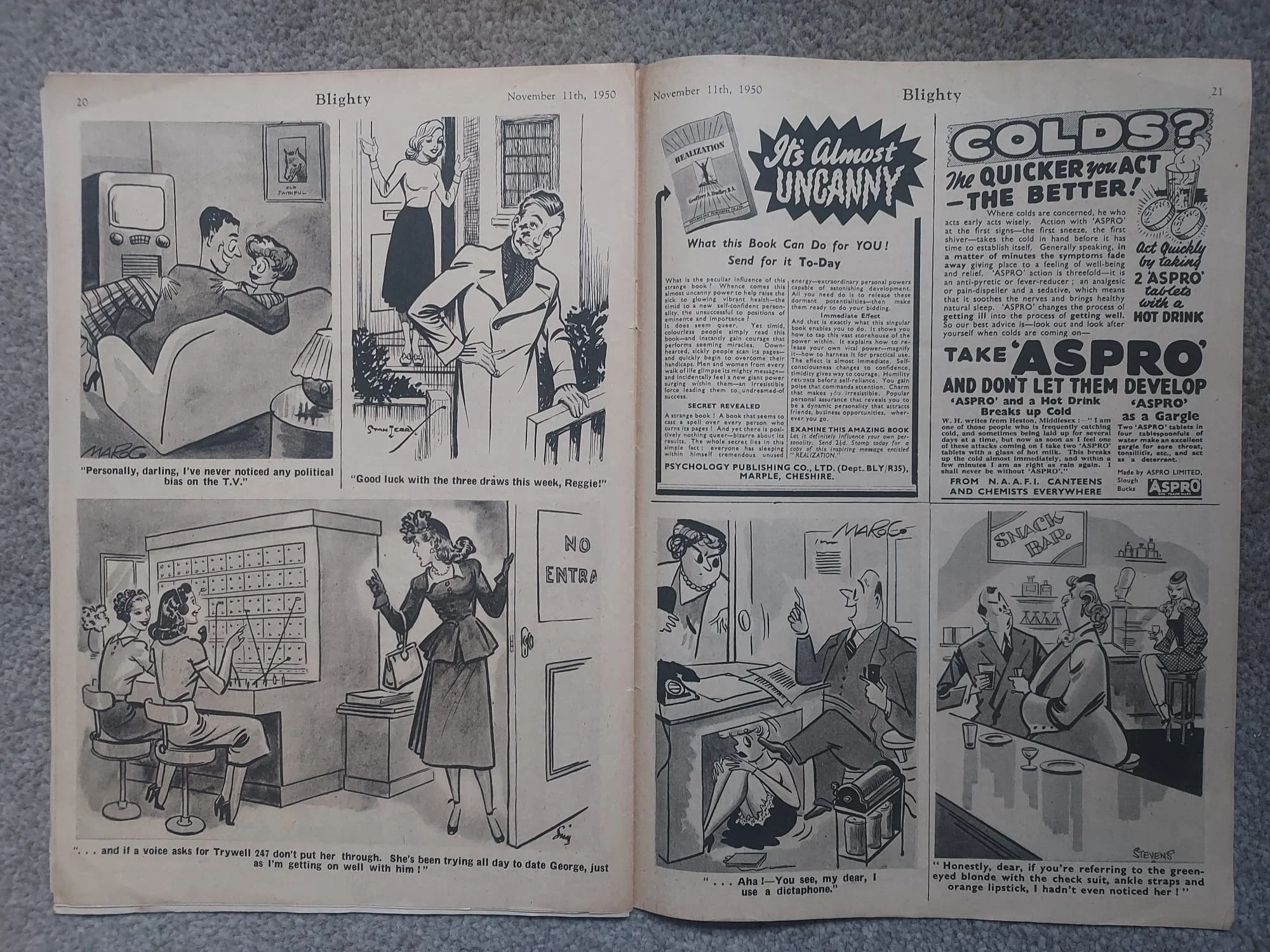
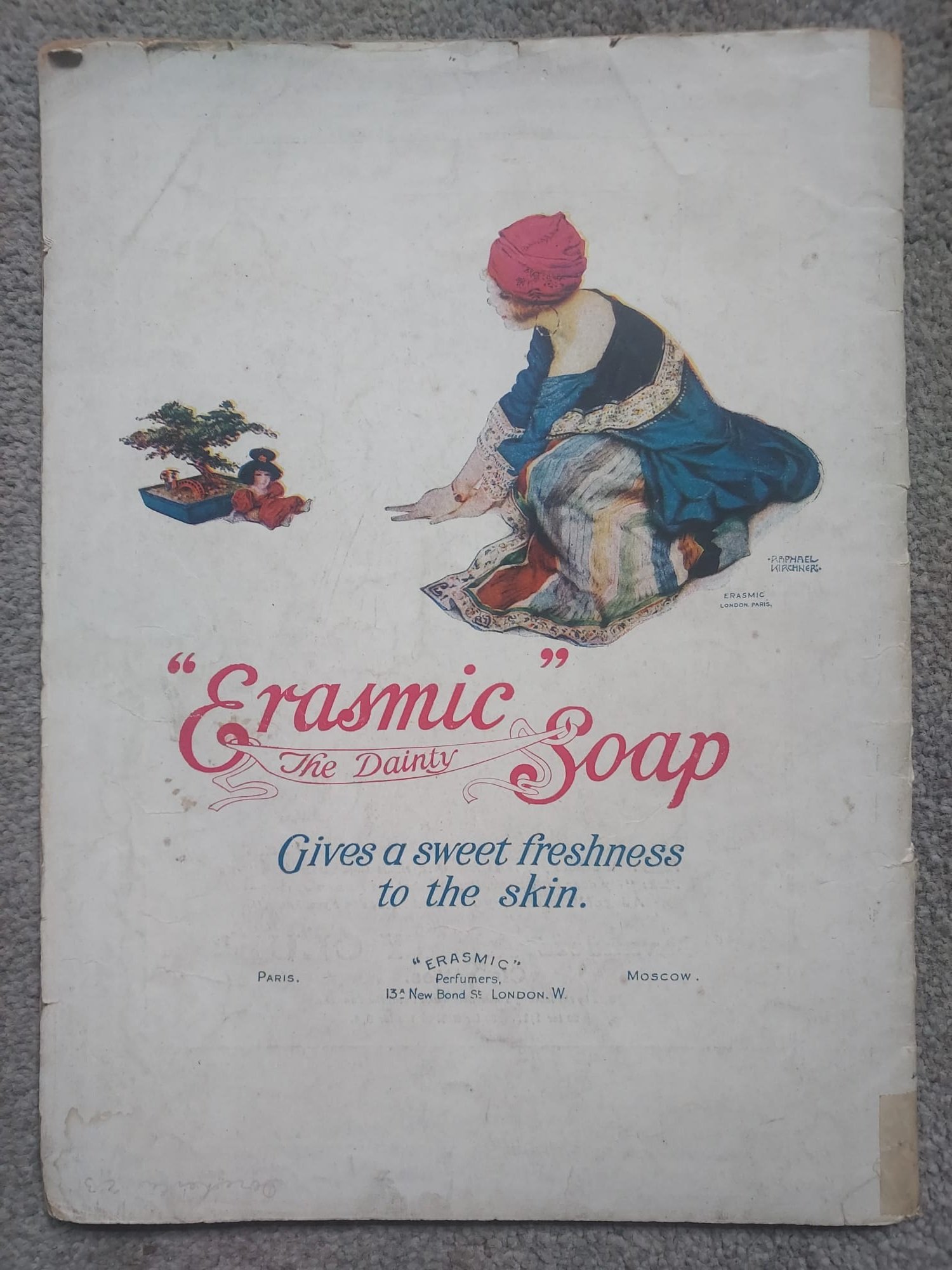
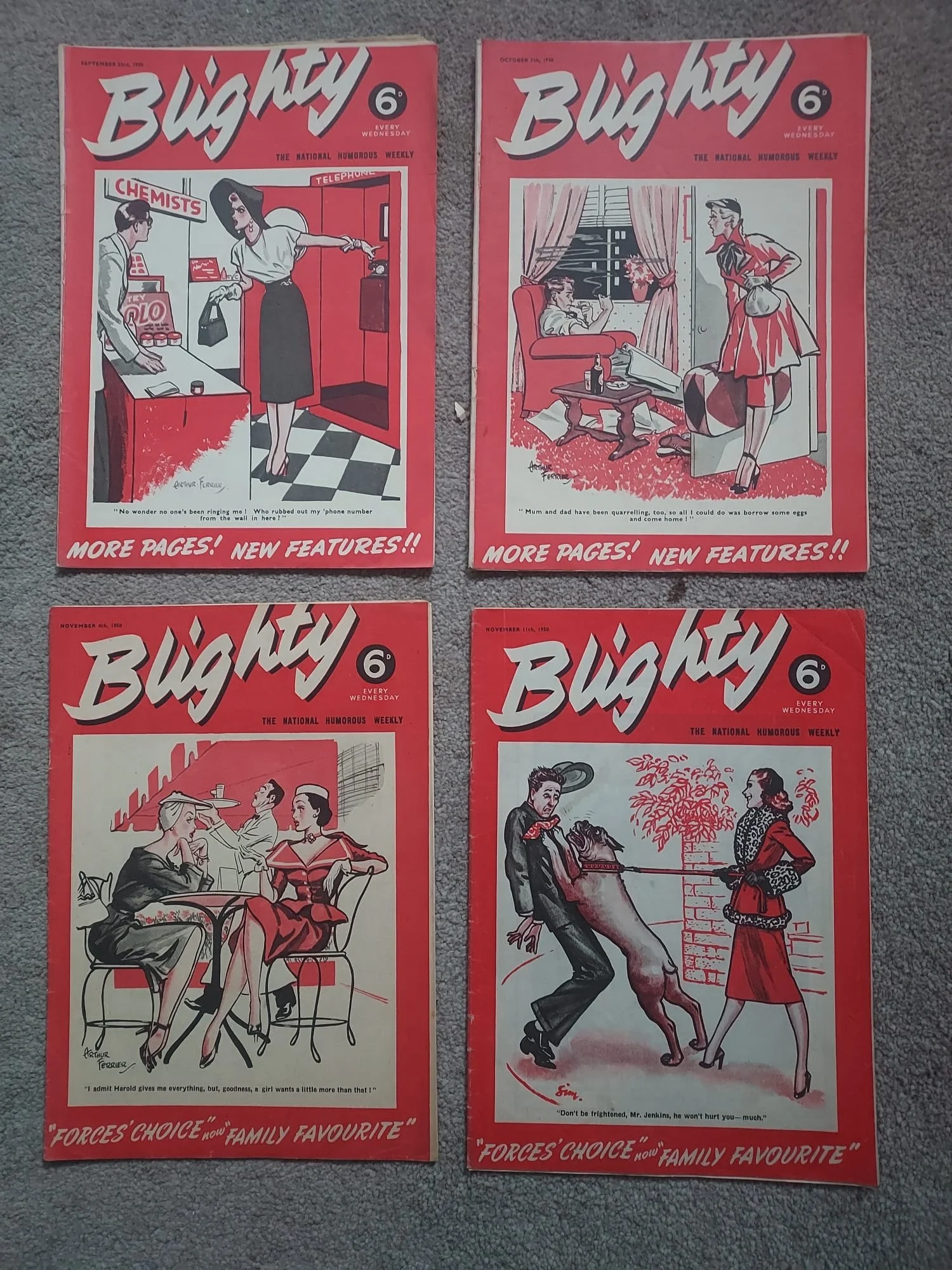
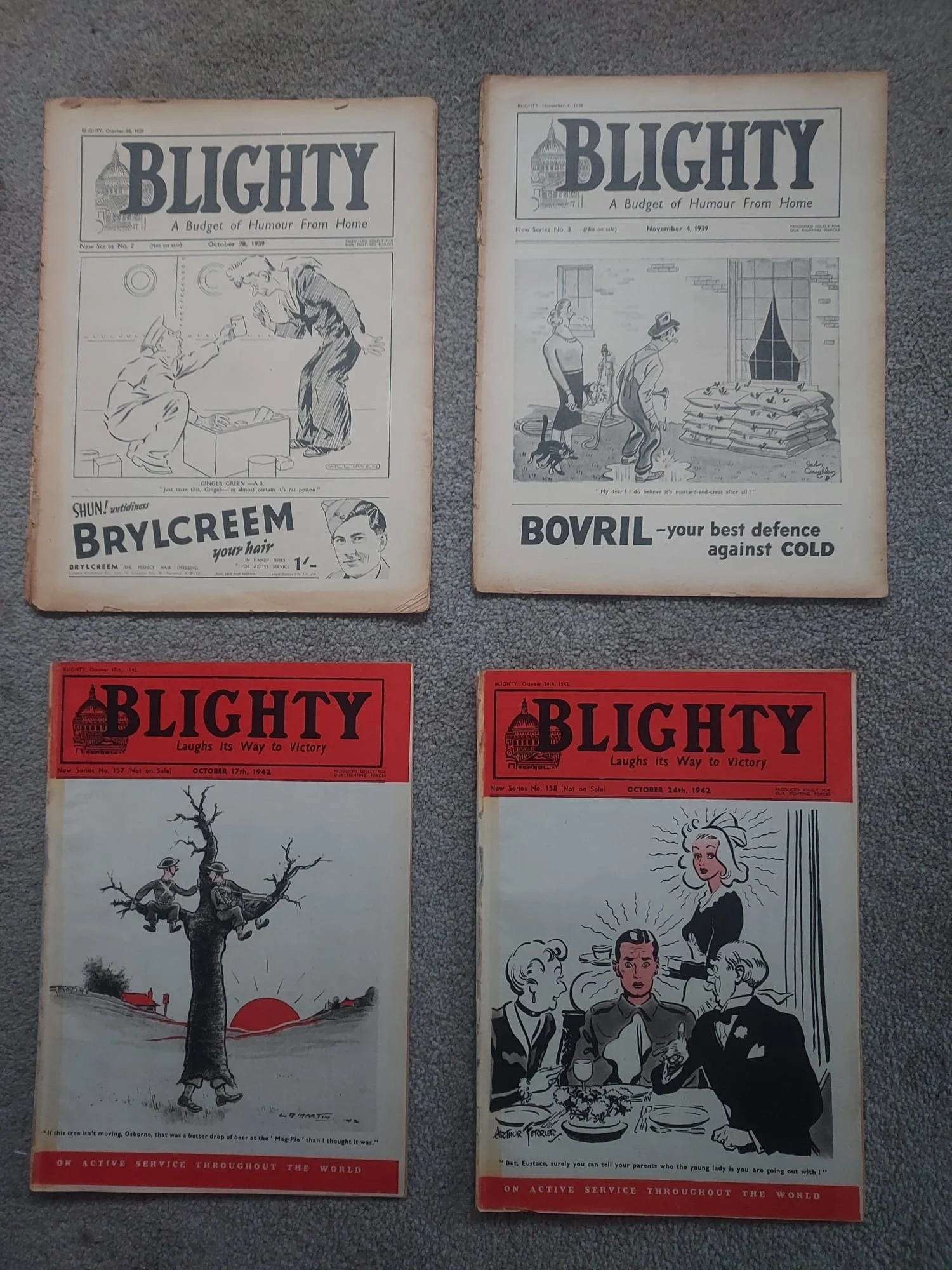
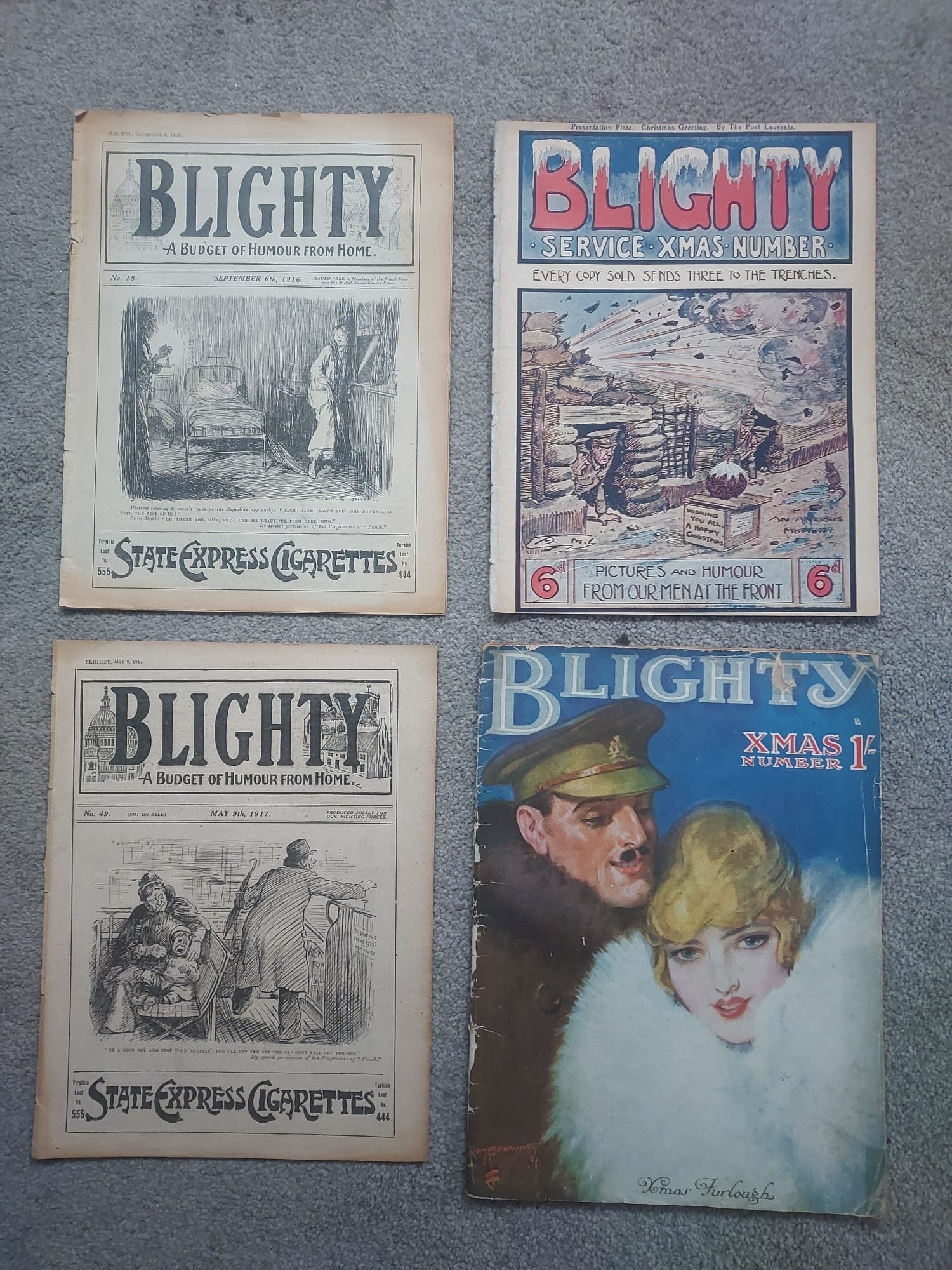
Blighty first appeared in 1916 as a pick-me-up for the servicemen in the First World War. It was initially free, with, apparently, one hundred thousand copies printed weekly and distributed ‘to the boys who are doing the fighting’. Christmas specials were also on sale to the general public – the 1916 copy, for instance, was 6d. It’s in this copy that we learn more about the rationale behind Blighty. It was meant to be a collection of the best pictures and stories, supplied for free by publishers, and distributed by the War Office, YMCA, Red Cross Society and others.
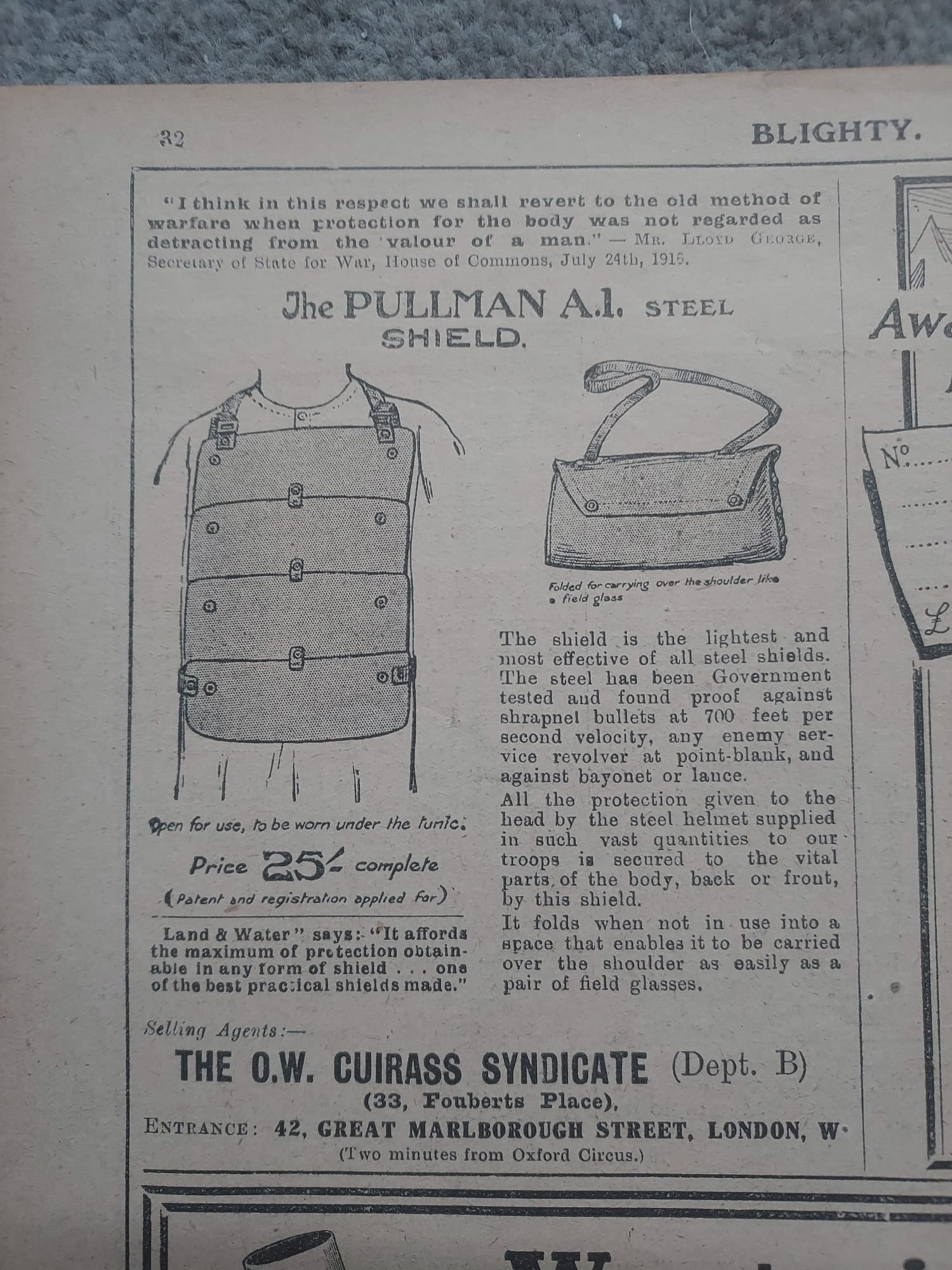
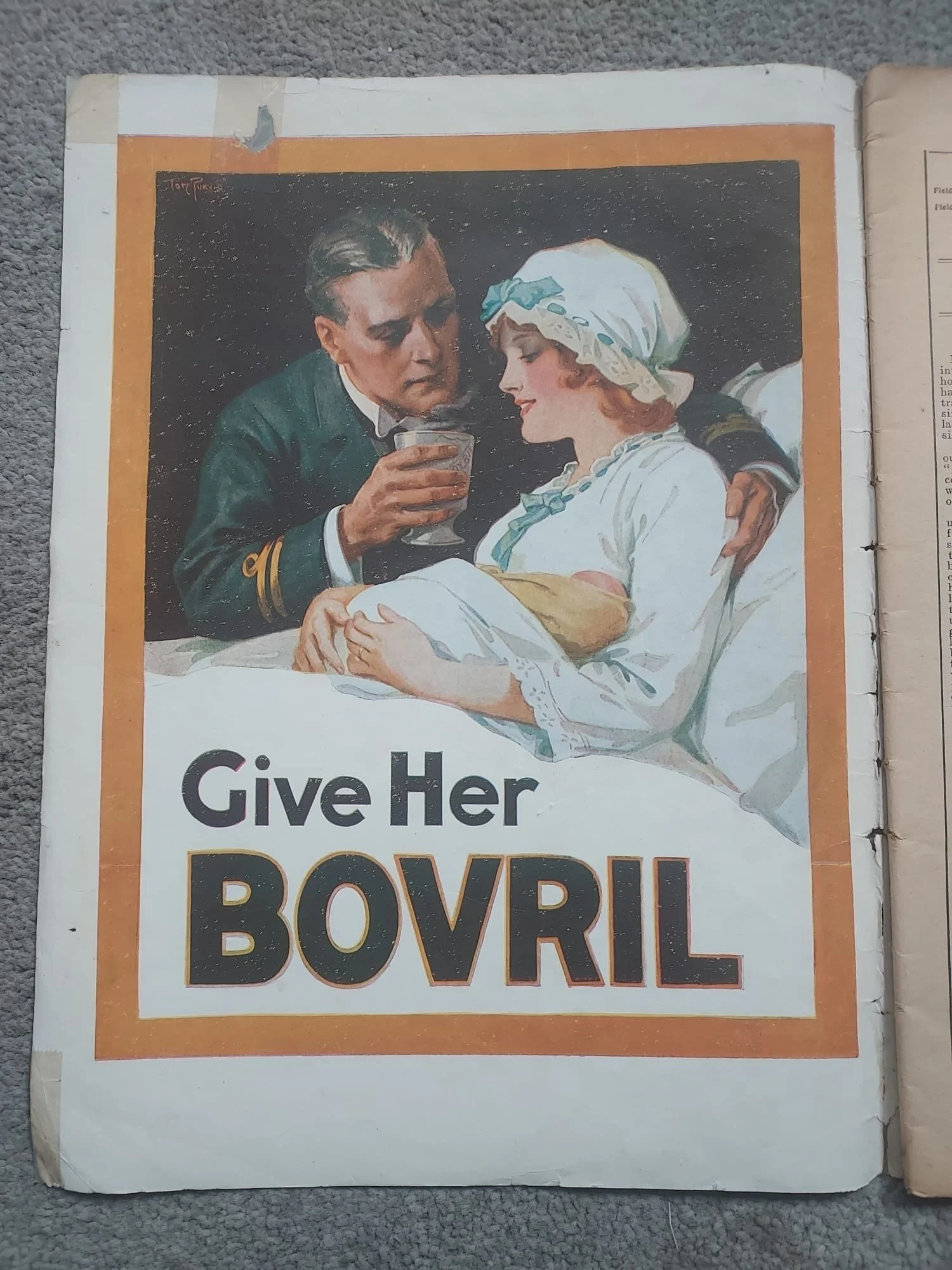
We have scattered copies for 1916 to 1918. These originals had few ads, but included those for cigarettes, Nestle milk, pens, pickles, pipes. One ad for body armour – the Pullman A1 Steel Shield for 25s – cited Lloyd George who said ‘I think in this respect we shall revert to the old method of warfare when protection for the body was not regarded as detracting from the valour of a man’. These Christmas specials had full-page colour ads for Bovril and Abdullah cigarettes. The magazine probably fizzled out following the end of war.
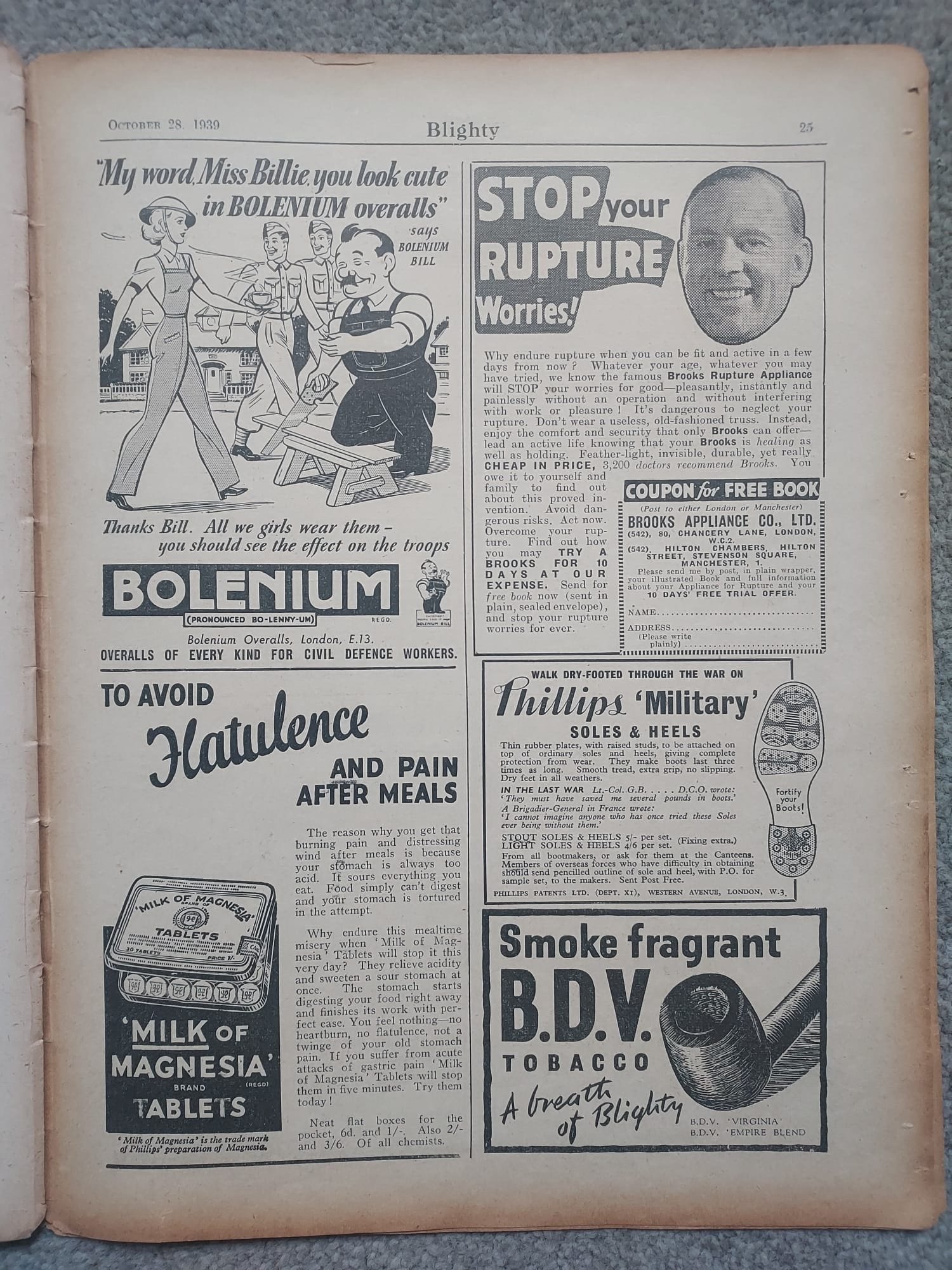
What a change, then, to the relaunched version of 1939. Again, free to the armed forces, and with a collection of news and images, it was increasingly reliant on nudge-nudge cartoons on the front cover and within. We have scattered copies for 1939 to 1959, and by then the ads were getting smaller. A regular centre-page ‘Photo Parade’ feature moved increasingly away from reassuring images of happy war veterans in the direction of the ‘bathing belle’, for those, ‘good at figures’. You’ll get the idea.
The trajectory, then was clear. Going on general sale as a sixpence weekly after the Second World War, by the late fifties it had become Blighty Parade, and we understand that subsequently it became just Parade, a top-shelf men’s magazine.
The collection has come from the late Steve Woodard, whose wife Tina was most kind to pass on to us.