The CWS book of party games, 1930s
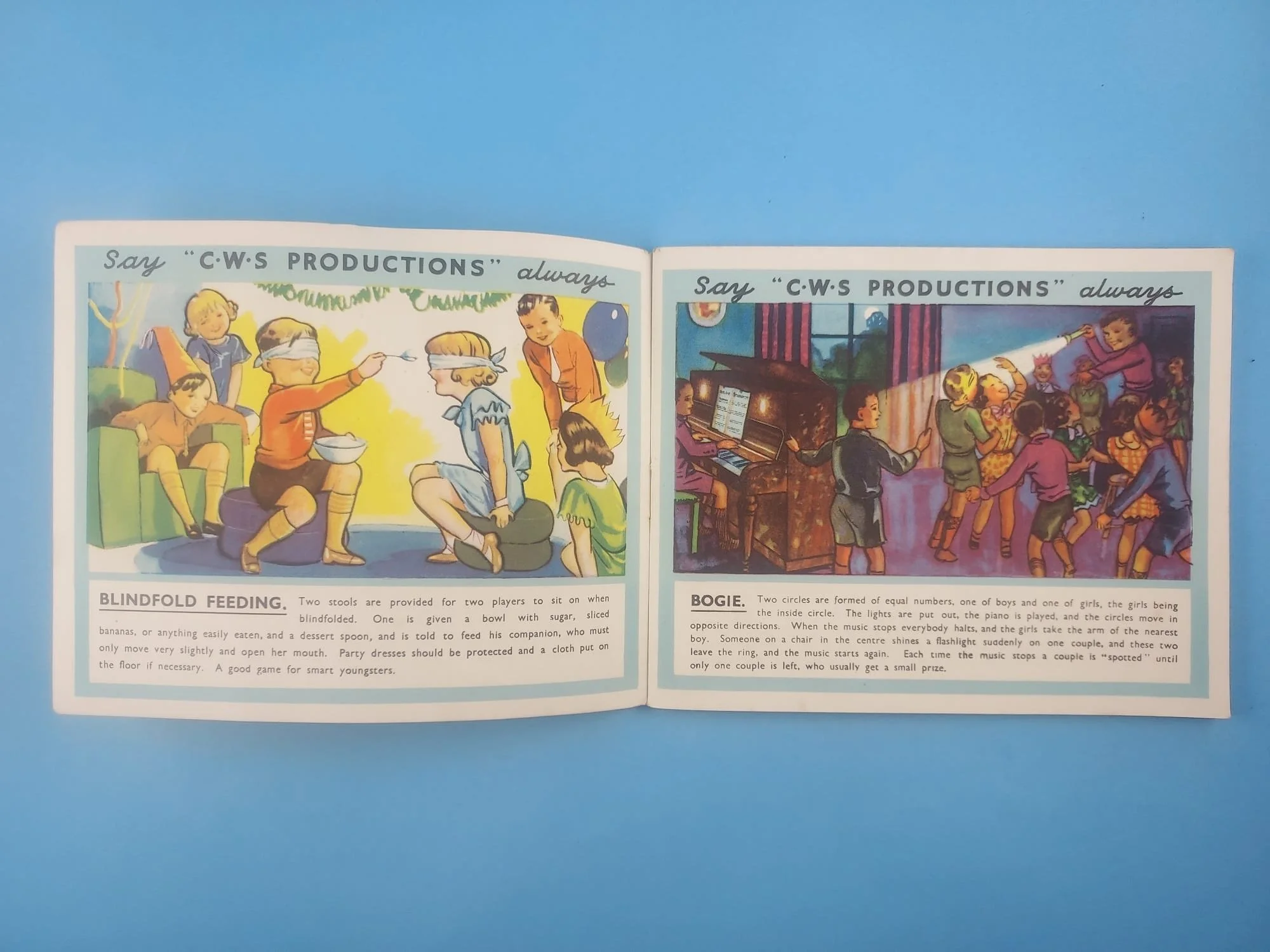
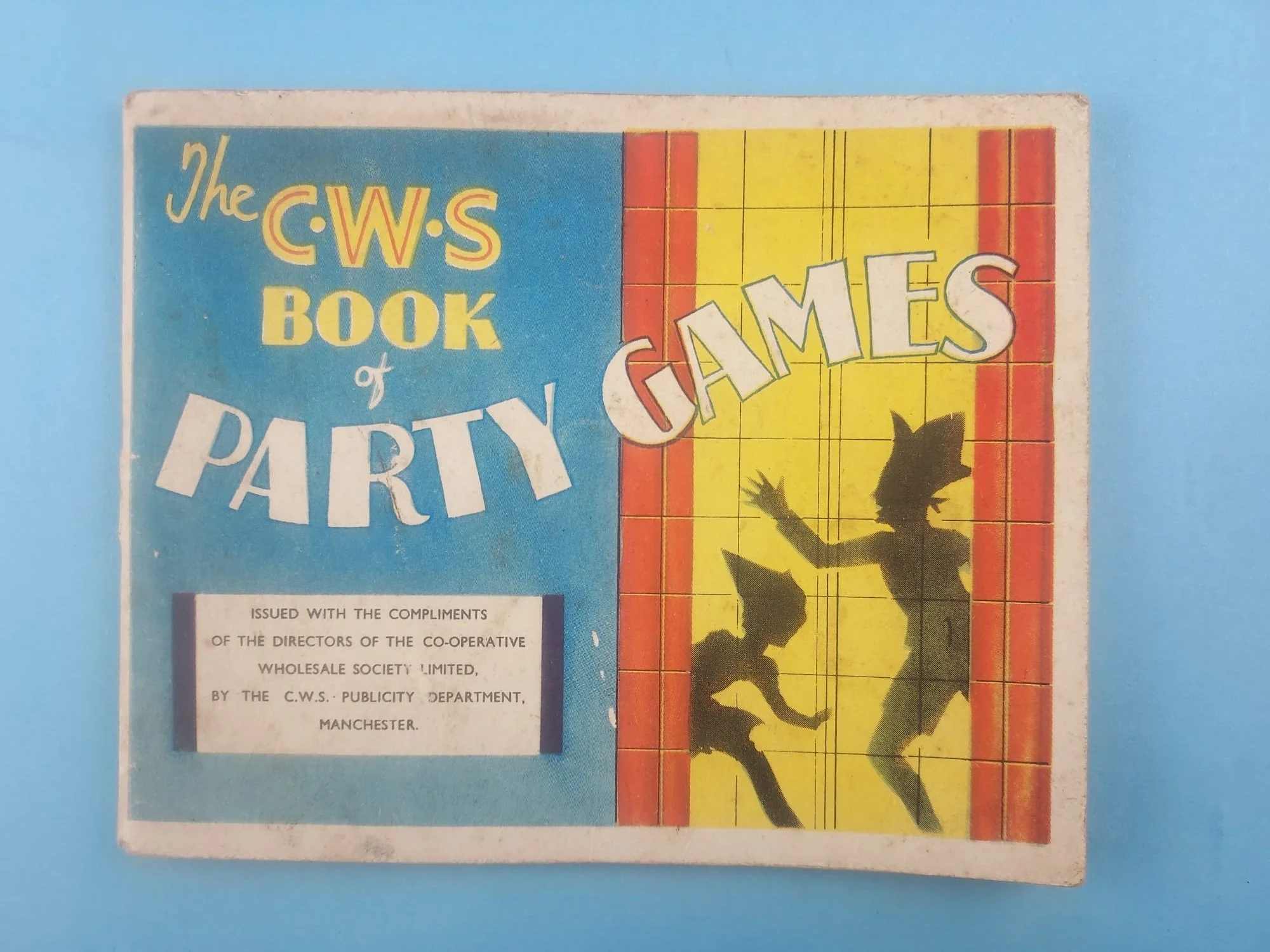

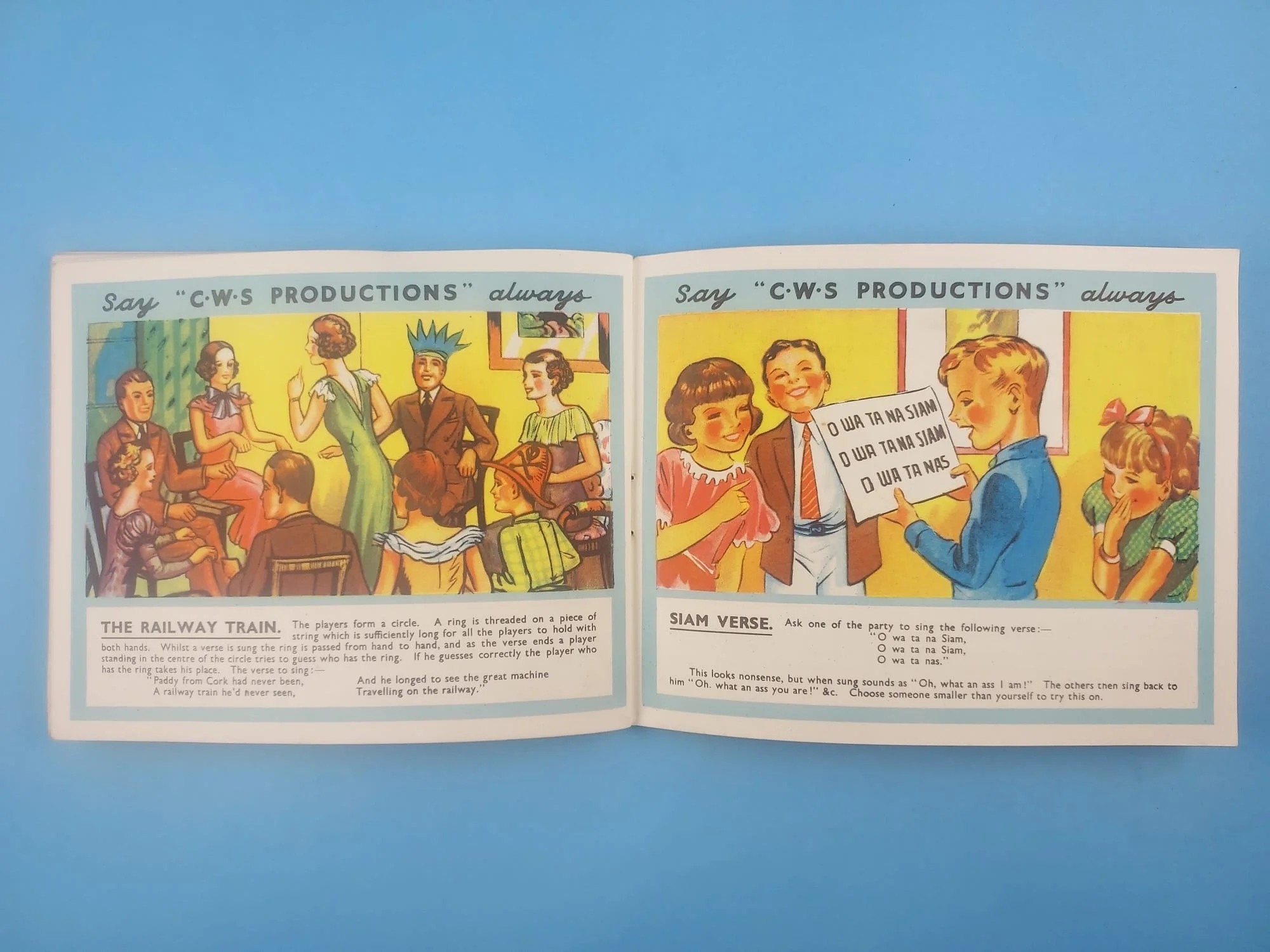
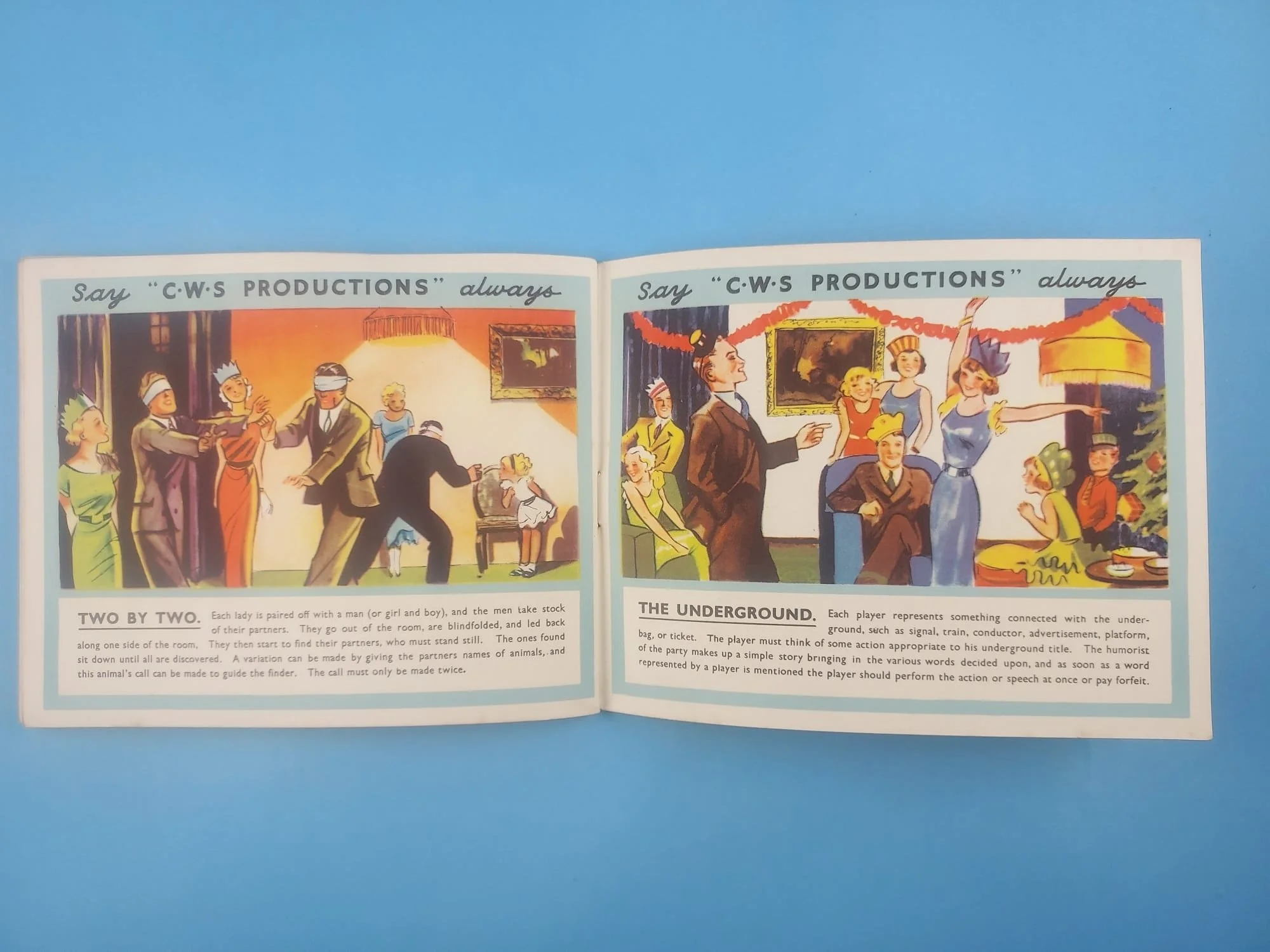
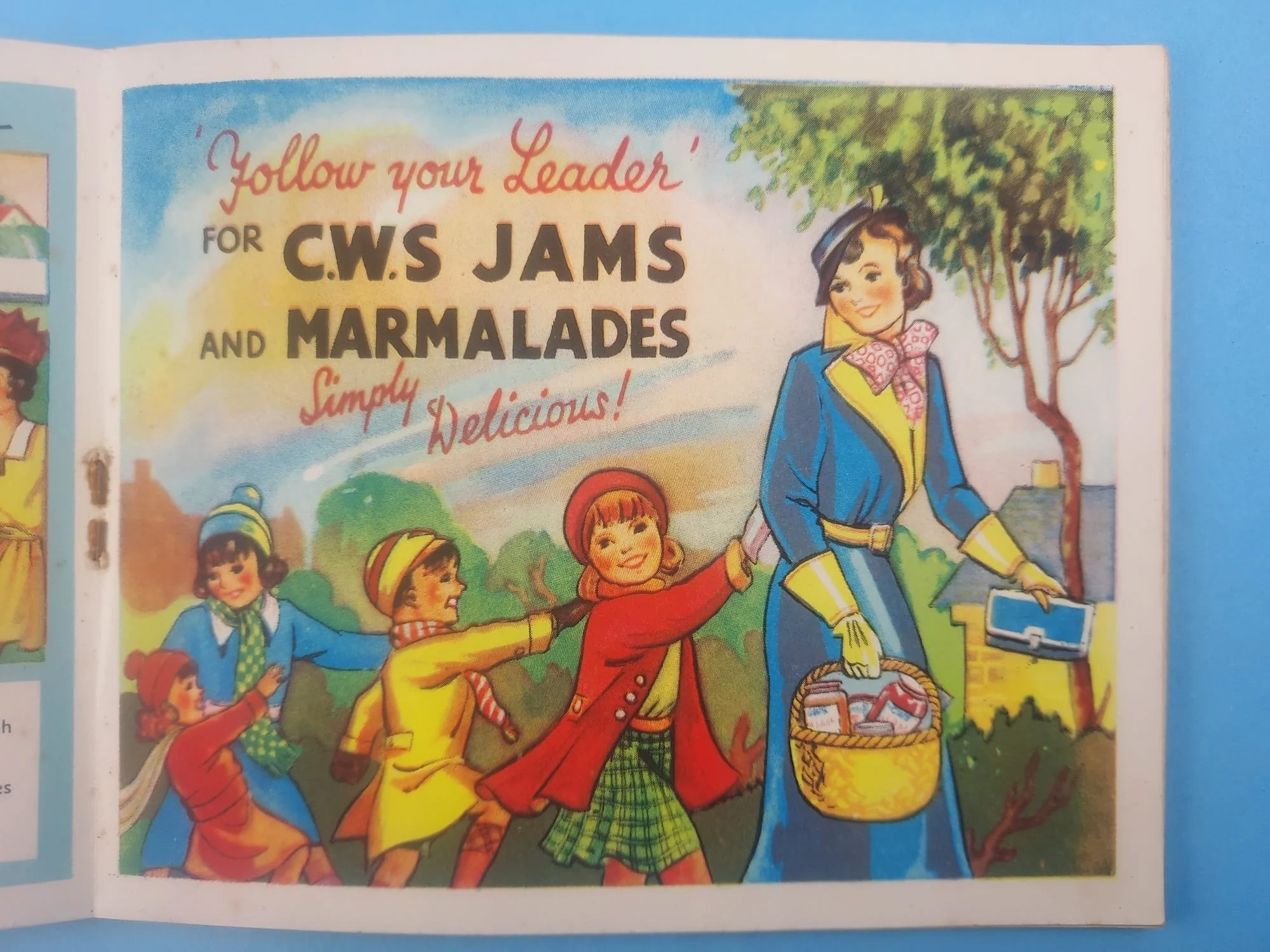

Our good friend Malcolm recently dropped off a booklet, The CWS book of party games, published by the Co-operative Wholesale Society around about 1930. It is a collection of artists’ illustrations and all on good quality paper. The book itself is small, not much bigger than modern-day A6. Full colour throughout, it really is glorious, although the artist remains unknown.
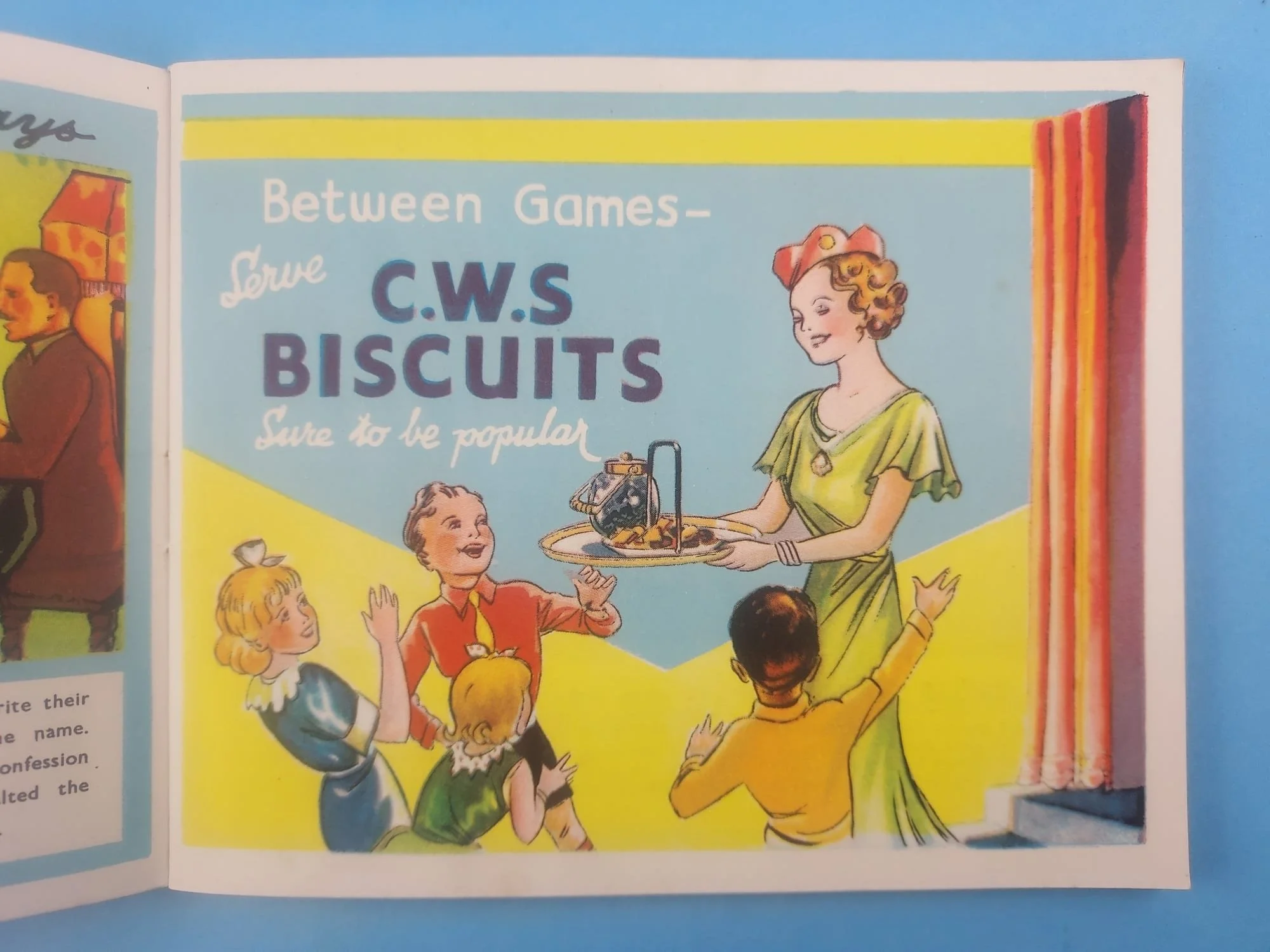
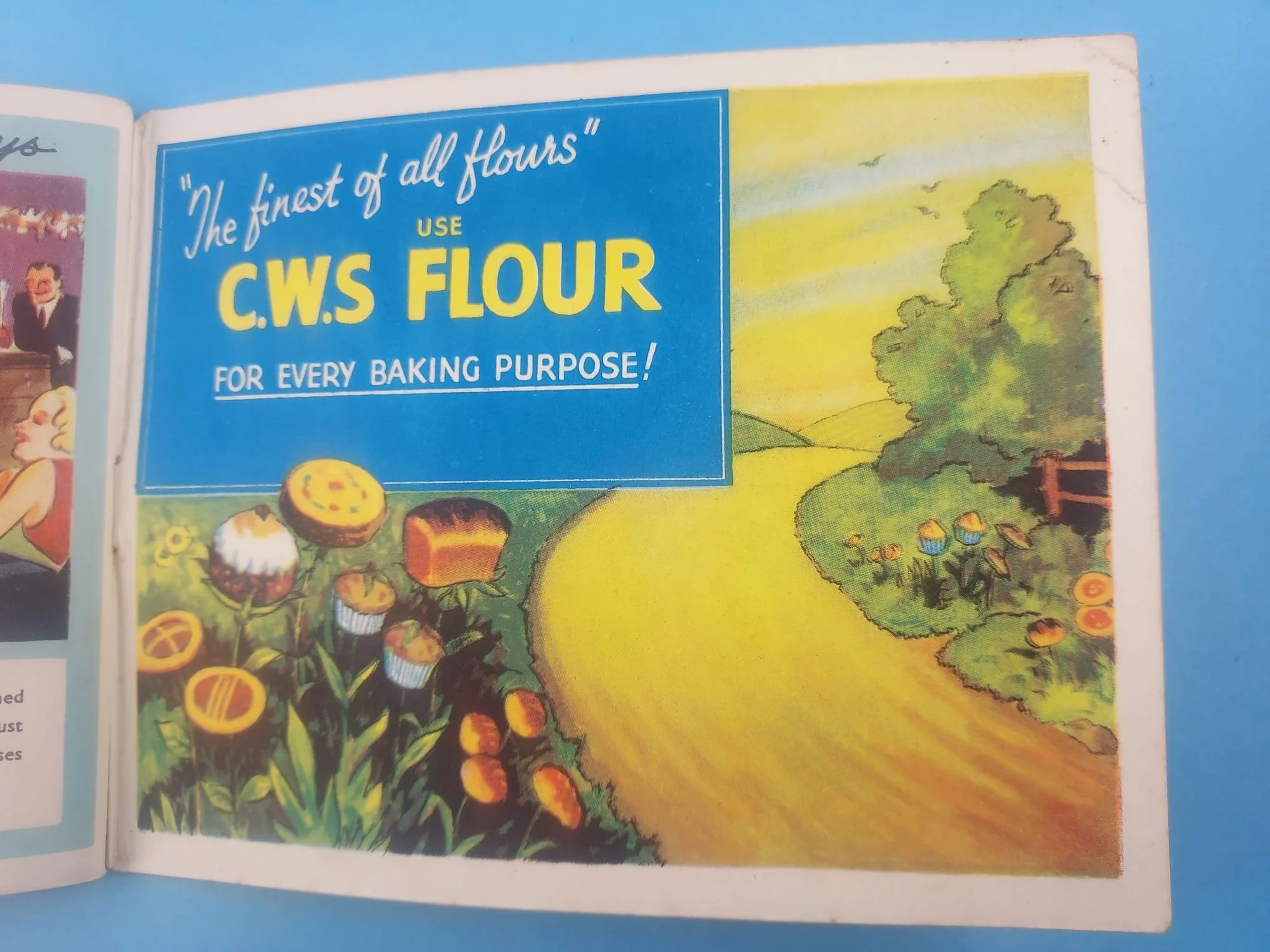
The booklet is clearly a CWS spin off, and so it’s no surprise to find the ads within are all for CWS products: tobacco and cigarettes, biscuits, jams, marmalades, ‘Lowestoft products’ (potted meats, fish and paste) and flour. This broad range reminds us of just how much the Co-op shop was once an integral part of the high street and corner-shop scene. Once you’d joined the Co-op its shops provided discounted groceries and the like, with the bigger outlets even offering clothing and lingerie. It aimed very much to be the one-stop shop.
The booklet itself provides a range of games to be played in social settings. There is an undeniable innocence about many of these. They are intended for adults and children, and are all wholesome fun. It would also have you believe (and maybe it’s true) that when you had your friends round for an evening of games, dinner dress and posh frocks were expected. The booklet clearly worked in raising the profile of the CWS, yet the cosy scenes of affluence and comfort must have been beyond the reach for the majority of its (working-class) customers. And therein lies the puzzle. On the back page we learn it was ‘issued with the compliments of the directors’ of the CWS, so was free. But when you popped in to pay for your milk checks, would you really put one of these booklets in your bag to flick through once you got back to your grim mid terrace?
As for the games, some are timeless – the treasure hunt, for example. Games requiring music (and for that music to stop) would of course use the household piano. But what about ‘blindfold feeding’ for the children, where one child offers spoonfuls of sugar to another? And ‘Siam verse’, where the unwitting child would read out loud ‘O wa ta na siam’, thus having the older children in the know in stitches.
We don’t know the exact date but the book is certainly getting on for a hundred years old, and so offers a brilliant, if rather idealised, snapshot of how you might socialise in that long-gone time.