Carnival Novelties (1939-40)
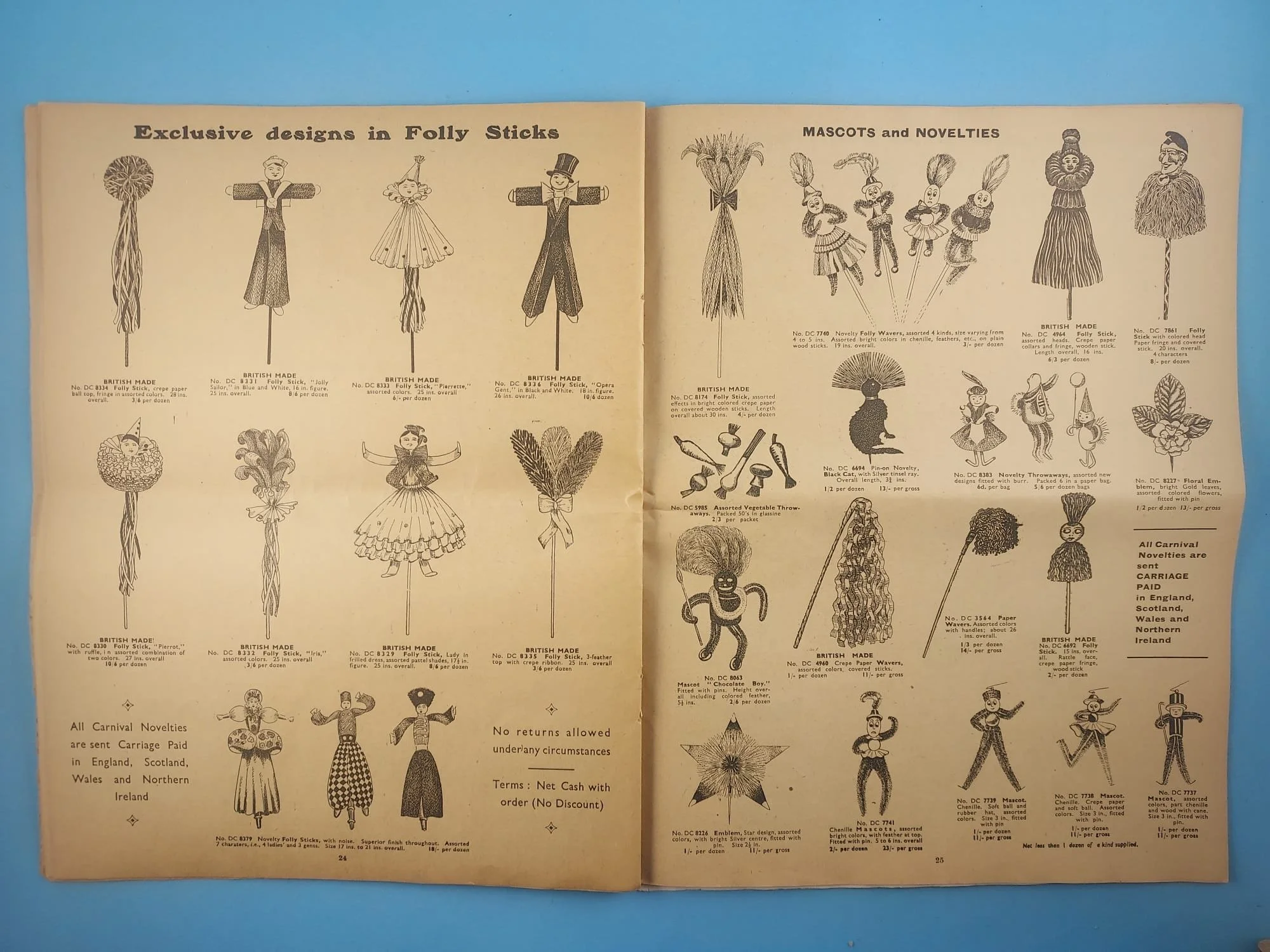
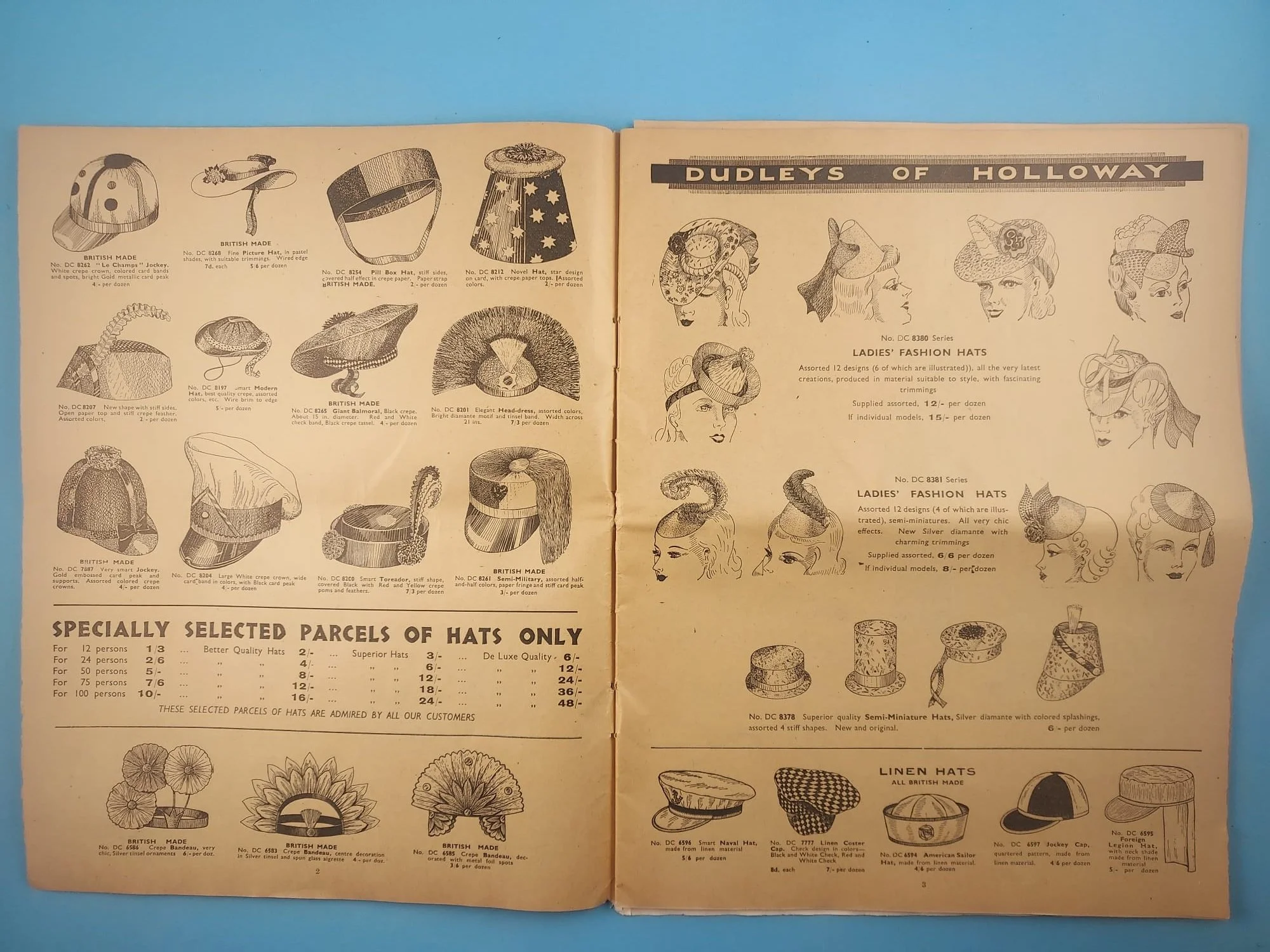
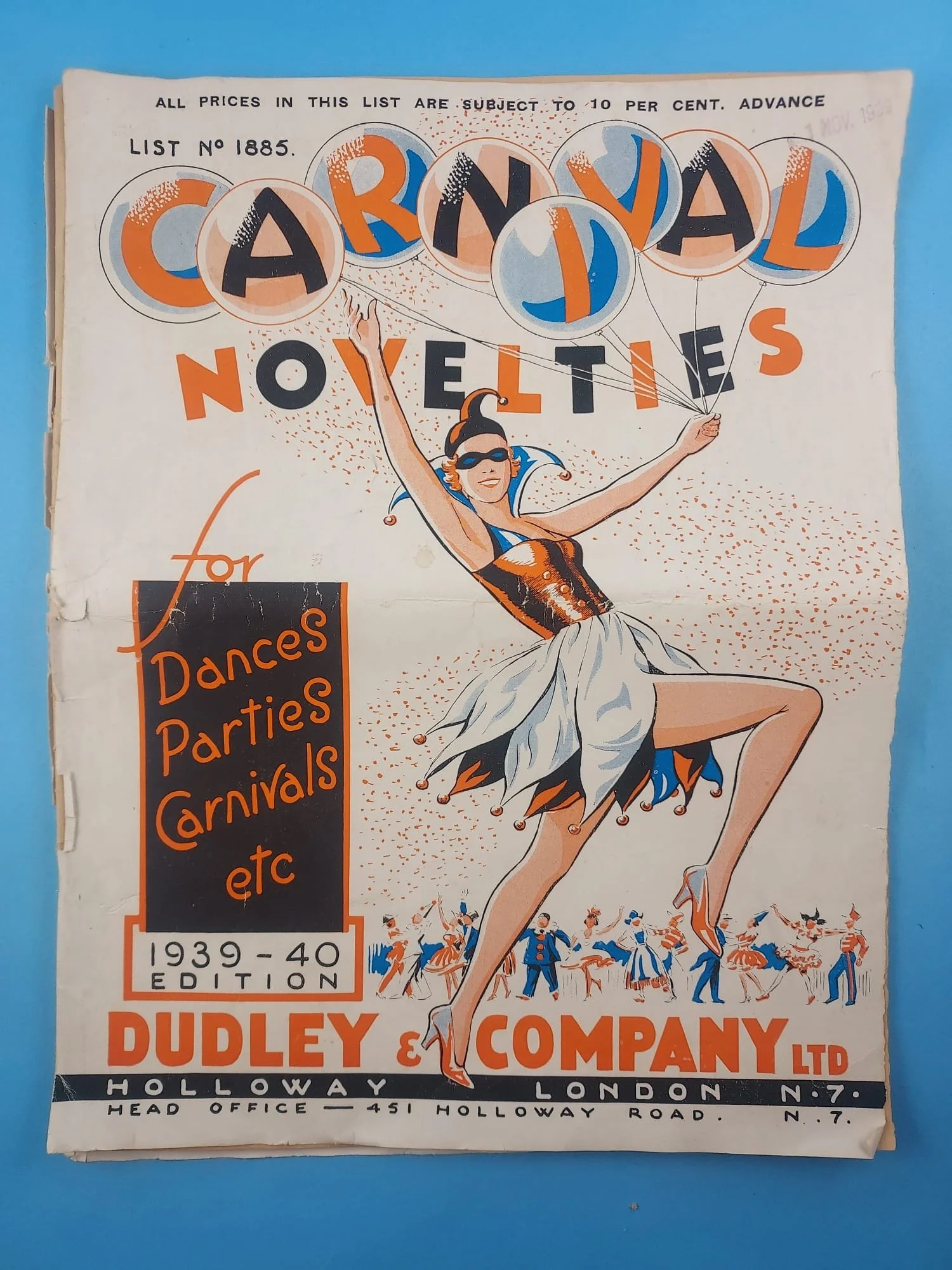
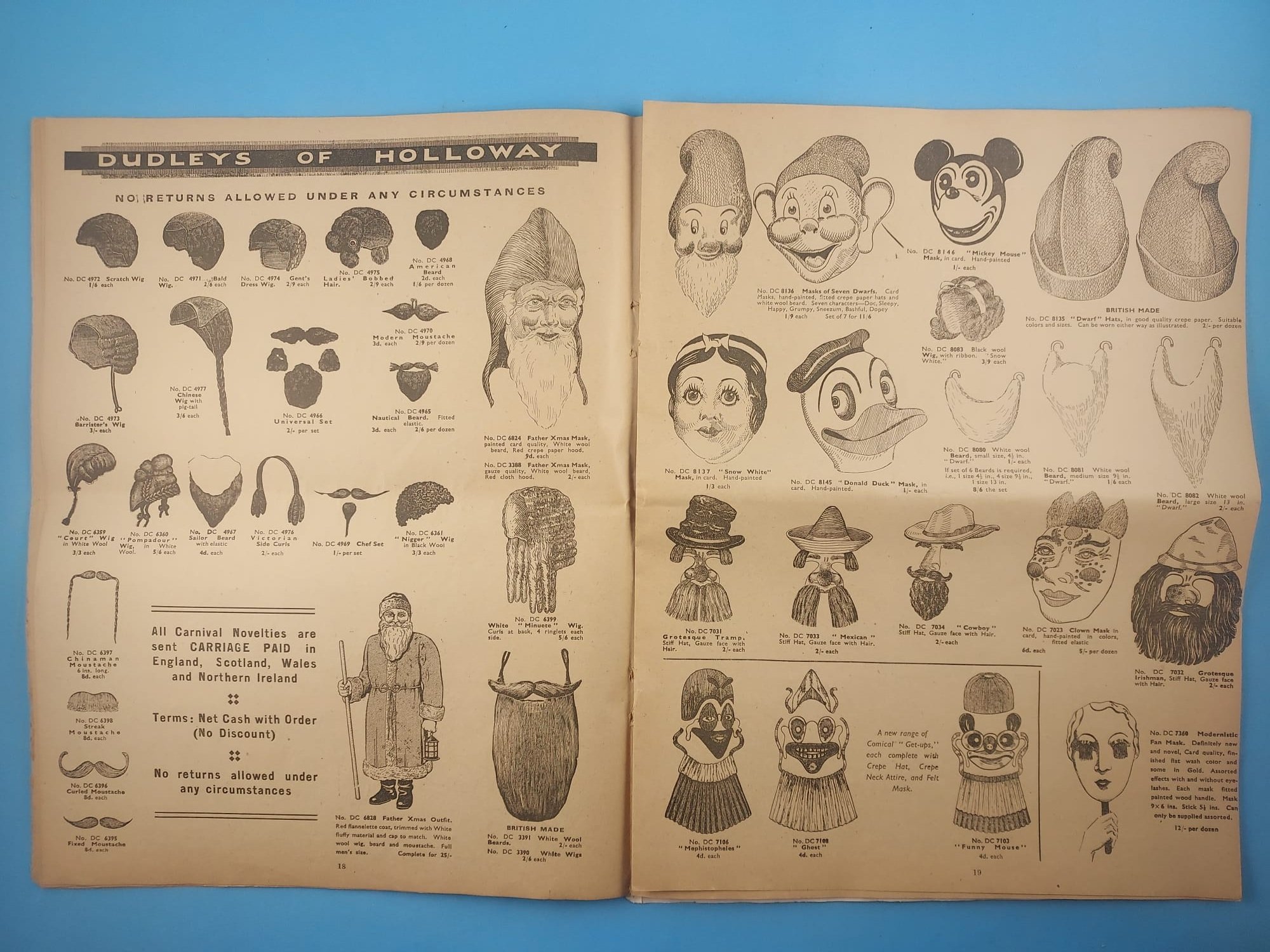
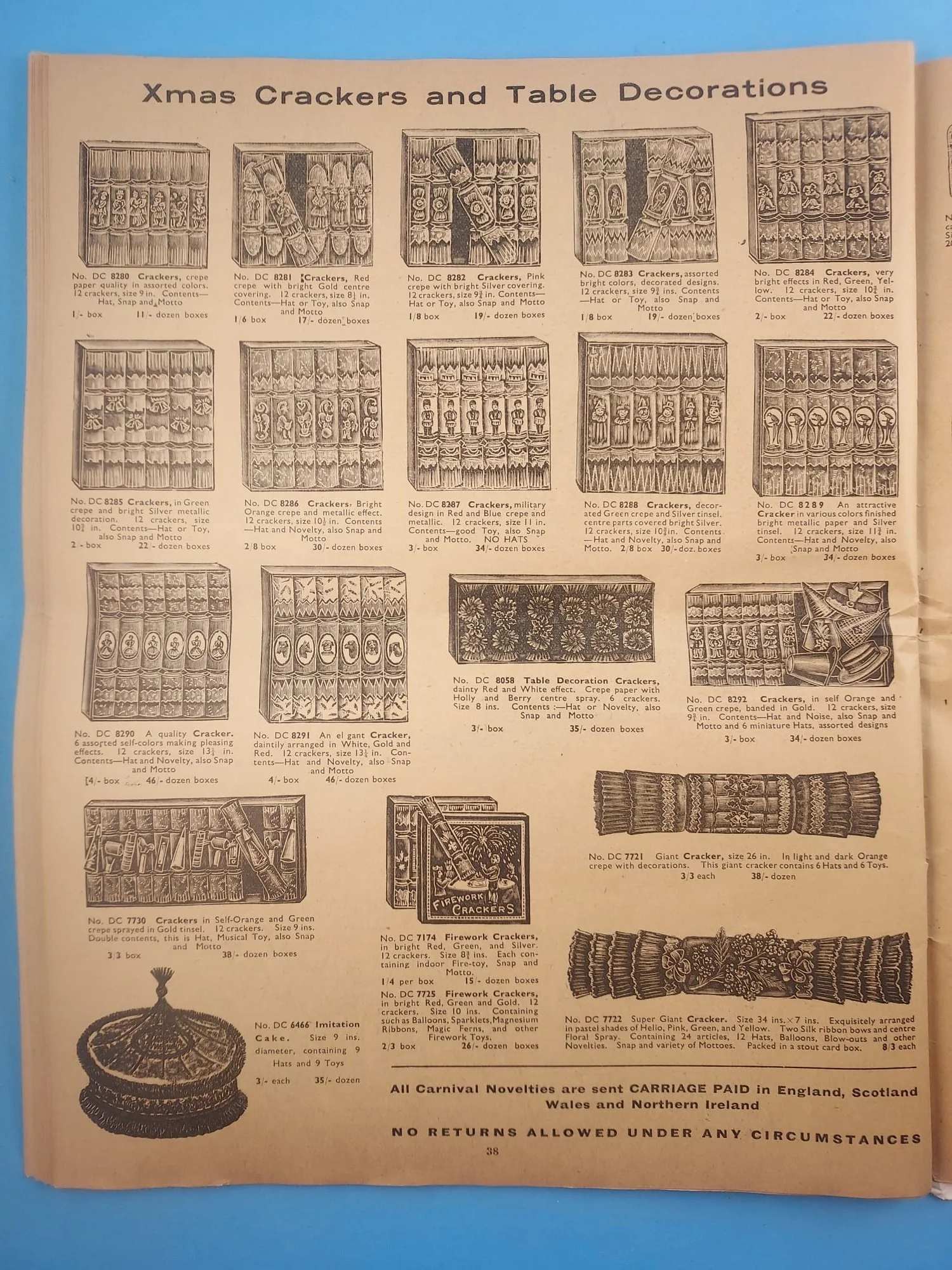
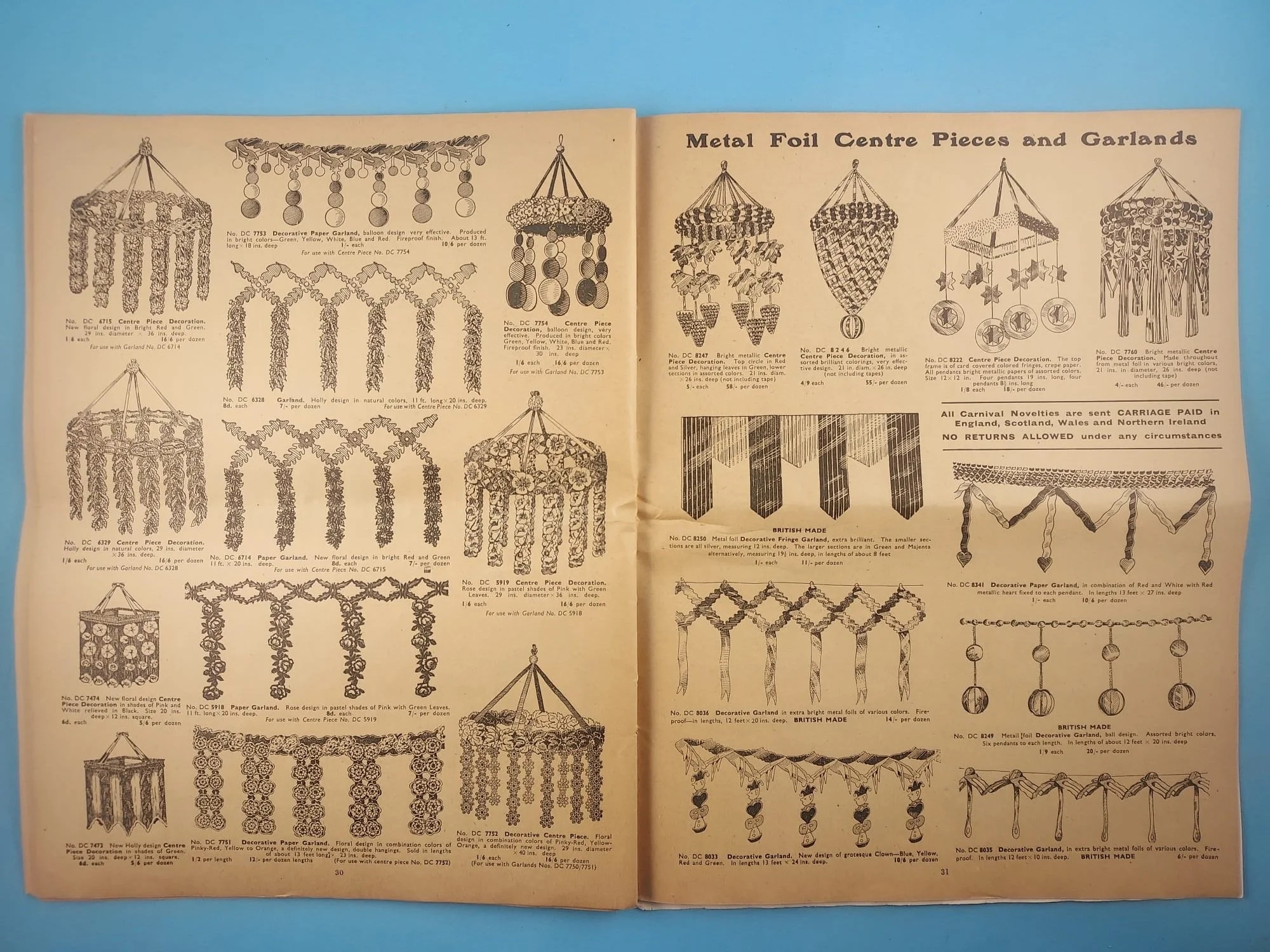
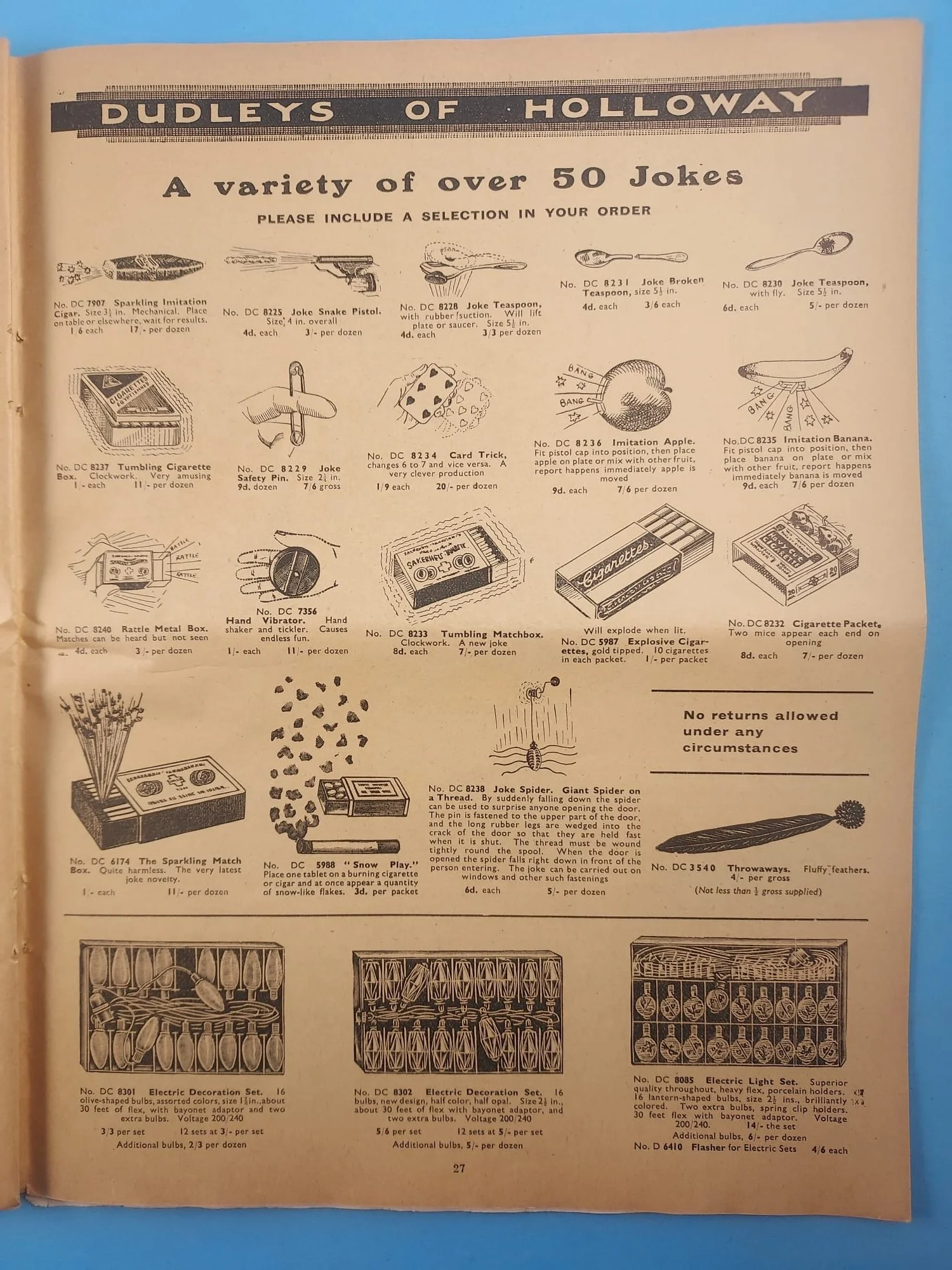
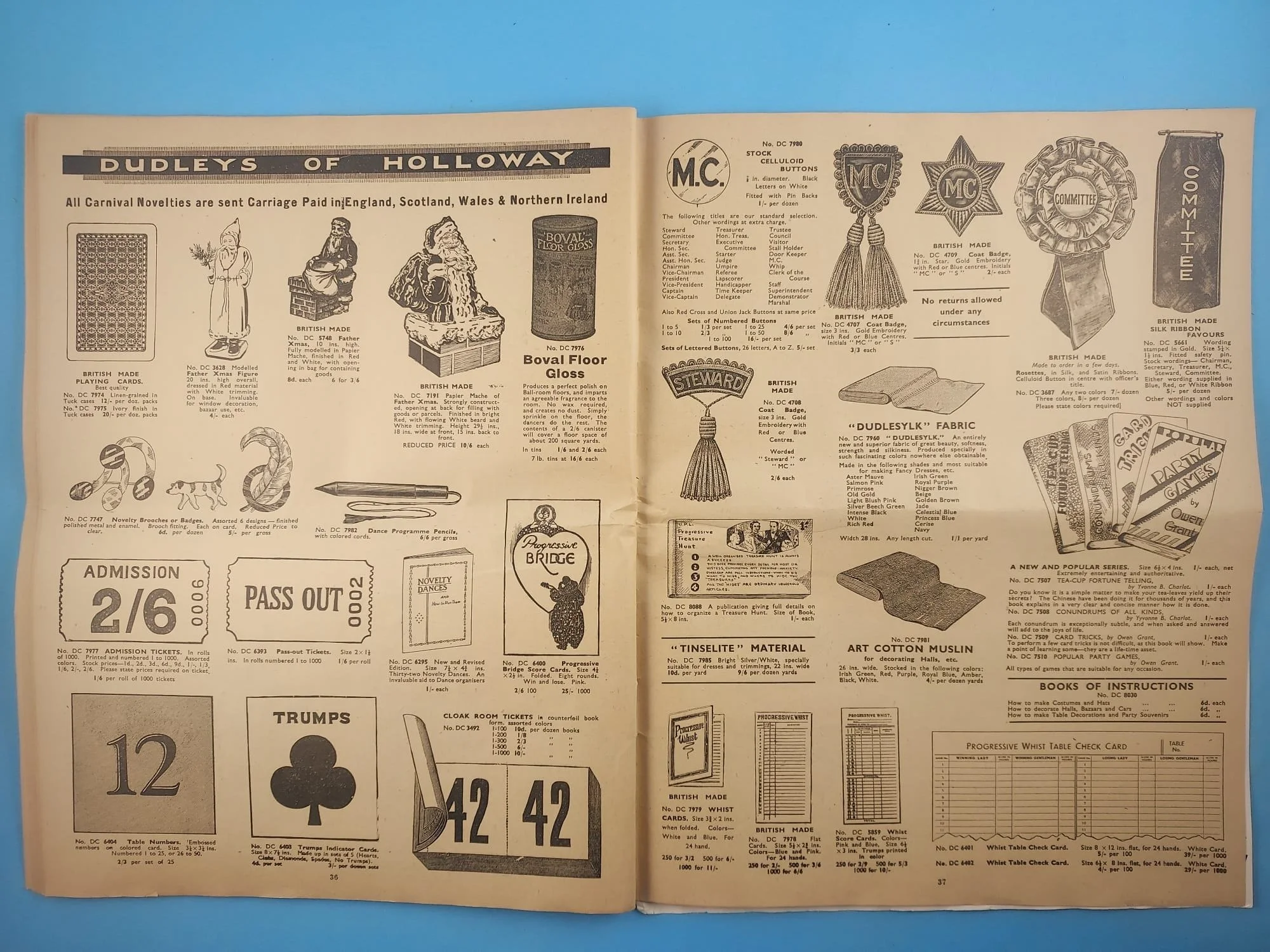
Our friend Paul recently sent us ‘Carnival Novelties’, the catalogue for Dudley and Co of London for 1939–40. This has indeed turned out to be something of a novelty, as I can’t find out anything about Dudley’s, and the only other catalogue of theirs I can find online is one for 1936. Not only that, but I’ll guess that their business – selling ‘novelties’ for ’dances, parties, carnivals etc’ – was fairly niche, even for its time.
The catalogue is addressing a demand for party, well, novelties, which were probably available only in the specialist shops of larger towns. Glancing through the catalogue, specialty hats were very much Dudley’s mainstay, as 15 of the 40 pages were for those. Then you could have masks, musical instruments made out of papier mache, folly sticks and mascots and ‘jokes’ such as a packet of exploding cigarettes (yes, really) or the water-squirter-in-a-buttonhole. They also sold fans, parasols, streamers, garlands, balloons and lanterns. ‘Useful decorations’ for the home included d’oyleys, paper tablecloths and Christmas trees.
Trying to understand the market, it was useful to have recently written about the CWS games booklet, because Dudley’s catalogue seems to be chasing a similar clientele. You could go to Dudley’s to buy, say, a dozen ‘Air Force’ hats for three shillings, to suit the theme of your house party (having picked up your CWS games booklet as a primer). I see in the decorations of the CWS illustrations, the rooms are fitted out with streamers similar to those available from Dudley’s.
To do this, of course, you’d have to have three shillings to spare in the first place, and I doubt many people had in the 1930s. The catalogue was presumably available on request to Dudley’s. If that were the case, though, you would have needed to know to apply to Dudley’s, suggesting they had placed ads in lifestyle or society magazines of the time. We’ll keep any eye out for these.
Our catalogue is entirely in black and white, apart from the front cover in blue, black and red, with all images hand drawn. The paper is delicate and the whole is starting to get fragile to the touch.
The terms of payment are interesting when compared to modern methods. You could have ‘COD’ (Cash on delivery) – does anyone offer that any more? If, though, you chose to pay with the order, it was advised that cash should be sent by registered post otherwise it was ‘liable to be lost’. I bet. Otherwise you could pay by cheque, but more likely (because you wouldn’t necessarily then have had a bank account), by money order or postal order. I can dimly remember postal orders from the 1970s but find that they are still a thing even now. No returns were permitted.