Magic magazines of the 80s and 90s: the Budget, Magigram and Goodliffe’s Abracadabra
Spoiler alert. If you thought all those magicians you see on the telly and elsewhere were actually performing, well, magic, then do not read on.
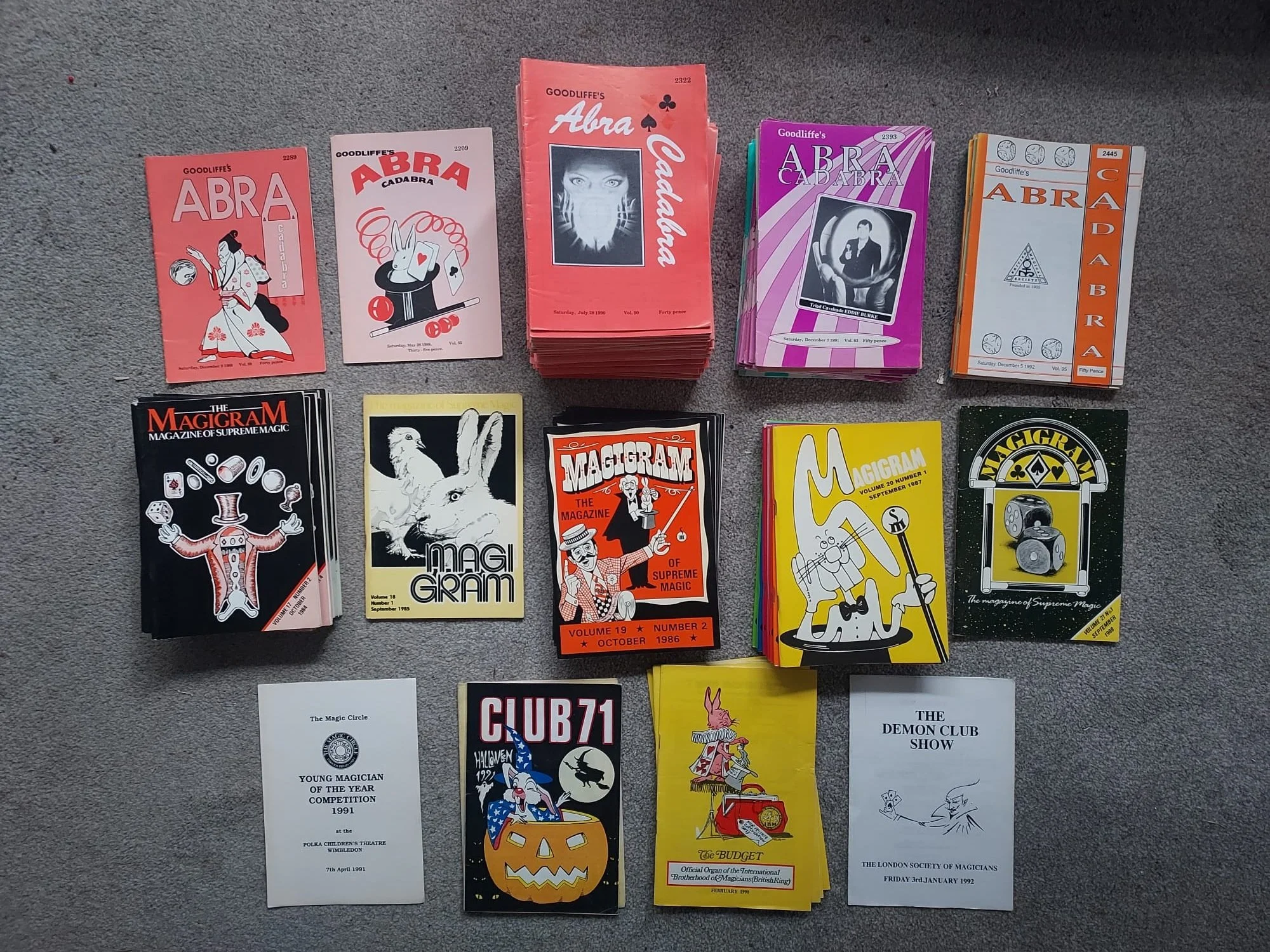
That’s because a friend down south recently gifted some magic magazines to us, wherein some of the tricks of the trade are laid bare. Now, we already had some titles on this theme – specifically, Magic and Magicseen from the 2000s – but we now have copies of Magigram, Goodliffe’s Abracadabra and the Budget.
A bit of background to the profession. The British Ring, or the International Brotherhood of Magicians, was created in 1928, and its official ‘organ’ was the Budget, a monthly, which continues today but has recently been renamed the Key Ring. With its stories, regular columns, ads, book reviews, letters and coming events, this is circulated by the Brotherhood and is not otherwise for sale. We have copies for most of 1990.
Magigram, ‘the magazine of Supreme Magic’, was a monthly that ran from 1966 to 1995 and was essentially the sales programme for the supply company Supreme Magic of Bideford. Magigram was available by mail order, with subscriptions costing £7.50 per year for the period 1984–8, the ones we now have. In it you can buy the props for magic tricks, and there are ‘how-to’ articles, reminiscences and so on. A link I can spot is that the magician Ken de Courcy was president of the British Ring in 1990, and was also behind Supreme Magic.
Then there is Goodliffe’s Abracadabra (called by those in the know, Abra). This weekly ran from 1946 to 2009, and we now have many copies for 1988 to 1993. It had a cover price (35p in 1988, 50p in 1993) but I don’t think it was ever likely to be on WH Smith’s shelves, and was otherwise available by subscription – about £30 for a year in 1990, depending on what class postage you wanted. With the strapline ‘the world’s only magical weekly’, it offered a similar blend of material as Magigram, but as a weekly was significantly thinner.
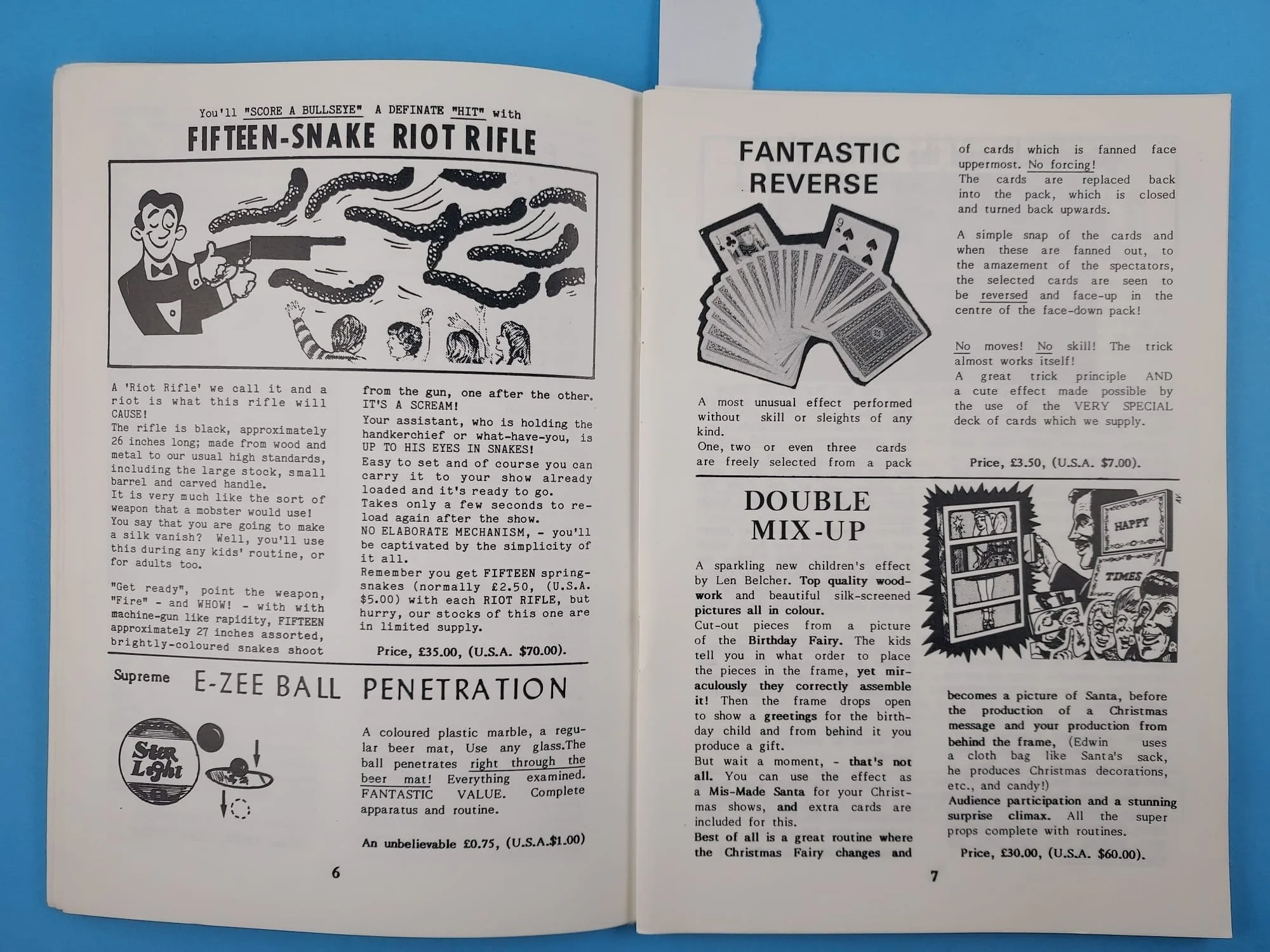
Judging by the covers, all the titles are professionally presented, but they surely chased an ever-thin niche readership of magic professionals. This meant that the editorial and ads had a scissors ‘n’ paste look, and all content was always in black and white. It shouldn’t be a surprise to find then that the ads in all of them are not like the slick and expensive examples you would see in a mainstream and high-volume publication. Instead, they all look home-made – and, indeed, some will have been – and of course they all predate the benefits of modern desk-top publishing. The low circulation of these publications would also mean the the props and tricks advertised were niche even within the profession.
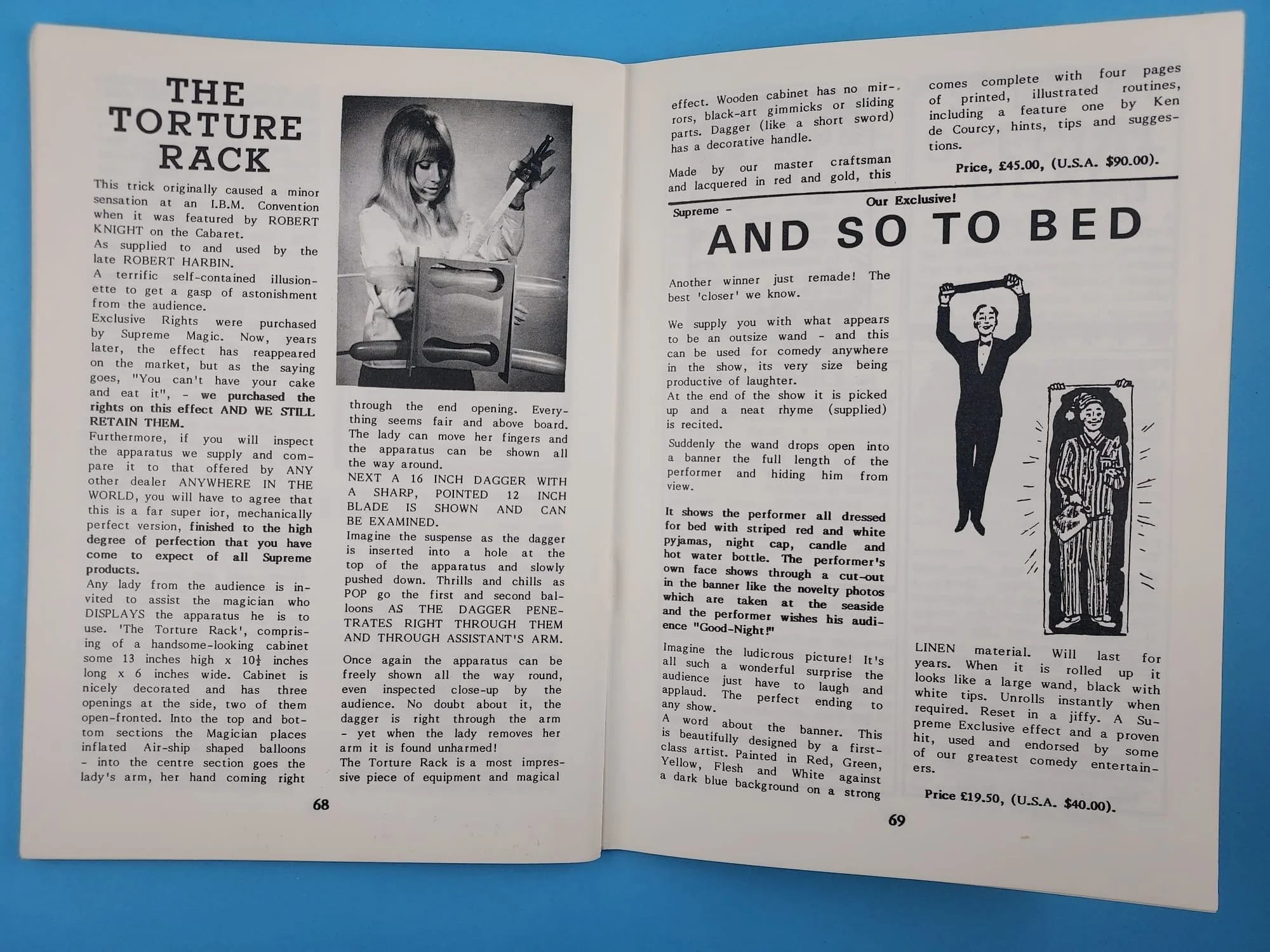
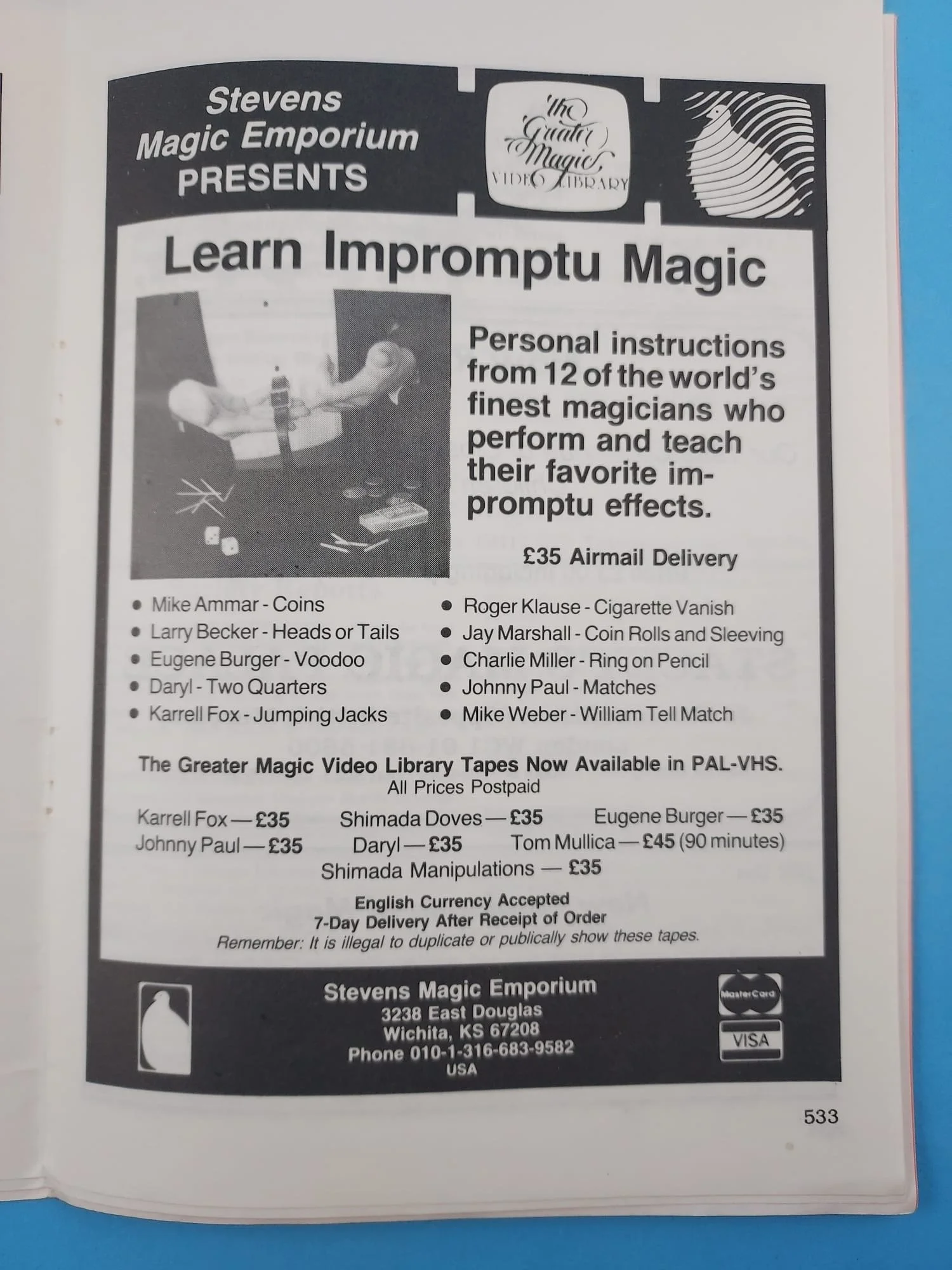
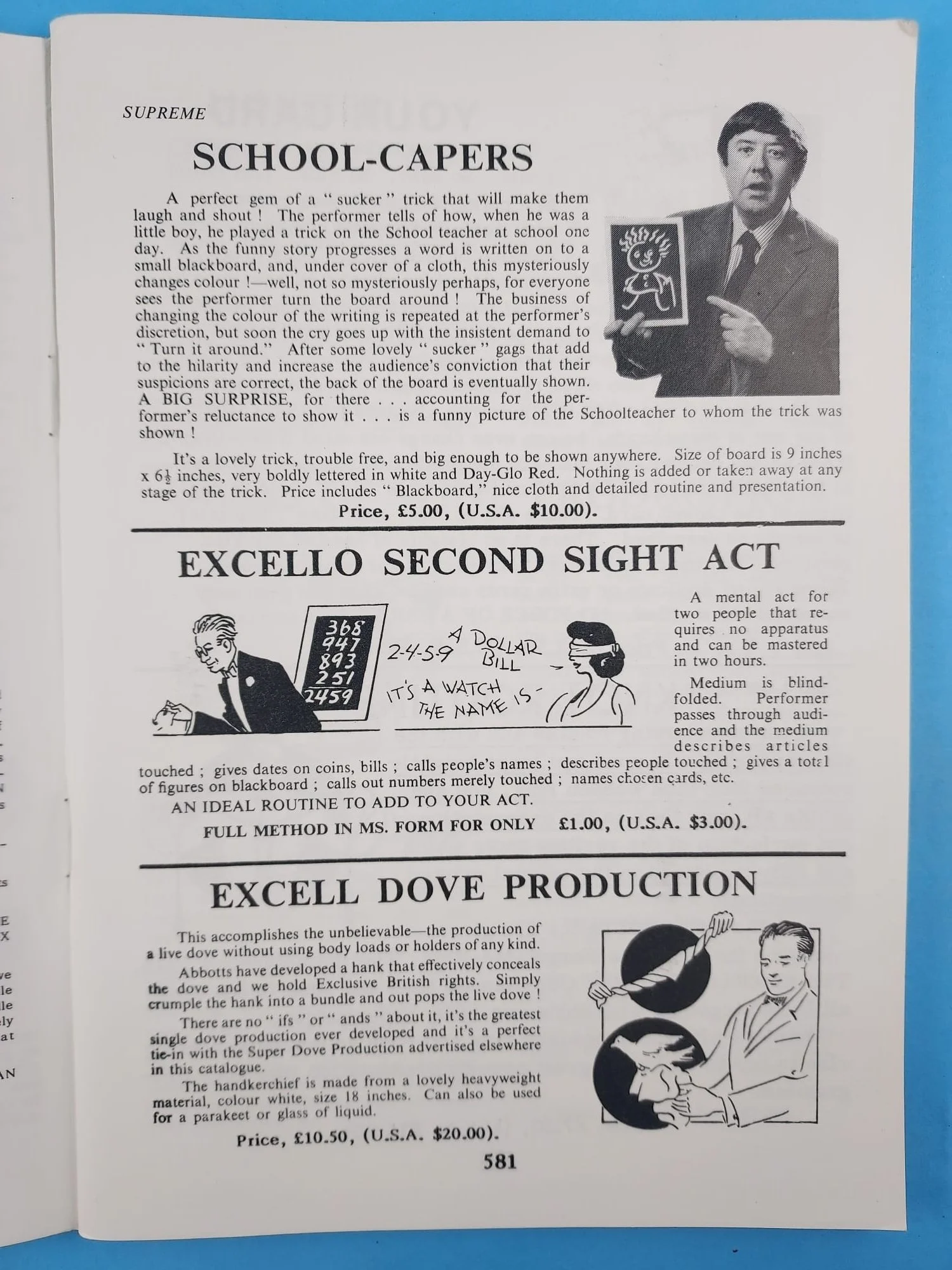
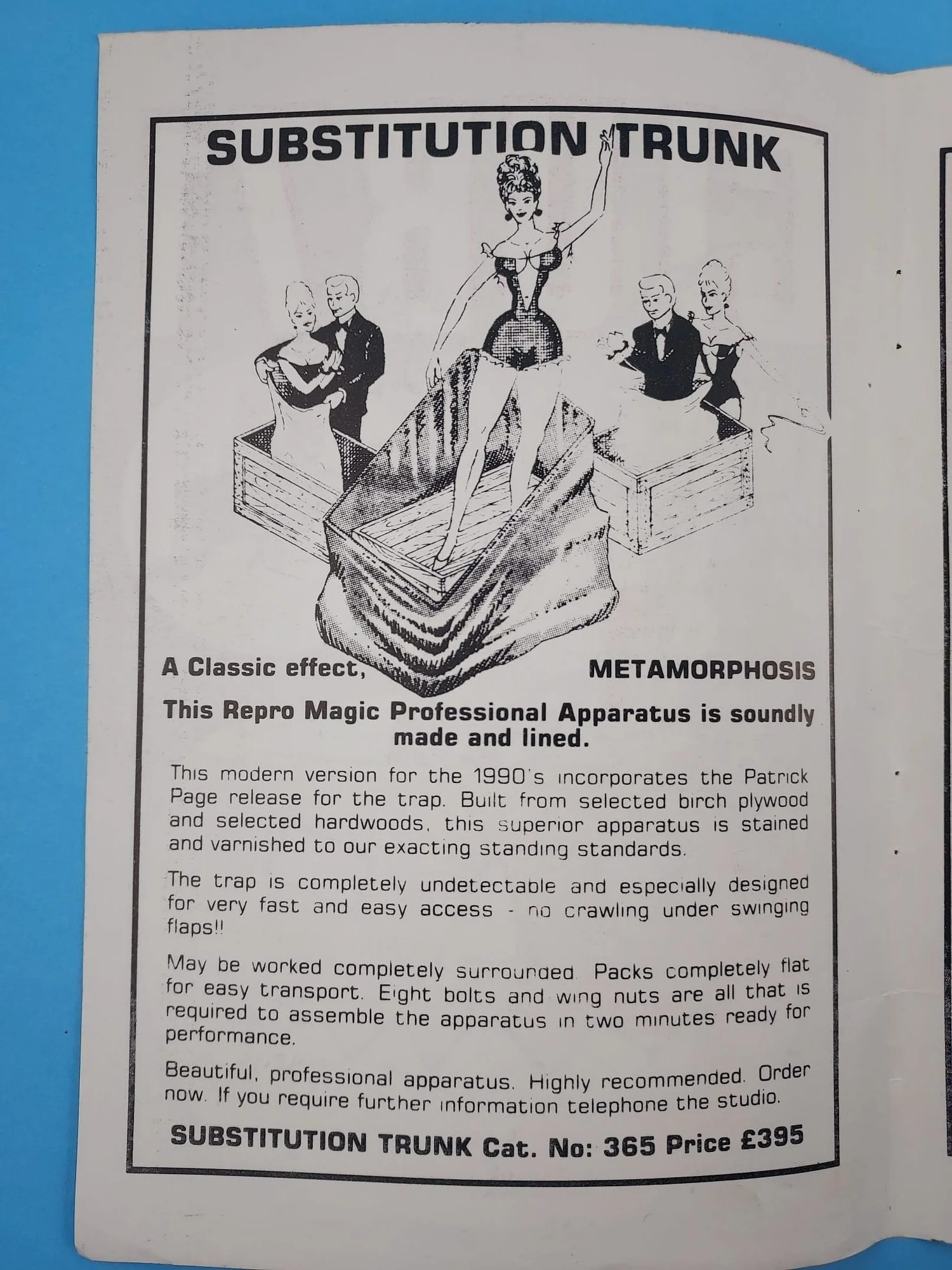
And, a bit like with Father Christmas, glancing at the ads soon reveals that trickery and deception are afoot. The Substitution Trunk – the one where one person is seen to enter the wooden trunk, and lo and behold, a different person emerges, is yours for £395. The special handkerchief to conceal the dove is £10.50. The ‘pick a card’ routine requires a special deck, yours for £3.50. The Torture Rack, where a knife is thrust into the concealed arm of the glamorous assistant, is £45. And you can buy the VHS video to ‘Learn Impromptu Magic’ for £35 delivered by airmail from the US, with the reminder ‘it is illegal to duplicate or publically show these tapes’.